

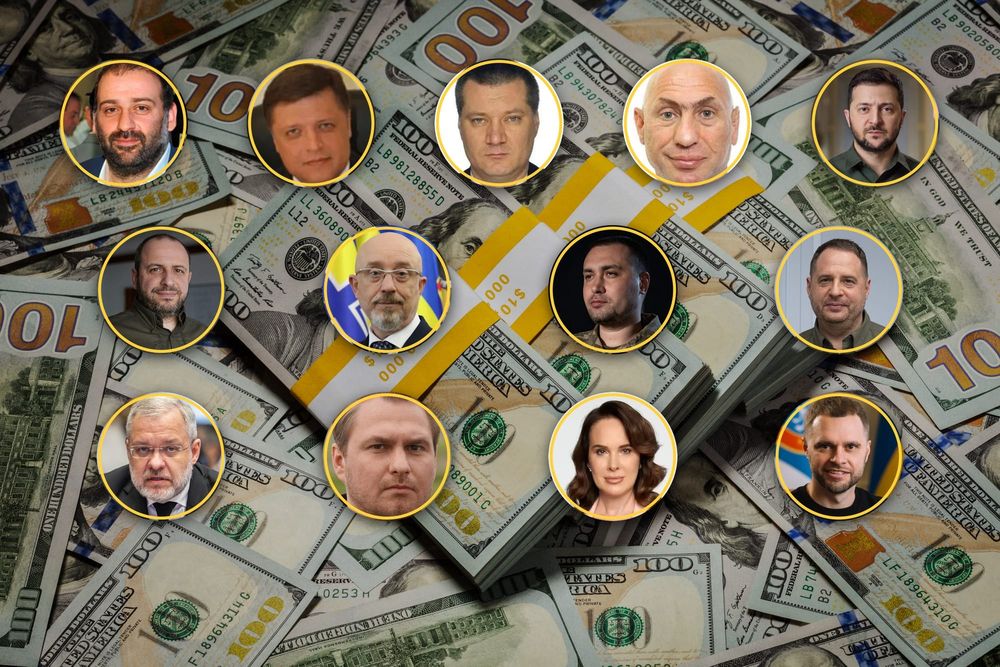
The force that ruins the country from the inside.
What is the most destructive force that can ruin a country from the inside? The force that has taken over all main verticals of power, penetrated into every state institution, evolved into a system, a mechanism running like a Swiss movement, and become a philosophy of ruling the State. This force, or better call it a disease, is corruption and is present to some extent in every country on the globe. No country in the world has zero corruption. According to the latest large-scale study by Transparency International in 2025, 67% of the world's countries (122 out of 182 countries surveyed) are seriously affected by corruption and have critical problems in the public sector. 33% of the world's countries (60 out of 182) have relatively low or moderate levels of corruption, but it is never zero.
In terms of percentages by country, it looks like this: 67% — countries with high and systemic levels of corruption (index < 50). 30.2% — countries with moderate control over corruption (index from 50 to 79). And 2.8% — countries with minimal corruption (index of 80 or higher). Only 5 countries remain in the world with the lowest rate of corruption: Denmark, Finland, Singapore, New Zealand, and Norway. Denmark is recognized as the cleanest and has 89 points.
Somalia and South Sudan, with 9 points each, and Venezuela, with 10 points, are recognized as the most corrupt. Ukraine occupies 104th place in this ranking. It might seem that a position in the second hundred doesn't look too bad, but that's only at first glance. Corruption has been one of the main obstacles to prosperity since Ukraine became an independent country in 1991. Like a stone, it has been pulling the country to the bottom of the rankings of the poorest countries in Europe and the world.
Nevertheless, with corruption at a high rate, Ukraine managed to weather the turbulent 1990s, the relatively stable early and late 2000s, revolutions and the chaos of changing governments, lose hope for a bright future, and then regain it thanks to the promises of its leaders—only to ultimately face a major war with Russia.
Corruption in times of war seems like a terminal disease and continues to eat away at a country’s strength even when every resource should be directed toward survival and defense. It is important to understand and recognize that, with the start of Russia’s full-scale invasion of Ukraine, corruption has not gone away; on the contrary, the war has served as a new catalyst for its evolution, propelling it to a new, sky-high level.
Volodymyr Zelensky remains Ukraine’s leader—a man who, in 2019, built his campaign around the fight against corruption and crafted an image as a candidate untainted by corruption, which enabled him to win by instilling new hope in the hearts of voters. However, Zelensky’s anti-corruption image soon began to crumble, and Ukrainians saw what had prevented them from living with dignity for decades—that very same corruption, only on an even larger, more shocking scale, cynical and destroying all hope for the future.
Defense Sector Corruption Cases During the War
The defense sector was originally one of the sectors where all the major financial flows—international aid, donations from Ukrainians themselves, and funds allocated from the national budget—were directed. That is why the very first cases of embezzlement and attempts to profit at the state’s expense arose precisely here.
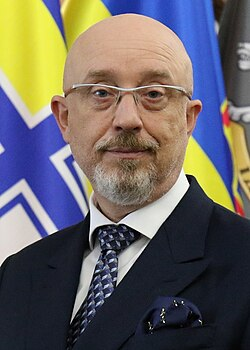
One of the earliest and most publicized scandals involved the Ministry of Defense’s food procurement for the Armed Forces in 2022–2023 under then-Minister Oleksii Reznikov. Companies supplied the army through “food kits” with significantly inflated prices for basic items. The most notorious were eggs, priced at around 17 hryvnias each, and potatoes multiple times above market rates. The phrase “eggs for 17 hryvnias” quickly became a common noun and was labeled as a nationwide symbol of wartime corruption.
National Anticorruption Bureau (NABU) and the Special Anticorruption Prosecutor Office (SAPO) later uncovered a scheme that generated more than 733 million UAH (approximately $17–18 million) in excess profits for suppliers between August and December 2022 alone. A senior Defense Ministry official was accused of enabling the overpricing, while Reznikov himself was never formally charged. He claimed the figure was a technical error, called the scandal “cognitive warfare,” and insisted he was not personally involved in procurement.
Did anyone take any responsibility or was punished? The answer is no. Despite public outrage and later searches at the minister's residence, he faced no penalties. Under pressure from the series of scandals, President Zelensky replaced him in September 2023 with Rustem Umerov, also a questionable person, citing the need for “new approaches.” Reznikov left government and has remained largely outside official politics, while critics questioned whether political protection limited accountability at the highest levels.
A broader and more systemic problem has been exposed in weapons, equipment, and military supply procurement throughout the war years. Confidential government audits covering 2024 and early 2025 showed that Ukraine lost about $1.2 billion in a single year alone to fraud, waste, artificial overheads and overpayments, and non-delivery of contracted weapons, drones, and other materiel. Several of the country’s largest defense contractors continued to receive new multimillion-dollar contracts even while under criminal investigation or after failing to fulfill earlier deals.
In one high-profile case, the Pavlohrad Chemical Plant supplied thousands of defective mortar shells, yet still obtained further large contracts while its director, Leonid Shyman, faced corruption charges and, to everyone's surprise, was sentenced to 5 years' imprisonment.
Another shocking instance of corruption was linked to the procurement of basic military clothing. In 2023, companies controlled by Lviv businessman Ihor Grinkevych and his son Roman won 23 Ministry of Defense tenders worth more than 1.5–1.8 billion UAH to supply jackets, combat shirts, trousers, underwear, and other gear for the Armed Forces. The companies had previously been engaged mainly in construction and had no necessary production facilities, warehouses, or experience in textile manufacturing, yet still managed to secure the contracts.

The delivered clothing turned out to be low-quality and unsuitable for military use — experts assessed it as more appropriate for civilian outdoor or fishing activities than for combat conditions, failing to meet the required technical specifications for durability, camouflage, weather resistance, and operational standards produced mainly in Turkey. The state suffered losses exceeding 1 billion UAH.
The scheme drew intense public attention after journalistic investigations and reporting highlighted the family’s sudden increase in acquiring luxury assets shortly after receiving the large funds. The Grinkevych family acquired high-end real estate in Kyiv, Kozyn, the Lviv region, and even abroad, as well as other valuable property. Roman Grinkevych became a particular focus of media coverage when he appeared in court wearing expensive Louis Vuitton sneakers worth nearly 1,000 euros. Ihor Grinkevych was detained in December 2023 while attempting to bribe a DBR (State Bureau of Investigations) investigator with $500,000 to return seized goods and close the case. The State Bureau of Investigation completed the pre-trial investigation, charging Ihor, his son Roman, company directors, and other associates with fraud on an especially large scale under martial law. Assets were seized, and the suspects were detained or placed on high bail, although final court verdicts were still pending in later stages of the proceedings.
These cases were exposed by journalists and investigators, looked into properly, and in some cases taken to court with charges and seized assets. Still, nobody really knows how many similar schemes stayed hidden. How much more money disappeared through overpricing, missing deliveries, or low-quality gear, and how widespread the problem actually was during the war, remains an open question.
To be continued......