


The investigation of the Midas case was followed by two more operations carried out by NABU and the SAPO: operations "Themis" and "Gorrest Gump". These two operations exposed an even more cynical and dramatic inside story of a corruption catastrophe in Ukraine. The primary source was operation “Themis” - an investigation into a powerful raider organization that, using forgery of documents and hacking into the registers of the Ministry of Justice, brazenly seized luxury real estate and business assets in Kyiv worth hundreds of millions of hryvnia.
But when one of the key members of the Midas case, the ex-Energy minister, ended up in jail, the criminal group urgently launched an operation to collect and legalize cash to pull him out of jail. Investigators of the National Anticorruption Bureau, with bitter irony, named this operation: "Forrest Gump," in honor of the famous movie describing the absurd, continuous run of corrupt officials for the money of a warring country for the sake of one goal - to urgently collect and launder 150 million UAH ($3.35 mln) in bail for German Halushchenko.

The main facility for laundering millions of dirty cash was the nationalized, state-owned Sense Bank. The conspirators tried to subordinate its financial flows and management to their interests. The main administrative executive role was played by the Deputy of the President's Office, Iryna Mudra. According to the investigation, she acted on the direct order of the fugitive Timur Mindich, hiding in Israel. Mudra’s key architect and partner in this scheme was the notorious developer, ex-MP, and former head of the construction corporation UKRBUD, Maxim Mikitas. NABU found out that Mudra and Mikitas were tied not only by a business relationship, but they also had an extremely close personal relationship - they were in a civil marriage. Mikitas paid her a “shadow bonus” to her salary in the amount of 20–30 thousand dollars a month, left her a share of $4 million from Ukrbud projects, and helped hide luxury real estate. However, the most shocking fact of the case was that 232 recorded conversations out of the 237 conversations that formed the basis of the case were recorded personally by Mikitas using a hidden microphone - he methodically recorded Mudra right at her home during confidential conversations to hand her over to the anti-corruption authorities.
After the exposure of the audio recordings, President Zelensky fired Iryna Mudra from office, and the Supreme Anti-Corruption Court decided to remand Mudra in custody, with the option of posting bail of 20 million UAH($500 thousand). Maxim Mikitas was detained with an option of bail of 30 million UAH ($650 thousand)
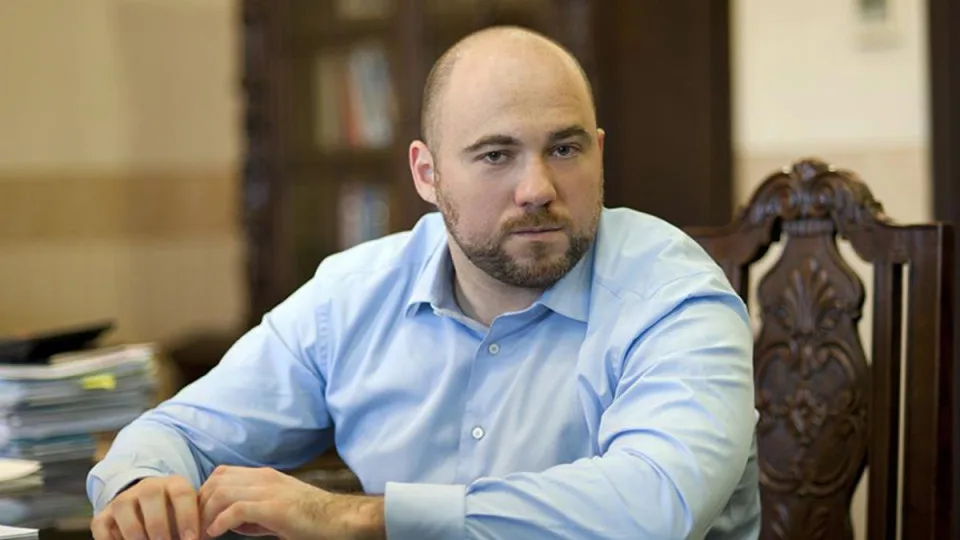
The main donor and key cash supplier for this scheme was a Member of Parliament, Vadim Stollar. In Ukraine, Stollar was notoriously known as an odious developer, a grey eminence of the Kyiv real estate business, former leader of the capital's cell of the pro-Russian party OPZZh, and involved in dozens of high-profile investigations into corruption in the urban planning sector of Kyiv. His criminal record dates back to the early 2000s. After the full-scale invasion began, Stolar fled the country and became a prominent member of the so-called "Monaco Battalion", living on the Côte d'Azur and in Dubai, but later returned in an attempt to save the remains of his construction empire through deals with the Government.
As part of Operation "Themis", NABU charged the Stollar with five criminal charges, including organizing a raider seizure of capital enterprises and luxury real estate worth almost 10 million dollars. Supreme Anti-Corruption Court set a record bail amount of 300 million UAH ($6.7 million) for him.
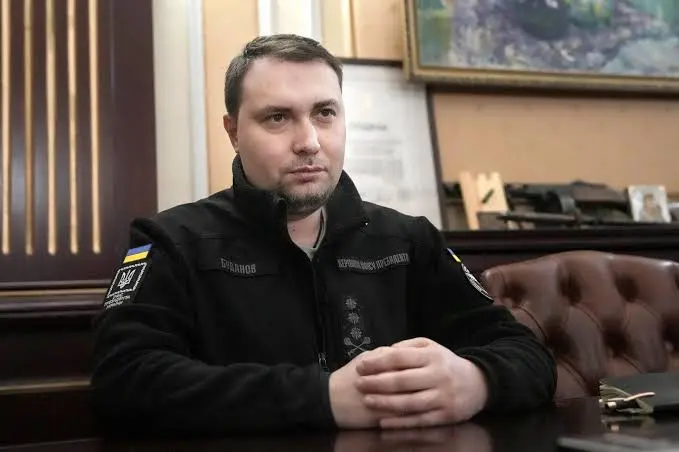
But the most shocking and explosive element of the revealed records was the trail left by Kyrylo Budanov, the head of the Office of the President and ex-Chief of the Main Directorate of Intelligence of the Ministry of Defense of Ukraine, a personality who was strongly associated with Ukrainian resilience and was heroically highlighted in the media. Budanov has been representing Ukraine's negotiation team on the highest levels, meeting the world's top officials .
In the records, he is referred to as Kyrylo Oleksyovich (Budanov's patronymic), which perfectly lines up with his name and surname, and there is no one else in the office who could have the same name and patronymic. The case materials revealed the frightening fact of the total merging of the state elite with oligarchic raider groups and special services: huge bags and bags with dirty millions in cash were brought to the branches of Sense Bank, entered into the cash registers, and were guarded by current employees of the Main Intelligence Directorate under its control. The military cynically used their official IDs and special vehicles to bypass front-line checkpoints and strict banking and financial monitoring procedures without the slightest obstacle.
The charges are quite convinced that Budanov was indeed involved in the scheme, and the investigation is looking for more grounds to file charges.
Thanks to Operation Forrest Gump, a tectonic shift has occurred that is fundamentally disrupting the system to which the corrupt ruling elite had become so accustomed and on which they had come to rely. Now all funds fall under scrutiny of financial monitoring and sophisticated verification. The National Bank of Ukraine has warned banks about these checks, and they are refusing to deal with suspicious individuals. Following the exposure of the scheme involving Sens Bank, neither Stollar nor Mudraya can pay their bail. After Mudra attempted to deposit 5 million, her accounts were frozen, and she remains in pretrial detention. As for Stollar, his attempts to deposit legal funds were unsuccessful, and the deadline for paying the 300 million hryvnia bail has expired, which gives the prosecution grounds to seek his actual arrest.
The public disclosure of the “Midas” and “Forrest Gump” corruption schemes is a crushing blow to Ukraine’s international image and the president’s position in negotiations with Western allies. At a time when Kyiv is conducting daily dialogues about the allocation of financial and military assistance for the country’s survival, news about the theft of billions to protect nuclear power plants and money laundering through state banks causes sharp bewilderment among foreign taxpayers and politicians.
Scandals of that scale provide strong arguments for Western skeptics, who for years have been promoting the thesis of “total corruption of the Ukrainian government” to severely limit support for the country in the ongoing war.