

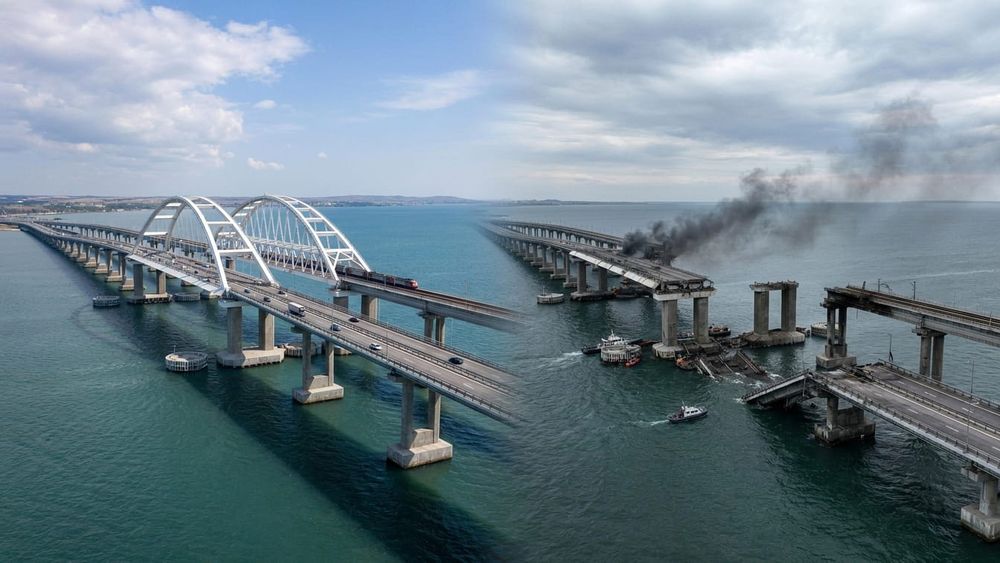
The idea of linking the Kerch and Taman peninsulas with a bridge predated Russia’s occupation of Crimea. Ukrainian and Russian officials discussed the concept as early as 2006 and again in 2010 under Presidents Viktor Yanukovych and Dmitry Medvedev. The projects haven't materialised until after Russia’s illegal annexation of the peninsula in 2014. The day after the annexation treaty was signed, Vladimir Putin ordered the government to begin work on a crossing that would create a direct road and rail link independent of Ukrainian territory and ferry services. The structure was intended both as practical infrastructure and as a political statement of control.
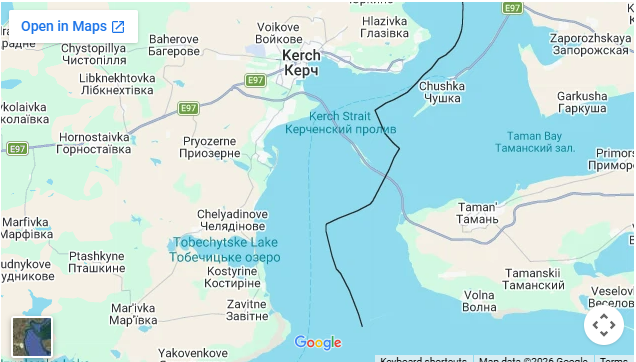
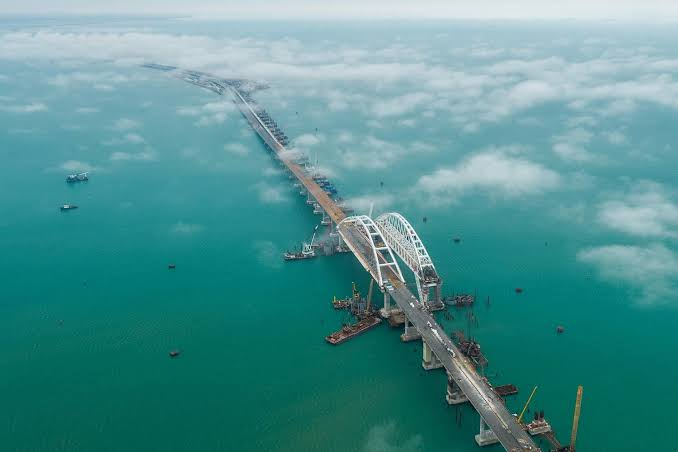
In January 2015, Russia named S.G.M. Group (known in Russia as Stroygazmontazh), a company linked to Putin associate Arkady Rotenberg, as general contractor without a standard open tender. The state contract was valued at roughly 222 billion rubles (about $3.8 billion at the time), with total costs approaching 228 billion rubles under the federal programme for Crimea’s socio-economic development. Construction of the parallel four-lane road and double-track rail sections, spanning nearly 19 kilometres via Tuzla Island, began in February 2016. The most complex element was the 270-metre navigation arches providing a 45-metre clearance for shipping. Putin personally drove a Kamaz truck across the road section at its ceremonial opening on 15 May 2018. The rail section opened in December 2019, with freight services following in mid-2020. Foreign firms from the Netherlands and Germany supplied equipment and technical assistance in violation of EU sanctions; several later faced fines and settlements.
For Moscow, the bridge became both a logistical artery and a high-profile symbol of the annexation. Putin called it a “miracle” and proof of Crimea’s “reunification” with Russia. After the full-scale invasion, it served as a key route for transporting troops, equipment, fuel, and ammunition to Russian forces in southern Ukraine and on the peninsula. Its military importance later declined as Ukrainian strikes and alternative land corridors reduced its share of cargo traffic, yet it remained strategically sensitive because of its proximity to the Black Sea Fleet base in Sevastopol and its role in regional maritime logistics. Russia repeatedly reinforced air defences and barriers around the structure after each attack.
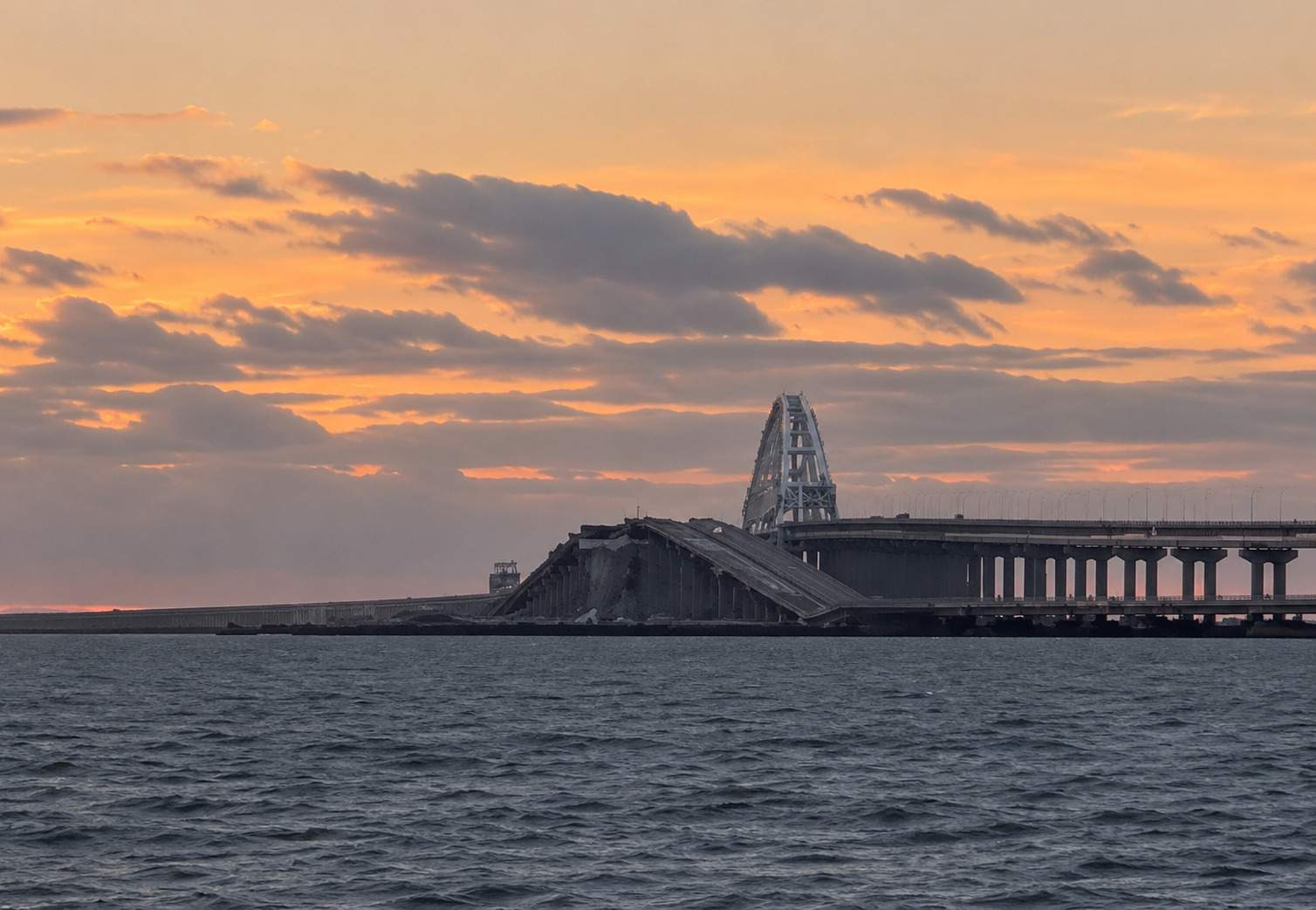
Ukrainian forces have successfully struck the bridge at least five times. The first major attack on 8 October 2022 used a truck bomb that ignited fuel tankers and destroyed sections of the road deck, killing four. In July 2023, Sea Baby naval drones damaged the roadway. A June 2025 underwater mining operation by the SBU damaged support pillars. On the nights of 16 and 17 November 2026, successive strikes deformed one arch and then caused the main road arch and span over the shipping channel to collapse into the water, blocking navigation and leaving the crossing in its most severe condition since the full-scale war began.