

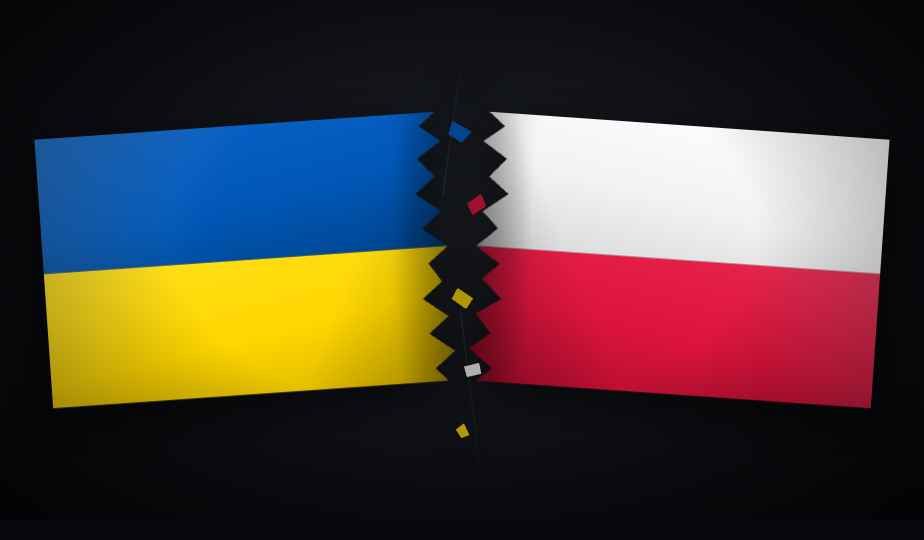
Friendship
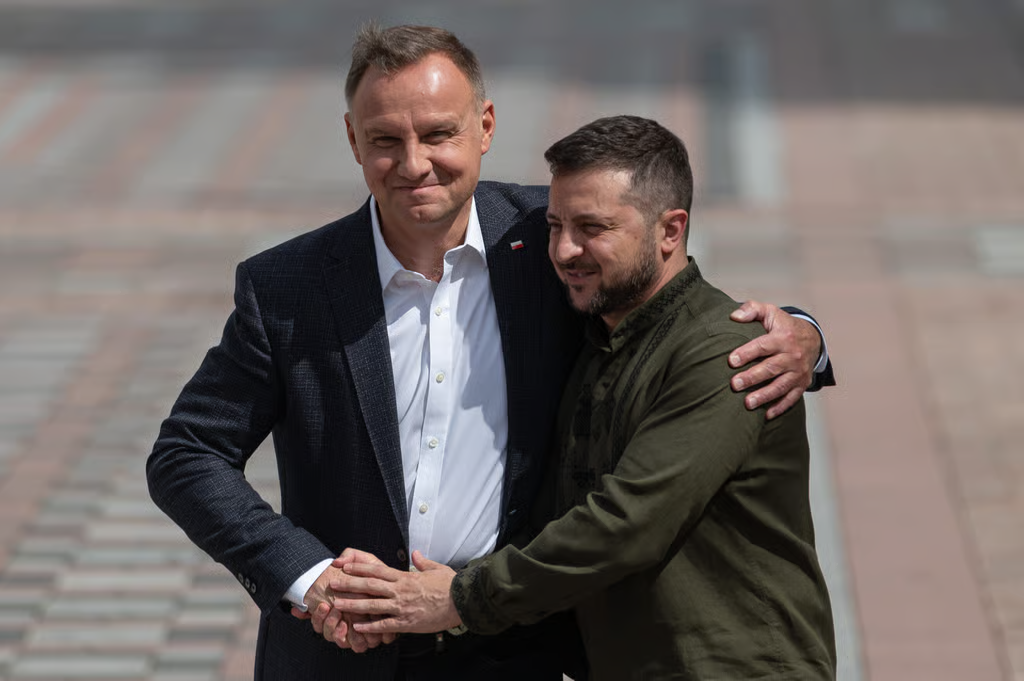
The year 2022 marked the peak of Polish-Ukrainian friendship, bringing the two nations closer than ever before. United by a common enemy and shared historical trauma from Russian aggression, Poland and Ukraine experienced an unprecedented level of solidarity. Frequent mutual visits between Polish President Andrzej Duda and Ukrainian President Volodymyr Zelensky, highlighted by iconic images of the two leaders warmly embracing, captured global attention. Poland opened its borders to hundreds of thousands of Ukrainian refugees, became Europe’s primary hub for military aid to Ukraine, and Duda emerged as one of Kyiv’s strongest advocates in both the EU and NATO. This remarkable relationship was built not only on strategic interests but on genuine emotions, deep solidarity, and a common fear of the Russian threat.
First Cracks: Economics vs. Emotions, year 2023
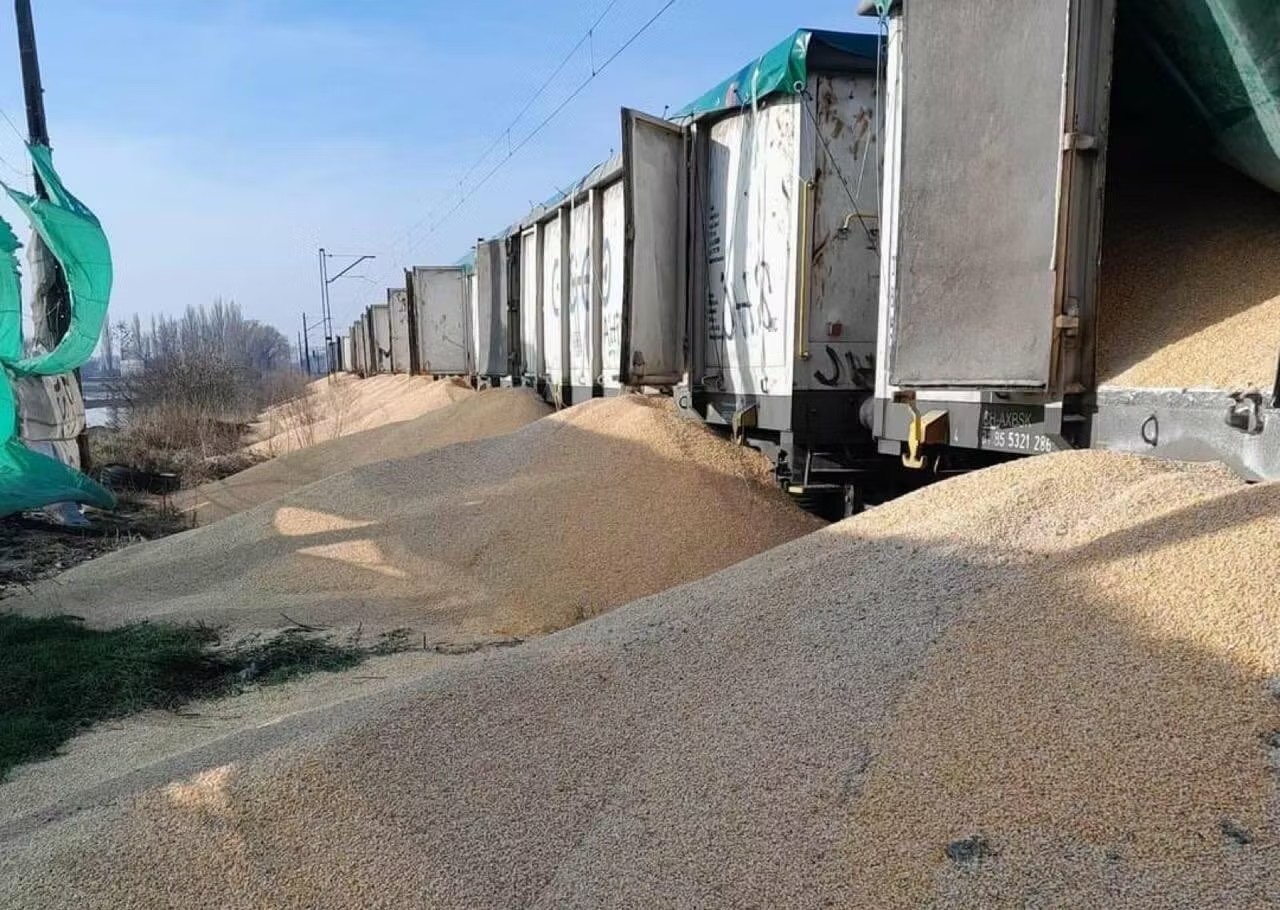
However, the wave of euphoria that defined Polish-Ukrainian relations in 2022 began to fade in 2023 as Polish national interests moved to the forefront. The grain crisis became a major turning point. Poland had generously opened its territory as a transit route for Ukrainian grain after Russia blocked Ukraine’s Black Sea ports. Yet when Ukrainian grain flooded the Polish market, it triggered strong discontent among local farmers. Polish protesters blocked border crossings, dumped Ukrainian grain from trains onto railway tracks, and staged dramatic demonstrations. For Ukrainians, grain is not merely a commodity — it is a painful symbol of national survival, especially in light of the Holodomor famine engineered by the Soviet Union. The situation escalated when Mateusz Morawiecki’s PiS government unilaterally imposed an embargo on Ukrainian grain, significantly cooling the previously warm bilateral relations.
Political reset in Warsaw, end of 2023 – 2024
The political change in Warsaw in late 2023 brought a new pragmatism to Polish-Ukrainian relations. After Donald Tusk and his coalition came to power, the previous emotional solidarity gradually gave way to a more calculated approach focused on Polish national interests. While Tusk continued to express strong political support for Ukraine, his government clearly prioritized the interests of Polish businesses and farmers. Border blockades by Polish protesters persisted, and Tusk explicitly stated that there would be no concessions on sensitive market issues, particularly regarding Ukrainian grain. As a result, bilateral relations shifted from the peak of emotional solidarity seen in 2022 to a new phase defined by “pure pragmatism.”
Historical memory and new disputes 2024 – 2025
However, old historical grievances have resurfaced and begun to strain relations. Polish politicians, including Defense Minister Władysław Kosiniak-Kamysz, have openly linked Ukraine’s European integration to progress on sensitive historical issues — particularly the exhumation of victims of the Volyn tragedy. Polish MEPs have pushed to include the Volyn events and the activities of the Ukrainian Insurgent Army (UPA) in the European Parliament’s official report on Ukraine’s EU accession progress. This has forced Brussels, which previously viewed the issue as a purely bilateral dispute, to address the historical conflict as part of the EU enlargement process. Warsaw accuses Kyiv of deliberately delaying full exhumations, despite Ukraine issuing targeted permits (such as in Puzhniky). In response, Ukrainian officials point out that Poland has still not fulfilled former President Andrzej Duda’s promise to restore the desecrated graves of UPA fighters on Mount Monastyr.
Karol Nawrocki: Consolidating the conservative course 2025 – 2026
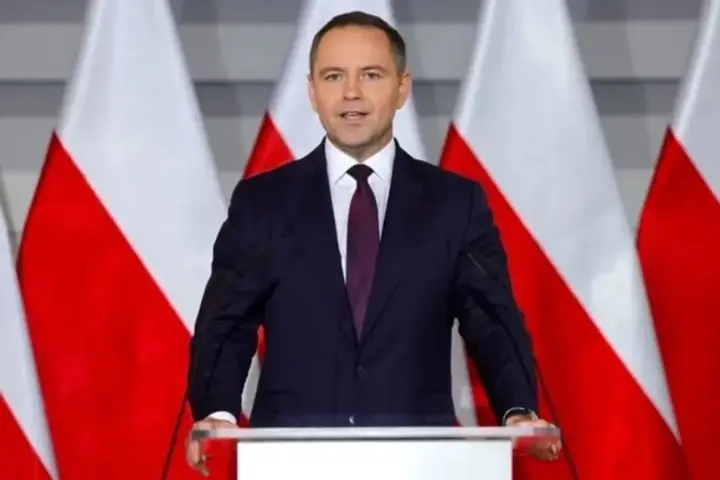
The election of Karol Nawrocki, a right-wing politician and former head of the Institute of National Remembrance (IPN), as President of Poland marked a significant shift in Polish-Ukrainian relations. With Andrzej Duda’s departure, the era of warm embraces and emotional “brotherhood” came to an end. Nawrocki’s rise has cemented Warsaw’s firm and uncompromising position on historical issues. Relations have transitioned from the peak of solidarity seen in 2022 to cold, pragmatic, and often tense negotiations between two neighbors, where each side firmly defends its national interests and historical narrative.
The situation further deteriorated after a scandal involving the naming of the local center of special operations "Pivnich" of the Armed Forces of Ukraine after "Names of Heroes of the UPA". President Nawrocki responded by revoking the Order of the White Eagle — Poland’s highest state award — previously granted to Ukrainian figures. This move was followed by former Polish presidents who also returned their orders. Polish politicians, including Jarosław Kaczyński and Mateusz Morawiecki, have repeatedly stated that “Ukraine must choose — either Bandera or Europe.” Against this backdrop, incidents of harassment against Ukrainians in Poland, including bullying of Ukrainian children in schools, have increased, while Polish officials, including Nawrocki, continue to frequently raise the issue of the Volyn massacre.
Conclusion
Despite the cooling of relations, Polish-Ukrainian ties have not been completely ruined. Poland remains Ukraine’s important strategic rear, providing consistent military, logistical, and political support. However, the emotional brotherhood of 2022 has been replaced by cold geopolitical pragmatism. The uncompromising stance of Polish right-wing conservatives and President Karol Nawrocki on historical issues is objectively playing along with the Kremlin’s propaganda machine.
For years, Moscow has promoted narratives about an “inevitable Polish-Ukrainian clash over history” and “ungrateful Ukrainians.” Radical steps by Warsaw — such as revoking state awards and issuing ultimatums — fit perfectly into Russian propaganda, allowing it to claim that “even Ukraine’s closest ally has turned its back.”
By prioritizing 80-year-old historical grievances over current security challenges, Polish conservatives risk weakening NATO’s eastern flank. The emerging split between Kyiv and Warsaw demoralizes Western allies and sets a dangerous precedent: that the European integration of a country at war can be blocked by disputes over military units names and historical monuments.
Historical note
Volyn massacre
The Volyn Massacre, also known as the Volyn Tragedy, refers to the mass killings of Polish civilians carried out by the Ukrainian Insurgent Army (UPA) and Organization of Ukrainian Nationalists (OUN-B) in 1943–1944, primarily in the Volyn region. During the summer and autumn of 1943, Ukrainian nationalist forces launched a coordinated campaign of ethnic cleansing against the Polish population, resulting in the deaths of an estimated 50,000 to 100,000 Poles, including women and children. Entire villages were burned, and civilians were killed with extreme brutality. While Polish retaliatory actions against Ukrainian civilians also occurred, they were significantly smaller in scale. The Volyn Massacre remains one of the most painful and divisive historical issues in Polish-Ukrainian relations to this day.
Ukrainian Insurgent Army (UPA)
The Ukrainian Insurgent Army (UPA) was a Ukrainian nationalist paramilitary and later partisan organization formed in 1942 during World War II. It fought primarily against Soviet forces, but also against Nazi German occupiers and Polish civilians. The UPA is best known for its role in the Volyn Massacre of 1943–1944, during which it carried out large-scale ethnic cleansing against the Polish population in Volyn and Eastern Galicia, resulting in the deaths of tens of thousands of Poles. In Ukraine, the UPA is viewed by many as a heroic liberation movement that fought for Ukrainian independence against both Nazi Germany and the Soviet Union. In Poland, however, it is widely regarded as a terrorist organization responsible for war crimes and mass murder of Polish civilians. The legacy of the UPA remains one of the most contentious issues in Polish-Ukrainian historical relations.
Stepan Bandera
Stepan Bandera (1909–1959) was a Ukrainian nationalist politician and one of the most controversial figures in 20th-century Ukrainian history. He was the leader of the radical faction of the Organization of Ukrainian Nationalists (OUN-B) and became a symbol of the struggle for Ukrainian independence. Bandera was imprisoned by Poland in the 1930s, spent time in Nazi concentration camps, and was later assassinated by a KGB agent (a Ukrainian man) in Munich in 1959. In Ukraine, particularly in the western regions, he is widely revered as a national hero who fought against Soviet and Nazi occupation. However, in Poland, Russia, and among some Jewish communities, Bandera is strongly condemned because factions of the OUN under his influence were involved in collaboration with Nazi Germany at the beginning of the war and in the ethnic cleansing of Poles during the Volyn Massacre. His legacy remains deeply divisive and continues to influence contemporary Polish-Ukrainian relations.