
Four years of the full-scale war. Years of resistance and battle for the future
Ukraine has been demonstrating its resilience against Russia for 4 years of full-scale war

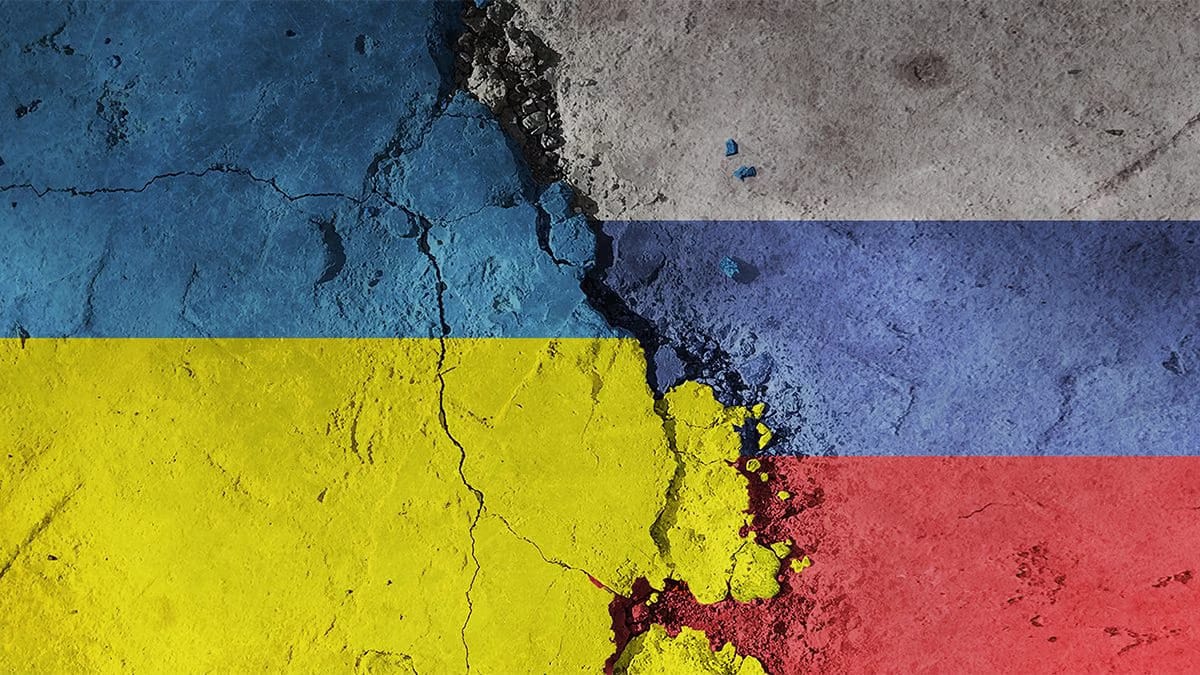
February 24 marks four years since Russia launched the full-scale invasion of Ukraine. Four years of relentless aggression, denial of Ukraine's existence, and countless war crimes. What began as a swift attempt to break Ukraine's independence turned into the longest-lasting war conflict in Europe since World War II. Russian confidence in a brief success led Ukraine to reveal its unbreakable spirit and the enduring power of the nation. The four-year milestone is a painful milestone that left behind an enormous amount of grief, ache, lost lives, and broken dreams. Vladimir Putin's maniacal zeal to restore the glory of the Russian Empire and the so-called greatness of the Soviet Union irreversibly changed world geopolitics, and trust in the North Atlantic Alliance, and proved that the world has changed forever.
In this article, I would like to revisit the beginning of the war, key points of the conflict, and analyze the ongoing peace deal process.
Diplomatic crisis
Before the first shots were fired, Russia orchestrated a massive military mobilization along Ukraine’s borders. 150 thousand troops were deployed near the Ukrainian borders in Russia and Belarus under the guise of “training exercises.” Russia issued what was later called by diplomats a “maximalist ultimatum.” It was in the form of two draft treaties. One for the USA and one for NATO - that essentially demanded to reshape the post-Cold War European Security architecture.
Russia's demands were focused on three major non-negotiable aspects: 1. Russia demanded a legally binding guarantee that Ukraine, Georgia, or any other former soviet country will never join NATO; 2. Moscow insisted that NATO withdraw all troops and military infrastructure from countries that joined the alliance after May 1997, which would have deprived Eastern European countries (Poland Baltics and the Balkans) of the “security umbrella”; 3. A ban on any NATO military activity in Ukraine, Eastern Europe, the South Caucasus, and Central Asia.
Other strategic demands included: a ban on deploying intermediate-range and shorter-range missiles in areas where they could strike the other party’s territory, a requirement that all nuclear weapons be deployed only within national territories (forcing the U.S. to remove its nuclear sharing assets from Europe), Restriction on heavy bombers and surface warships to operate in international waters/airspace if they were within striking distance of the other side.
In January 2022, the USA and NATO provided written responses in which they were open to some dialogue, but rejected the core “ultimatum” points. Many analysts agreed that Russia used the demands as a smokescreen to begin the invasion, knowing that the demands were unacceptable to the West.
The invasion
The “Blitzkrieg” attempt began in the early morning on February 24. Russia launched an assault on Ukraine from multiple directions, focusing on taking over Kyiv. Cruise and ballistic missile strikes were used against Ukrainian airfields, command centers, and radar systems.
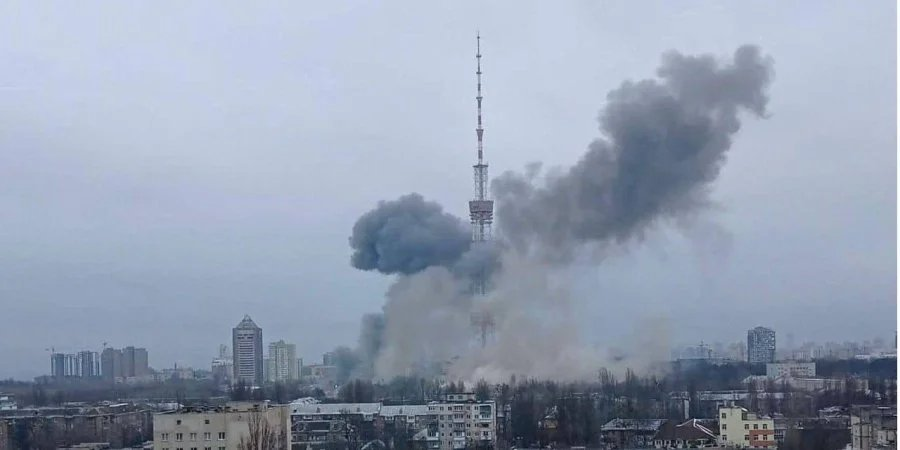
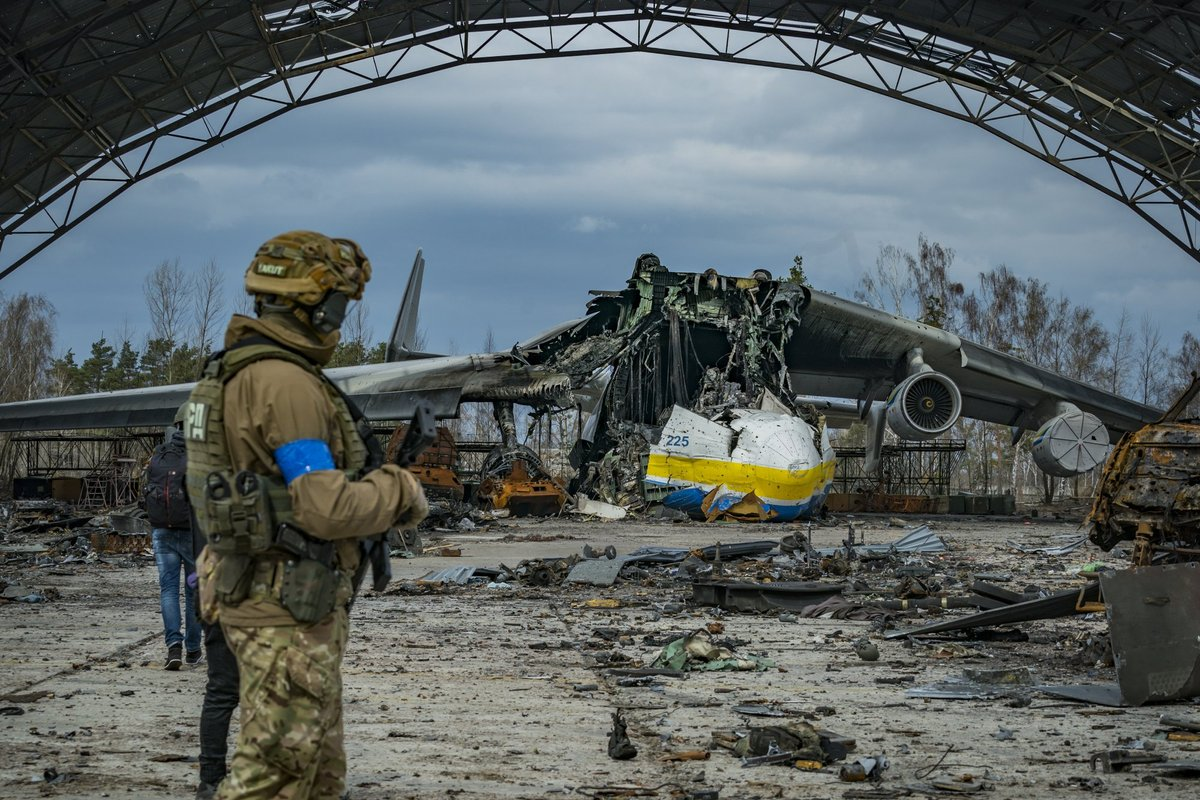
Russian elite airborne troops attempted to seize the Hostomel (Antonov) Airport, just 12 miles (ca. 19 km) from Kyiv, to create an airbridge for heavy equipment. Initially, Russian paratroopers successfully landed under a hail of fire Ukrainian National Guard conscripts to retreat and raising the Russian flag by midday. However, the “blitzkrieg” began to unravel as Ukrainian forces launched a fierce evening counteroffensive backed by heavy artillery fire. The relentless shelling damaged the airport's runway and made it useless for 18 massive transport planes waiting in Russia to deliver the main invasion force.
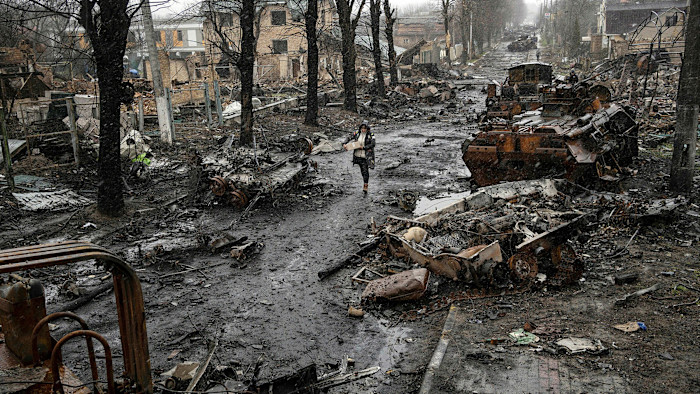
Ground forces entered from the North (towards Kyiv), East (towards Kharkiv), and South (from Crimea). Russia lost the momentum due to using outdated tactics from WWII times. Russian columns quickly ran out of fuel and food. A 40-mile-long convoy stalled on the road to Kyiv. Ukrainian forces used Western-supplied systems like Javelin and NLAW to devastate Russian armor. However, sustaing a colossal casualties in troops and armor, Russians managed to occupy settlements near Kyiv that, later after their withdrawal, will shake the world by demonstrating the atrocities in Bucha and Irpin.
In the south, Russians managed to advance from occupied Crimea and take over Kherson Oblast, a significant part of Zaporizhzhia Oblast, including the largest nuclear power plant in Europe.
The siege of Mariupol became one of the most intense and dramatic events of the beginning of the war. It was one of the biggest cities of the Donbas region that remained under Ukrainian control since 2014-2015. The siege was a brutal 86-day military campaign that began on February 24, 2022, and resulted in the near-total destruction of the strategic port city. Within days of the invasion, Russian forces completely encircled the city, cutting off all electricity, water, and heating for hundreds of thousands of trapped civilians. The siege was marked by devastating attacks on civilian infrastructure, most notably the bombing of a maternity hospital and a drama theater used as a shelter. The resistance officially ended on May 20, 2022, when the last soldiers were ordered to surrender, leaving the city under full Russian occupation. The fall of Mariupol gave Russia a “land bridge” from Russia to Crimea.
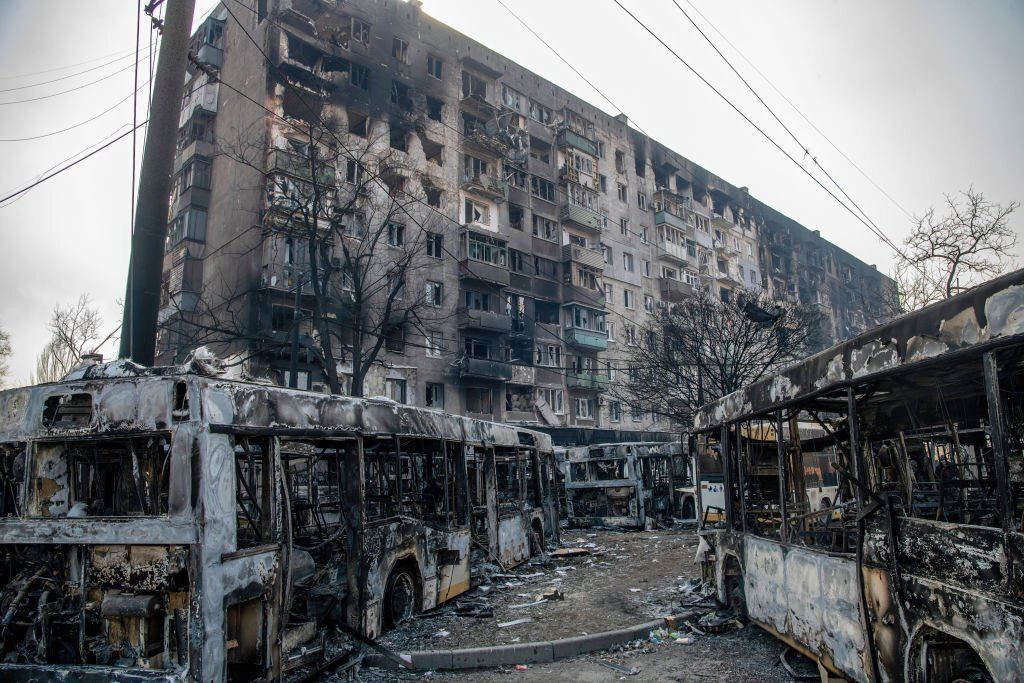
In the northeast, Russians took over a big chunk of Kharkiv oblast, where, later, plenty of events of war crimes were also uncovered.
At the end of March 2022, Russian forces had to withdraw from territories near Kyiv; this event symbolized the collapse of their original plans to capture the capital and establish their puppet government.
Later, during 2022, Ukrainian forces pushed Russians out from the northeast territories in Kharkiv Oblast and liberated half of Kherson Oblast, including the city of Kherson, which was taken in the first days of the invasion.
Key points of the full-scale invasion
2022
After failing to take Kyiv, Russia redeployed its forces to the East to focus on completely taking over the Donetsk and Luhansk regions. After massive artillery shelling, in June -July 2022, Russian forces captured Sievierodonetsk and Lysychansk. It marked nearly total control over the Luhansk region.
In September 2022, Russia declared the annexation of four regions (Donetsk, Luhansk, Kherson, and Zaporizhzhia) by conducting fake referendums, despite not fully controlling them.
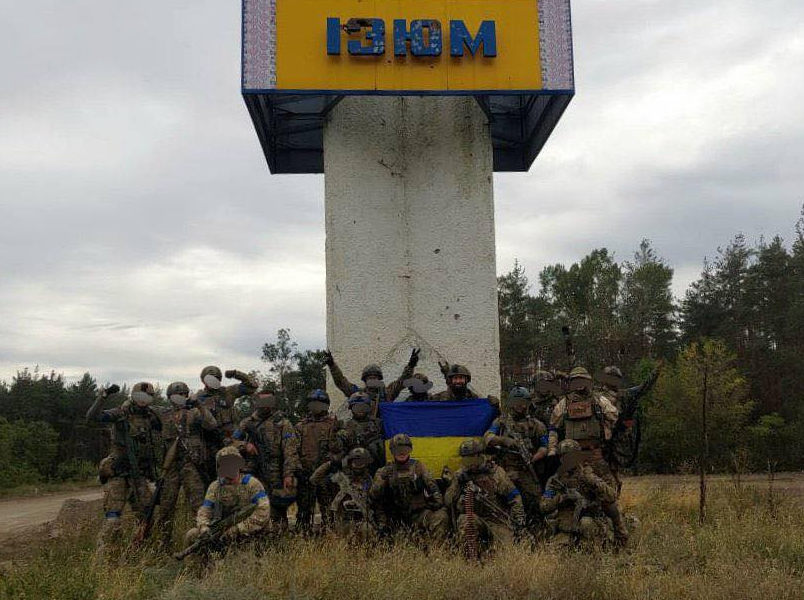
In the fall of 2022, Ukraine initiated two stunning counteroffensives that dramatically shifted the momentum of the war. The first, known as the Kharkiv Breakthrough in September 2022, caught Russian forces completely off guard: in a rapid and well-coordinated operation, Ukrainian troops collapsed the overstretched enemy frontline in the northeast, liberating more than 12,000 square kilometers of territory—including the strategically important towns of Izyum and Kupiansk — within days.
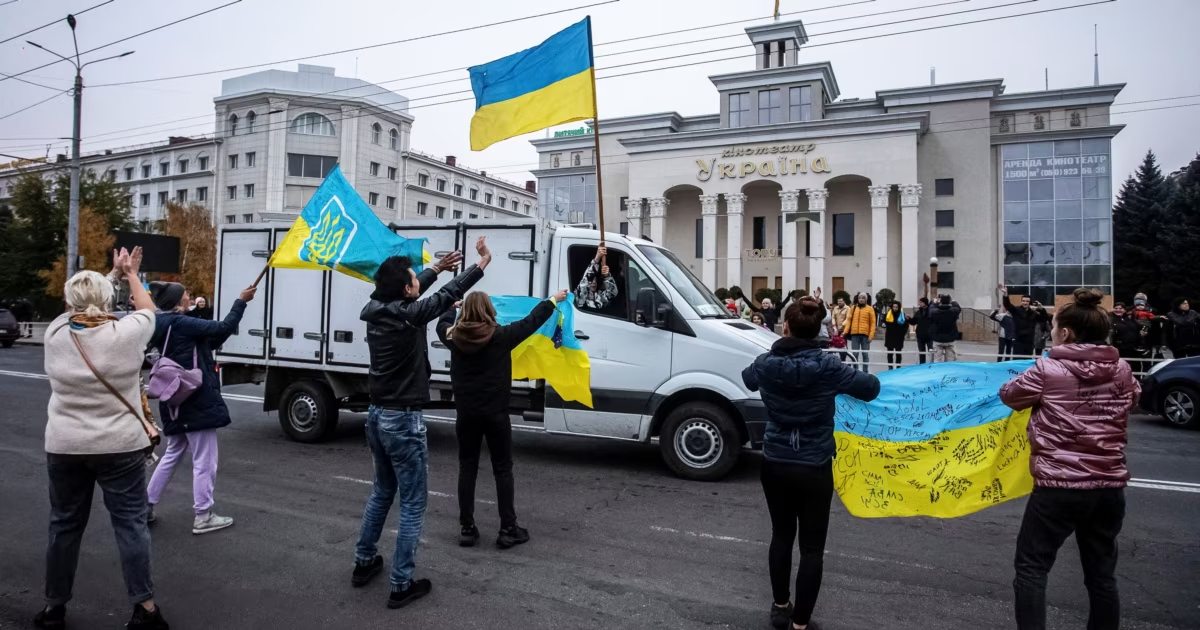
The second, the Liberation of Kherson, culminating in November 2022, forced Russian troops to withdraw from the only regional capital they had captured since February, retreating to the eastern bank of the Dnipro River after months of grinding Ukrainian pressure and logistical strangulation. Together, these “Lightning” offensives—named for their speed and surprise—marked one of the most successful periods of Ukrainian military operations in the entire war, liberating vast areas and boosting national morale at a critical moment.
In October 2022, Russia launched systematic attacks on Ukraine`s power system, attempting to plunge the population into darkness and freeze to submission. Such energy destruction campaigns Russia will use every winter in the following years of the war.
2023
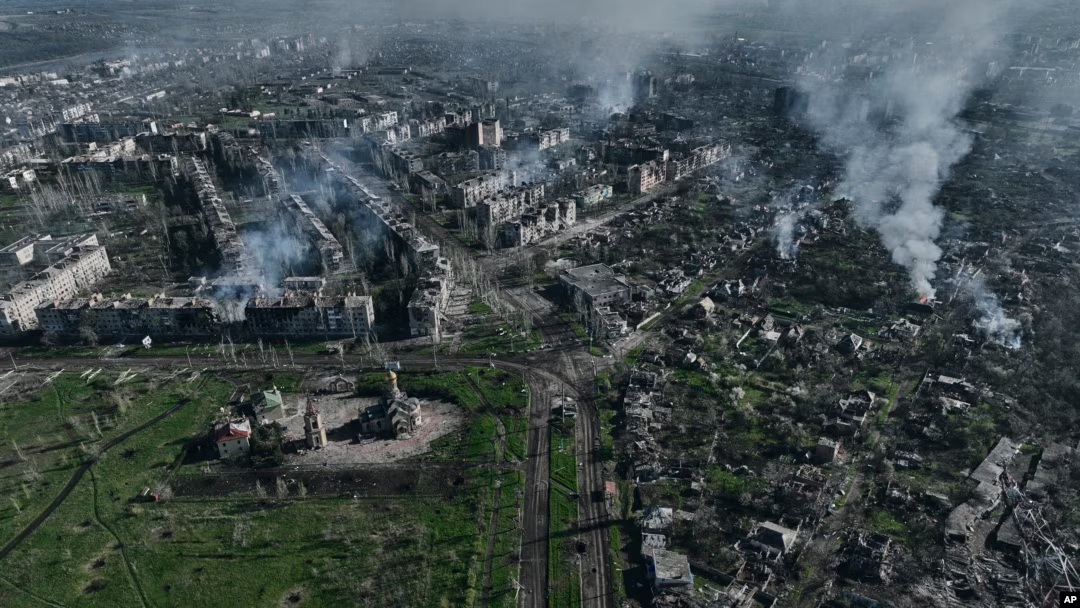
In 2023, the war slowed into trench warfare reminiscent of WWI. Howere some major event happened at the battlefield. Russia managed to capture the key town of Bakhmut after 10 month assault, sustaining enormous cassualties. Ukrainian forces launched a counteroffensive in early June 2023 aimed to break through Russian defensive lines in southern Ukraine (primarily Zaporizhzhia and western Donetsk oblasts) and achieve significant territorial gains, but it ultimately failed to meet expectations. Russia maintained large-scale missile and drone attacks targeting critical infrastructure and causing casualties among civilians.
After months of preparation and with substantial Western-supplied equipment (tanks, infantry fighting vehicles, artillery, and long-range systems), Ukrainian forces encountered extremely well-prepared Russian defenses — dense minefields, layered trenches, anti-tank obstacles, and heavy artillery/drone coverage. Progress was painfully slow and costly: by late summer, Ukraine had advanced only 5–10 km in the most contested sectors iberating a few villages but failing to reach operational depth or break the land bridge to Crimea. The operation cost thousands of Ukrainian troops and a large portion of newly supplied Western armor, while Russia retained control of key territory and continued to fortify its positions. The stalled counteroffensive shifted momentum back toward attritional warfare, lowered Western optimism about a quick Ukrainian victory, significantly affected the spirit of Ukrainians, and reinforced the perception of a protracted, grinding conflict.
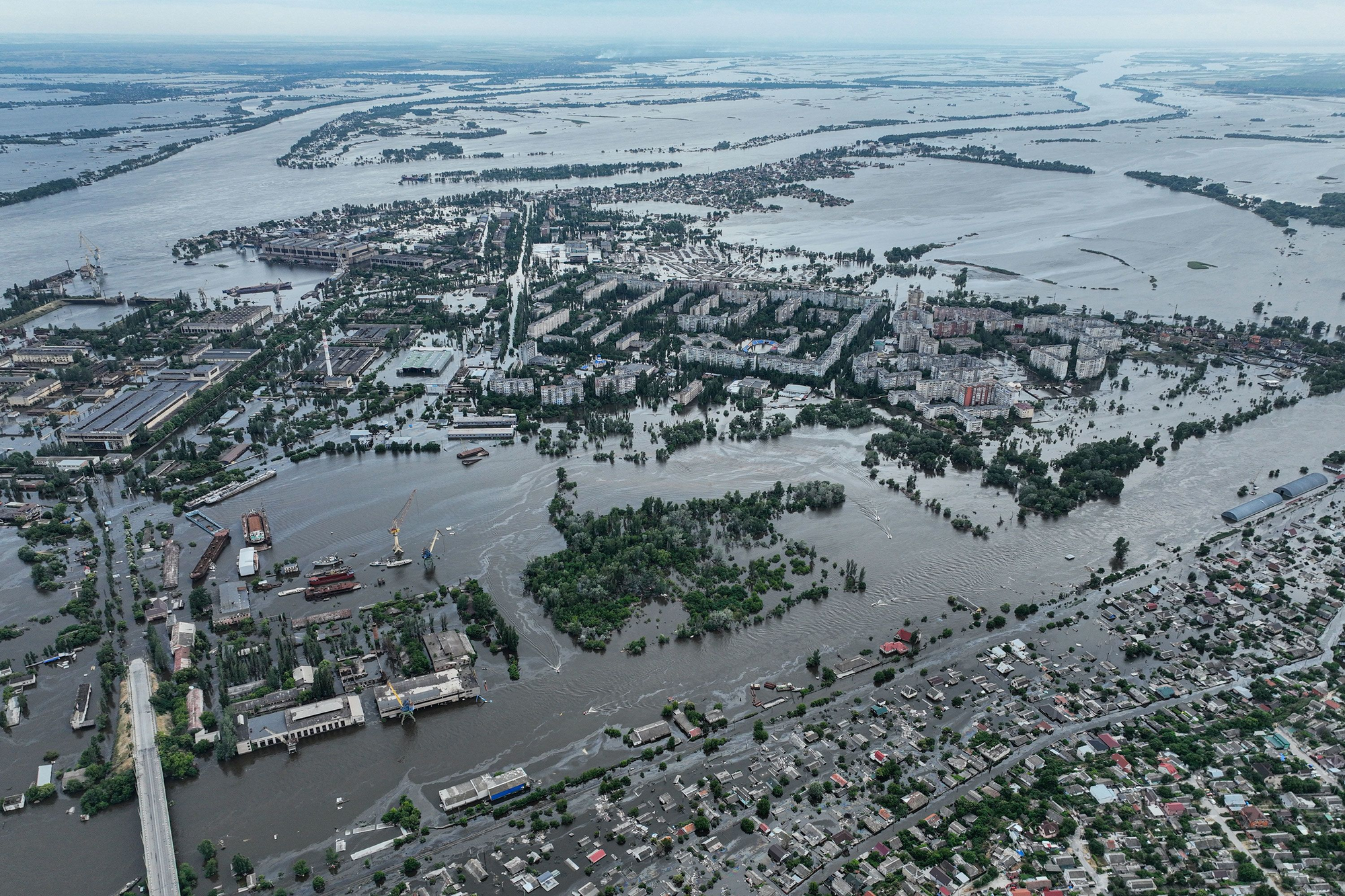
One of the biggest Russian war crimes that led to a humanitarian disaster was the destruction of the Kahovka dam in the South of Ukraine. On the night of June 5–6, Russian forces blew up the dam, unleashing a catastrophic flood that devastated the Kherson region. The breach released an estimated 18 cubic kilometers of water, flooding dozens of settlements downstream, including parts of Kherson city, submerging farmland, and contaminating vast areas with industrial pollutants, oil, and mines. Ukrainian authorities and international experts, including the UN and independent investigations, concluded that the dam was deliberately blown up from inside Russian-controlled territory, with evidence pointing to an intentional act by Russian forces to disrupt Ukrainian counteroffensive plans, flood defensive positions, and create a new natural barrier along the Dnipro River.
The flood displaced tens of thousands of people, destroyed homes, killed livestock, ruined crops over thousands of hectares, and contaminated drinking water supplies for months. Russia denied responsibility, claiming Ukraine carried out the attack, but no credible evidence has supported this version.
In 2023, Russian troops captured, according to various estimates, from 487 to 540 square km ( 188 to 208 square miles) of territory of Ukraine.
2024
In 2024, the war in Ukraine mainly settled into a prolonged war of attrition, with Russia making slow but steady territorial gains in eastern Ukraine (especially Donetsk Oblast) through brutal, high-casualty assaults, while Ukraine focused on holding defensive lines, conducting deep strikes into Russian rear areas, and preserving its forces for future operations. Russia kept up constant large-scale aerial attacks across Ukraine.
In February 2024, after months of “meat wave” assaults, Russian forces captured the strategic stronghold of the town of Avdiivka in Donetsk oblast.
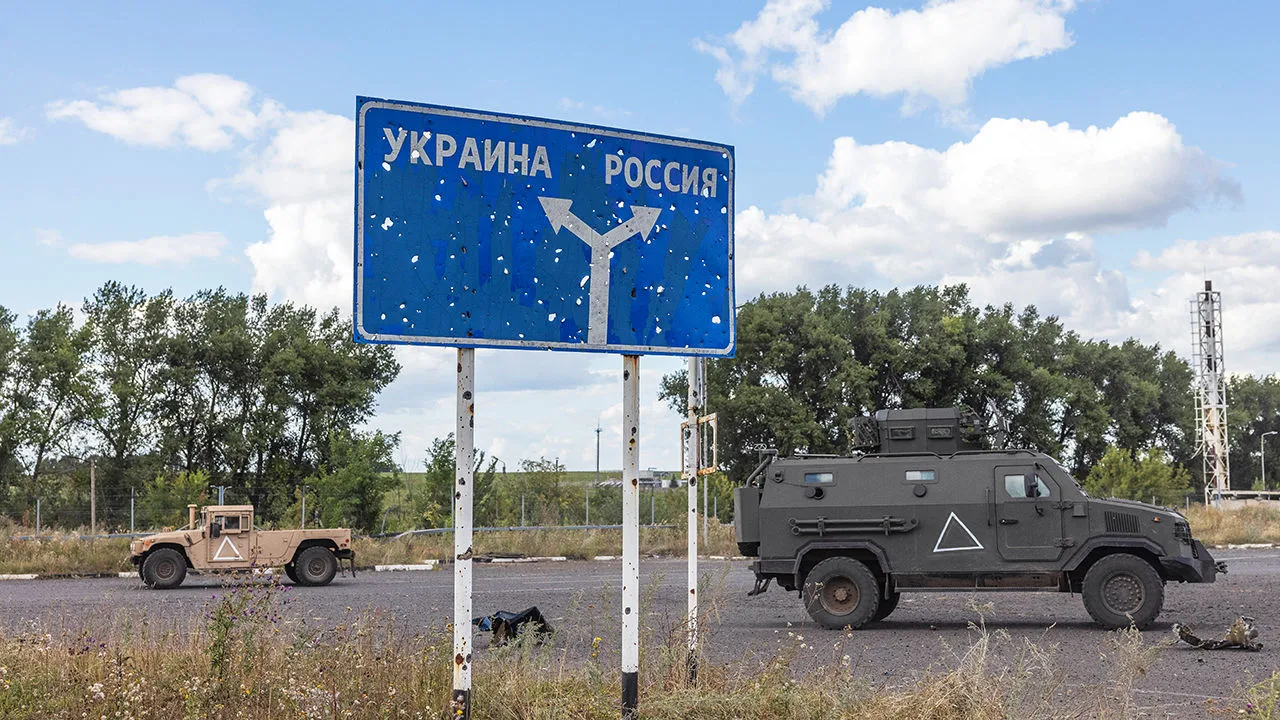
In August, Ukrainian forces launched a surprise ground invasion into Russia`s territory, which was famously known as the Kursk Incursion. This operation marked a seismic shift in the war's geography as Ukraine launched a daring, high-stakes offensive into Russian sovereign territory. By achieving total operational surprise, Ukrainian forces seized over 1,000 square kilometers and dozens of settlements, including the strategic town of Sudzha, within the first few weeks. This maneuver aimed to achieve multiple strategic goals: forcing the Kremlin to divert elite units away from the grueling Donbas front, creating a “buffer zone” to prevent Russian shelling of the Sumy region, and securing a “land fund” of Russian territory to use as leverage in future peace negotiations.
However, after a year, Ukrainian troops could no longer hold the captured territories due to several Russian counteroffensives and were forced to withdraw, ending the operation with limited strategic gains but a significant morale impact on Russia.
In 2024, Russian troops captured, according to various estimates, from 3,300 to 4,168 square km (1 275 to 1609 square miles) of the territory of Ukraine. This is about 7 times more than for the entire year 2023.
2025
In 2025, Russia continued to use creeping-occupation tactics, mainly targeting attempts to capture the Donbas region. Unlike previous years of the war, in 2025, the war continued against a backdrop of intense peace negotiations.
The town of Pokrovsk key logistics hub, became one of the main goals of Russian forces in the Donetsk oblast. After a brutal months-long campaign, Russian troops entered the city in September 2025, controlling approximately 67% of the city by the year's end.
Russia adopted a “buffer zone” strategy, attempting to seize territory along the northern borders of Sumy and Kharkiv to push Ukrainian artillery out of range of Russian soil.
The famous operation of Ukraine's army in Kursk came to an end in March. After the well-coordinated actions of Russian forces, which reportedly used “infiltration” tactics through underground infrastructure, Ukrainian troops gradually left the territory of Russia. Interesting detail: Russians had to involve North Korean troops to regain their land in the Kursk region.
The war evolved into a contest of industrial production and electronic warfare. Russia began mass-producing drones controlled by fiber-optic cables, making them immune to Ukrainian signal jamming and allowing for high-precision strikes up to 20 km behind the lines.
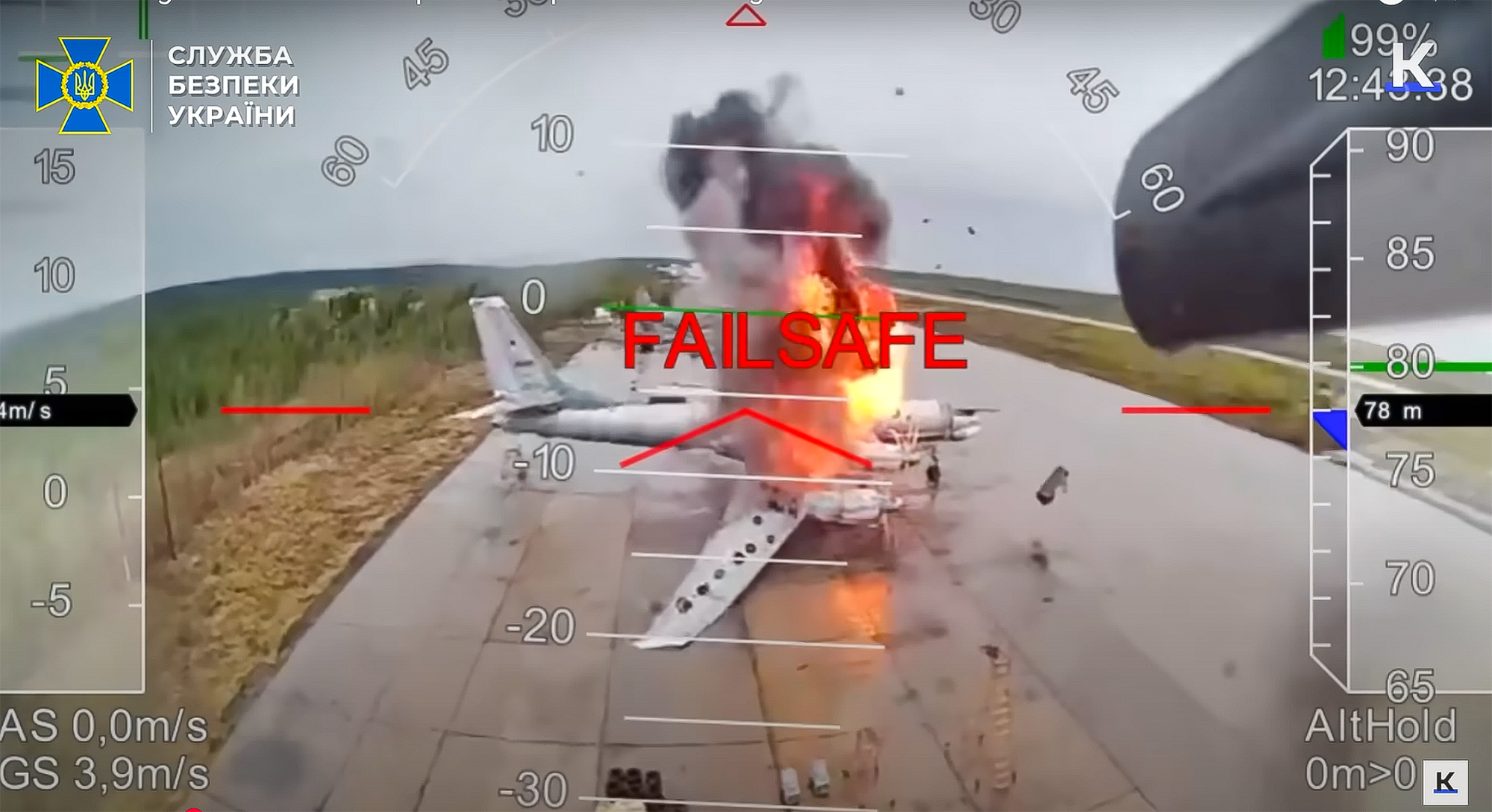
On June 1, Ukraine’s Security Service (SBU) executed a bold deep-strike operation into the Russian territory that made history as Operation Spiderweb. The operation targeted four major Russian airbases simultaneously—Engels-2, Dyagilevo, Olenya, and Belaya—using 117 long-range kamikaze drones launched from trucks on Russian territory owned by Russian shipping companies, while the truck drivers had no idea what was going on. The strikes hit strategic bomber fleets (Tu-95, Tu-22M3, Tu-160) and support aircraft used for launching cruise missiles against Ukraine, reportedly destroying or damaging at least 41 planes and causing secondary explosions at ammunition and fuel depots. Described by Ukrainian sources as the largest single-day drone attack on Russian military aviation since the invasion began, the operation demonstrated advanced Ukrainian long-range strike capabilities and significantly raised the cost of Russia’s air campaign.
When the cold season set in at the end of the year, Russia intensified air attacks on Ukrainian power facilities, which caused a critical situation in many cities, with a situation close to a humanitarian catastrophe in Kyiv, where thousands of households were left without heating and electricity.
In 2025, Russia captured 4669 square kilometers (1802,711 square miles) of Ukrainian territory, leaving behind significant casualties among civilians due to large-scale aerial attacks.
Negotiation process
The first attempts to solve this war in a diplomatic way were shortly after the invasion in late March 2022. Peace talks were held in Istanbul centered on a proposed “Treaty on Permanent Neutrality and Security Guarantees for Ukraine.” Within this framework, Ukraine expressed a willingness to adopt a permanently neutral, non-nuclear status and drop its bid for NATO membership in exchange for legally binding security guarantees from a group of guarantor nations (including the USA, UK, and China). This group would function similarly to NATO’s Article V. The “Istanbul Communiqué” also suggested a 15-year consultation period to resolve the status of Crimea and a meeting between Presidents Zelensky and Putin to finalize the borders of the Donbas.
However, the momentum of the peace negotiations collapsed when, in early April, following the withdrawal of Russian forces from the Kyiv region, the discovery of mass atrocities in Bucha. This fundamentally broke trust in diplomacy and moved the Government of Ukraine toward military victory rather than diplomatic compromise. It is worth mentioning at this point the fact that Ukraine managed to withstand Russia's harsh attack and managed to make them withdraw from Kyiv, their main objective, which inspired Ukrainian spirit and created a belief that Russia can be defeated on the battlefield.
In the following years, Russia remained in diplomatic isolation. In the beginning of 2025, when Donald Trump returned to the White House as the newly elected President of the United States, he pulled Vladimir Putin out of diplomatic isolation by a phone conversation. It marked the initiation of a continuous peace deal negotiation between Russia and Ukraine, where the USA stood as mediator. The peace talks process looked like shuttle diplomacy. Ukrainian, US and Russian delegations held meetings in different countries like Saudi Arabia, Switzerland, USA (Trump's residence, Mar-a-Lago).
The Trump administration shifted U.S. policy toward freezing the conflict by proposing a twenty-year moratorium on Ukraine’s NATO membership. In exchange for this delay, Washington offered Kyiv "platinum-standard" bilateral security guarantees and continued military hardware to deter future Russian aggression. This proposal sought to address Moscow’s primary "red line" while ensuring Ukraine remained a heavily armed sovereign state. However, the plan faced significant pushback from Eastern European allies who viewed any NATO delay as a green light for future Russian expansion.
Negotiations in 2025 increasingly pivoted toward "territorial realism," which prioritized an immediate ceasefire over the restoration of Ukraine’s 1991 borders. Under this framework, the West would maintain a policy of non-recognition regarding annexed regions while recognizing actual Russian control as a temporary reality.
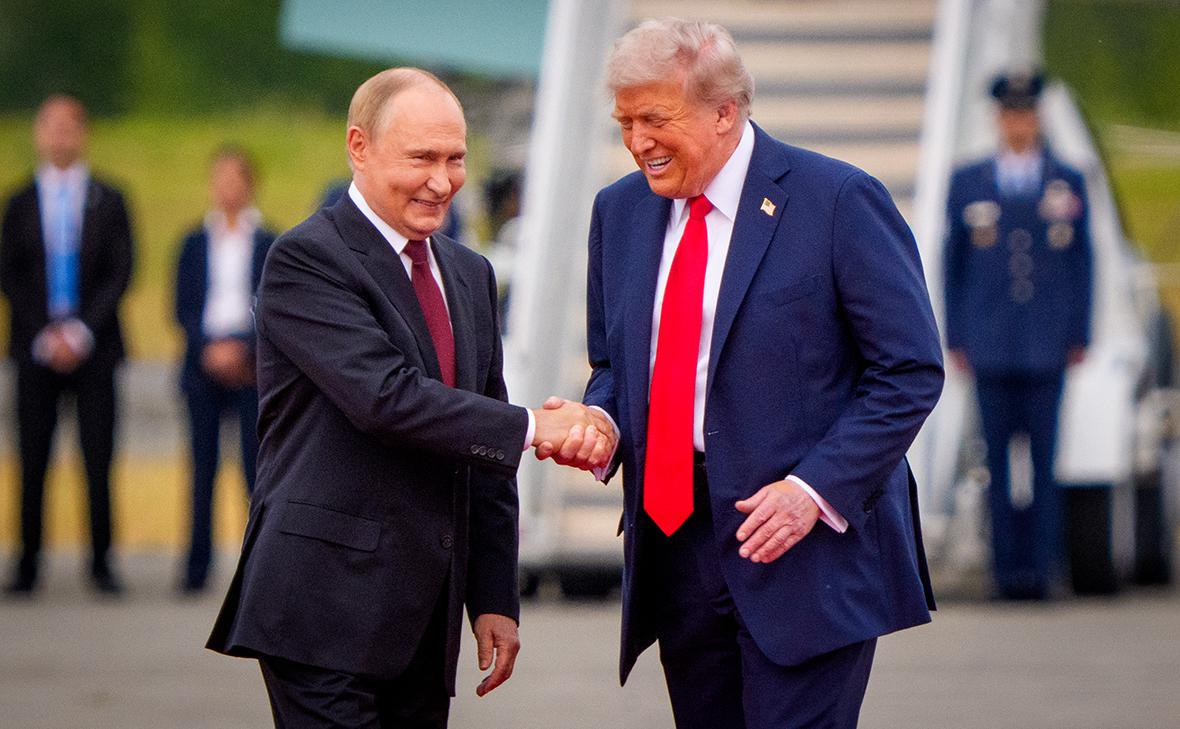
The negotiation process led to a personal meeting between Donald Trump and Vladimir Putin. In August, the two leaders held a meeting at Joint Base Elmendorf-Richardson in Alaska. It made history as the Anchorage Summit and high-stakes was an attempt to reach a "grand bargain" on neutral ground. While the summit produced striking imagery of the two leaders against a backdrop of Arctic military hardware, it failed to deliver a signed ceasefire agreement. Tensions reportedly spiked during the private sessions, with the Russian delegation refusing to commit to a specific withdrawal timeline from newly occupied zones. Despite the lack of a formal treaty, the meeting established a direct "Big Power" channel that largely sidelined the European Union's diplomatic role.
After the Anchorage Summit, the shuttle diplomacy continued. Russia highlighted its main demands that would supposedly end the war:
- Ukraine has to completely withdraw its military from the entirety of the Donetsk, Luhansk, Kherson, and Zaporizhzhia regions, including major cities Russia had never successfully captured. Moscow insisted on the full international recognition of these four regions and Crimea as sovereign Russian territory, rather than merely accepting a "freeze" at current frontlines.
- The Kremlin required a legally binding international treaty and a change to the Ukrainian constitution to permanently bar the country from ever joining NATO. Additionally, Russia demanded a total prohibition on the deployment of any NATO troops, instructors, or Western-standard long-range missile systems on Ukrainian soil.
- A major Russian demand was the holding of national Ukrainian elections within 100 days of a ceasefire, intended to challenge the legitimacy of the wartime government. Moscow sought to ensure that any future administration in Kyiv would be "friendly" to Russian interests, essentially demanding a veto over Ukraine's domestic and foreign policy leadership.
- Russia insisted on a synchronized roadmap for the immediate lifting of Western sanctions and the return of $300 billion in frozen central bank assets as a condition for peace. They also demanded that the U.S. restore Russia’s access to the dollar payment system (SWIFT) and formally invite Moscow to rejoin the G7, reverting the group back to the G8.
These demands, especially territorial concession, became the subject of fierce debate. Russian demands fundamentally contradict the Constitution of Ukraine.
Moscow`s demandon for Ukraine's permanent “neutrality” and a ban on NATO membership directly violates Article 18 of the Constitution, which states that Ukraine's foreign policy is aimed at ensuring its national interests and security through participation in European and Euro-Atlantic structures.
Recognition of occupied parts of Donetsk, Luhansk, Zaporizhzhia, and Kherson oblasts as Russian territory breaches Article 2, which declares Ukraine's territory indivisible and inviolable, and Article 134, which affirms the integrity of the Autonomous Republic of Crimea and Sevastopol as integral parts of Ukraine.
Russia's push for "denazification" and the removal of Ukraine's current government contradicts Article 5, which establishes that the people are the sole source of power, exercised directly and through elected bodies, and prohibits any seizure or usurpation of power.
These demands would force Ukraine to dismantle its democratic system and sovereignty—something no legitimate Ukrainian authority can agree to without violating the Constitution itself.
Donald Trump and his special envoy Steve Whitcoff, who represented the US delegation, described each step of the shuttle diplomacy as very productive and promising. But in reality, the negotiation process didn't have any effect on the ongoing war and didn't bring the end closer. Russia cynically used the negotiations as a backdrop for their intense military campaign directed to destroy Ukraine as a state and remove it from the world map.
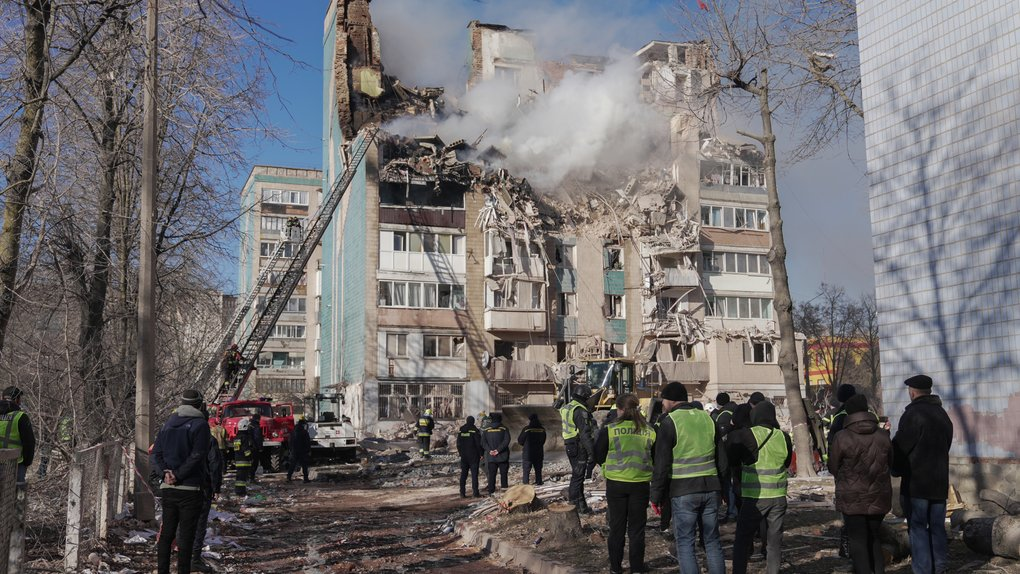
It is worth mentioning that 2025, the year of negotiations, became the deadliest year for civilians, not counting the first year of the full-scale invasion. Russia killed 2,514 and injured 12 242 civilians.
What to expect next
Ukraine's leadership has repeatedly affirmed that any agreement must preserve its sovereignty, territorial integrity, and right to pursue NATO/EU membership—positions established in the Constitution and backed by overwhelming public support. Moscow, however, continues to frame these demands as non-negotiable foundations for any ceasefire, signaling that it views the current battlefield stalemate as advantageous and is not yet ready to compromise meaningfully.
The upcoming months will unlikely bring a breakthrough. Instead, Russia will keep up with continuation of attritional warfare in the east, focusing on capturing the rest of the Donbas region, with Ukraine attempting to execute counteroffensives in the areas where it's possible. Washington will most likely increase its pressure on Ukraine to demonstrate “flexibility” (elections, referendums, or concessions).
Ukraine will increasingly lean on EU military aid packages and financial support to sustain the defense, while Russia will balance limited tactical gains with diplomatic theater to keep sanctions pressure at bay and maintain Trump's engagement without real concessions. The war will remain in a deadlock with no near-term end in sight.