


,
Venice Art Biennale's jury resigned in protest over Russian and Israeli presence just days before festival starts
The five-member jury of the Venice Biennale announced on April 30 that it would resign in protest, only a week after declaring that it would not evaluate works from countries whose leaders are wanted by the International Criminal Court for crimes against humanity.
While the jury did not directly name any countries, the statement was widely understood to refer to Russia and Israel. Russian President Vladimir Putin and Israeli Prime Minister Benjamin Netanyahu are both currently subject to ICC arrest warrants.
The resignations came one day after the European Union’s culture commissioner announced a boycott of the Biennale because of Russia’s participation.
This year’s Biennale has been marked by growing controversy over Russia’s return to the event for the first time since the start of the full-scale invasion of Ukraine in 2022. Critics have focused particularly on the Russian pavilion and its commissioner, Anastasia Karneeva, who was appointed by the Russian government and reportedly has close ties to Russia’s military-industrial sector.
On April 10, Ukraine imposed sanctions on five members of the Russian pavilion, including Karneeva. Ukrainian officials later said they were also seeking European Union visa bans against those individuals.
In a statement released on April 23, the jury said that the Biennale has a historical responsibility to connect art with the major political and humanitarian issues of the time.
“As members of the jury, we also have a responsibility towards the historical role of the Biennale as a platform that connects art to the urgencies of its time,” the statement said, adding that the group wanted to demonstrate its commitment to the defense of human rights.
Russians attacked Dnipropetrovsk Oblast nearly 50 times, on a single day: 1 killed, 22 injured
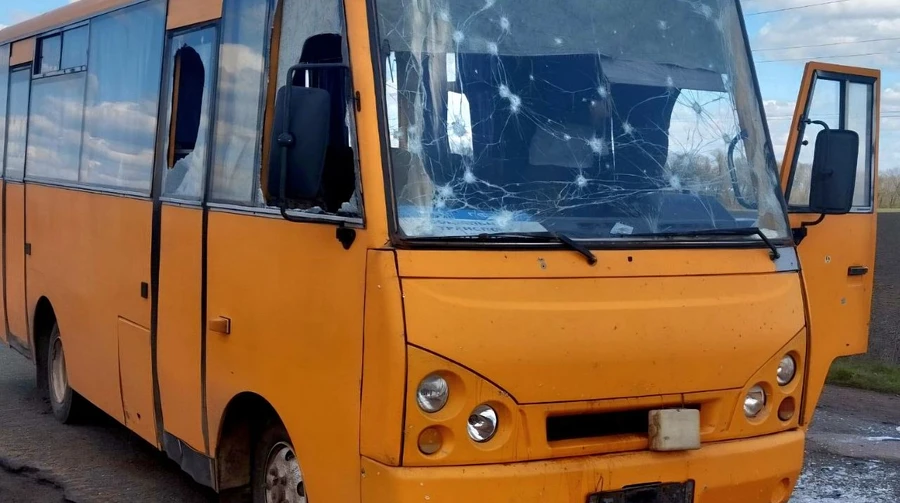
Russian occupation forces carried out nearly 50 attacks across three districts of Dnipropetrovsk Oblast on April 30, using drones and artillery strikes that killed one person and injured at least 22 others, according to regional authorities.
A woman was killed in the Dnipro district, while 18 other people were injured, seven of whom were hospitalized. Another person was wounded directly in the city of Dnipro.
The attacks sparked several fires throughout the area. Vehicles located on the grounds of a company were destroyed, and an unused building was damaged.
Russian forces also targeted Nikopol and nearby communities including Chervonohryhorivka, Marhanets, Pokrovske, and Myrove. Residential houses, a summer kitchen, a garage, and a car caught fire, while additional homes sustained damage.
Authorities also reported damage to civilian infrastructure, including an administrative building, a community arts center, a market, and a bus.
Three additional civilians were injured in the strikes: women aged 52 and 62, and an 88-year-old man. Officials said they would receive outpatient treatment.
Zelenskyy explained Putin's idea of "Victory Day ceasefire"
President Volodymyr Zelenskyy said he believes the Kremlin’s proposal for a temporary ceasefire is aimed primarily at ensuring that Russia’s annual Victory Day military parade on 9 May takes place without disruption from possible Ukrainian strikes.
Speaking in an interview with Bloomberg, Zelenskyy said Russia wants “the parade to pass calmly for a few hours” before resuming attacks afterward.
“We don't want any ceasefire to become a tactical deception by the Russian Federation,” Zelenskyy stated.
At the same time, the Ukrainian president emphasized that Kyiv supports genuine ceasefire initiatives aimed at protecting civilians and enabling prisoner exchanges.
“We always respond positively to genuine ceasefire proposals with Russia, if they exist,” he added.
The US general says that Russia is helping Iran in war
General Dan Caine, chairman of the Joint Chiefs of Staff, said during a U.S. Senate hearing that Russian leader Vladimir Putin is assisting Iran in its war effort, according to The Guardian.
Caine stated that Russia is helping Iran in its conflict with the United States, but declined to provide specific details because the hearing was public.
“There’s definitely some action there,” he said.
Republican Senator Roger Wicker, who chairs the committee, echoed the concern.
“There’s no question that Vladimir Putin’s Russia is taking serious action to undermine our efforts for success in Iran,” Wicker said.
15 million Ukrainians require mental health support amid new war-driven crisis
Ukraine’s mental health crisis is worsening as Russia’s full-scale war enters its fifth year, according to a new report released by the International Rescue Committee (IRC) on April 29.
Based on more than 5,000 psychological consultations, the IRC estimates that around 15 million people in Ukraine now need mental health support. About 60% of those seeking help are struggling with anxiety, while one in five is experiencing depression.
The report found that older adults are among the most vulnerable. Roughly 80% of people identified as needing psychological support are over the age of 40, including many over 60. According to the IRC, this age group faces heightened risks linked to isolation, limited mobility, chronic illnesses, and the loss of loved ones.
The organization said the prolonged war, combined with a difficult winter and mounting financial pressure, has intensified psychological strain across the country. Many families have reportedly been forced to cut back on essentials such as medication.
People are increasingly seeking help not only because of trauma caused by missile strikes and shelling, but also because of displacement, grief, and economic hardship.
“People continue to live with deep anxiety about the overall situation in the country — uncertain about the future and unable to plan ahead,” said IRC psychologist Marharyta Zhulieva.
“At times, this collective strain becomes a kind of mass stress, especially when neighbours learn of the loss of someone from their own community,” she added.
Women continue to make up the majority of those seeking psychological support, while social stigma still prevents many men from asking for help, according to the report.
IRC mental health specialist Dr. Hazim Mostafa said the country’s needs have shifted from emergency support to long-term psychological care.
“People in Ukraine are no longer seeking one-off crisis assistance — they require long-term, specialised care,” Mostafa said.
He added that the burden of mental health problems is no longer concentrated mainly among displaced people but has spread throughout Ukrainian society as the war drags on.