


Russian attacks killed at least three and injured 38 across Ukraine, a day after Witkoff and Kushner visited Kyiv for renewed peace talks.
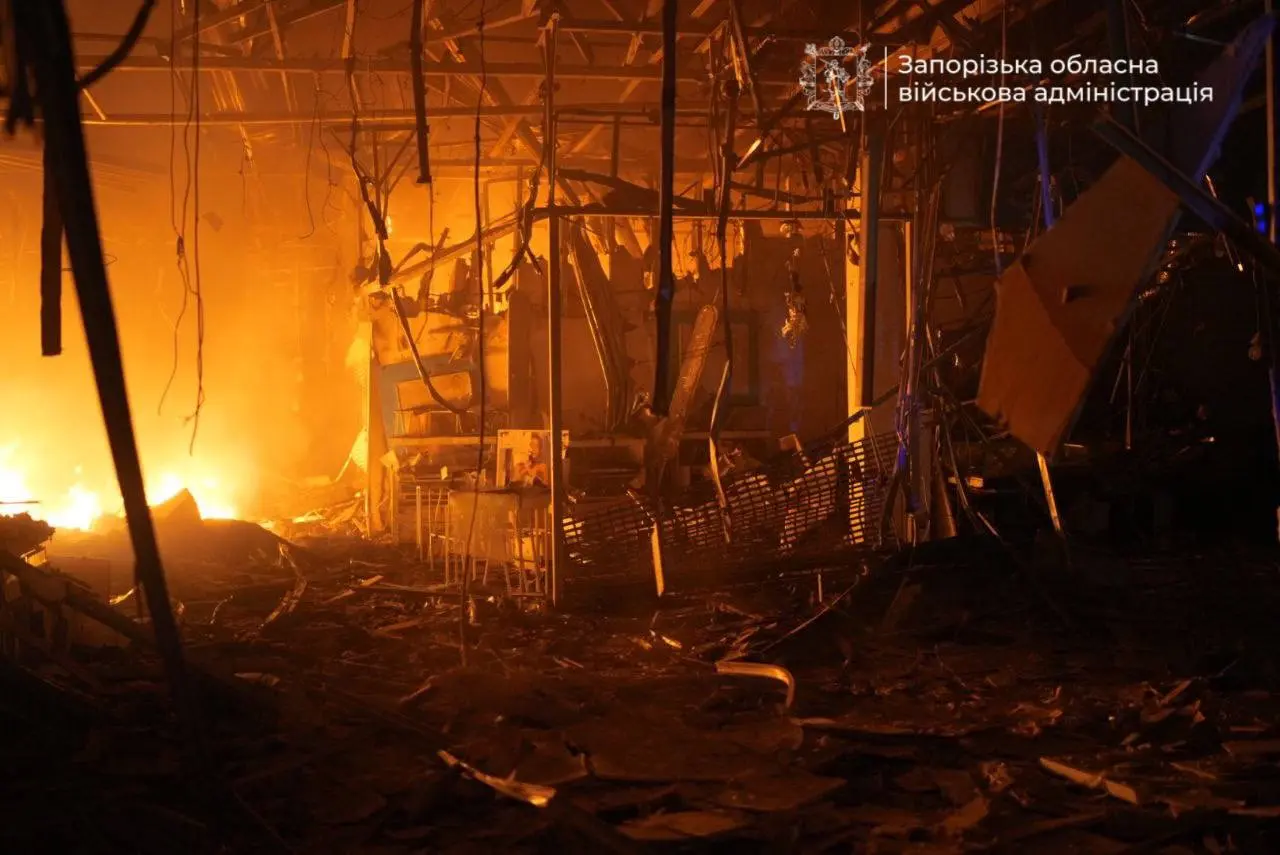
Russian attacks killed at least three people and injured 38 others across Ukraine over the past day, local authorities reported September 7, a day after U.S. President Donald Trump’s special envoys Steve Witkoff and Jared Kushner visited Kyiv for talks on ending the war. Russia launched 92 attack drones against Ukraine overnight, of which 71 were shot down or intercepted, according to Ukraine’s Air Force. In Kherson Oblast, two people were killed and 14 injured, while Dnipropetrovsk Oblast reported one death and six injuries. Seven people were wounded in Donetsk Oblast, five in Kharkiv Oblast, four in Zaporizhzhia Oblast, two in Sumy Oblast, and no casualties were reported in Odesa Oblast, where a Russian drone struck a house overnight.
The attacks serve as a clear signal that Russia is using Trump's envoy's visits as a smokescreen and trying to please Donald Trump with staged negotiations.
Ukraine hosts around 2,000 fraudulent call centers
There are approximately 2,000 fraudulent call centers currently operating in Ukraine. While Dnipro was long the main hub of this industry, many so-called “offices” have been relocating to Kyiv and western regions of the country, partly because of Russian shelling and increased attention from law enforcement.
Around 90% of these centers target Russian citizens. This preference is not driven by patriotism and a goal to punish Russians and has a rather practical explanation. It is significantly harder to hold scammers accountable when victims are located in Russia and do not file complaints with Ukrainian authorities. The industry has evolved into a sophisticated illegal business that generates tens of millions of dollars annually. Operations now feature professional technology, structured management, dedicated HR departments, and carefully developed psychological scripts.
Common schemes include impersonating bank security services, promoting fake investment or cryptocurrency opportunities, posing as police or security forces, using “relative in distress” scenarios, and offering various compensation or payment schemes. The primary tools are psychological pressure and artificial urgency: victims are threatened with financial losses, criminal charges, or account freezes and are pushed to transfer money or reveal banking details immediately.
These call centers also distort the local labor market. Young people are offered salaries ranging from $800 to $1,500 or higher, plus commissions, making it difficult for legitimate businesses to compete for staff.
Ukrainian law enforcement has intensified its crackdown. In just one week in August, the National Police, working with the Security Service of Ukraine (SBU) and the prosecutor’s office, conducted 411 raids and shut down 94 fraudulent call centers across the country.
The recent "Operation Carthage" was conducted by the National Anticorruption Bureau (NABU) and exposed possible involvement of the General Prosecutor's Office in covering up the activities of fraudulent call centers.
Russia struck the Ukraine-Romania border crossing for the 2nd time this week
Russia struck the Orlivka border crossing between Ukraine and Romania with Shahed-type drones overnight September 6, temporarily suspending operations at the facility, authorities in Ukraine’s Izmail district reported. The attack came just days after the crossing reopened following a previous Russian drone strike.
No casualties were reported, according to Andrii Demchenko, spokesperson for Ukraine’s State Border Guard Service. Operations resumed by the morning of September 6, he said, adding that the crossing recovered much faster than after the earlier attack on Sept. 1, when drones damaged buildings and other infrastructure and sparked fires. The facility reopened Sept. 3 after repairs and tests of its ferry service.
Demchenko said Russia is actively targeting border infrastructure in Romania and Moldova as well. The Orlivka-Isaccea crossing links Ukraine’s Odesa Oblast with Romania across the Danube River and has become an important alternative for trade and logistics as Russia continues to threaten Black Sea shipping routes. The Danube is also Ukraine’s only viable grain export route since Russia withdrew from the Black Sea Grain Initiative in 2023.
Russian forces are modernizing the Iskander family of missiles, with a focus on increasing range
Russia is actively modernizing its Iskander missile systems to significantly increase their range and improve their ability to penetrate air defenses. Most reports focus on an extended-range ballistic version, often called the “Iskander-1000” or 9M723-2, which Ukrainian specialists and intelligence sources link to a potential range of up to about 1,000 km. This would allow strikes deep into western Ukraine, including cities such as Lviv, depending on the launch site.
The 1,500 km figure is more commonly associated with the 9M729 cruise missile variant of the Iskander system rather than a pure ballistic missile. Some monitoring sources have previously suggested that this longer-range cruise missile could theoretically reach Lviv, Uzhhorod, and other western regions. At the same time, production of standard Iskander-M ballistic missiles has risen sharply, with reports citing around 60 units per month in spring 2026.
Claims that Russia has scheduled test launches of a 1,500 km ballistic Iskander toward western Ukraine in October or November 2026 remain preliminary and unconfirmed by major Ukrainian intelligence or independent monitoring sources. While the overall trend of relying on ballistic missiles and incrising range extension is clear, the specific 1,500 km ballistic capability and the exact test schedule have not been reliably verified in open reporting.