


Ukraine no longer has a steel industry
The plants that produced 90% of the country’s steel have been forced to shut down after Russian strikes, according to the Financial Times. In early September, Russian ballistic missile attacks targeted the blast furnaces of Ukraine’s three remaining major steel plants in the industrial regions of Zaporizhzhia and Dnipropetrovsk. The facilities — two owned by Metinvest and one by ArcelorMittal in Kryvyi Rih — accounted for about 90% of national steel production and have now halted operations.
“As of today, Ukraine doesn’t have a steel industry anymore,” Oleksandr Vodoviz, head of the chief executive’s office at Metinvest, told the FT. He added that Russian forces knew everything about the plant and knew exactly where to hit. It is still unclear how long repairs will take — days, weeks, months, or years.
The shutdown of these plants, which together employ more than 15,000 people, could have significant knock-on effects and a huge impact on tax revenues.
Russian drone strikes injure residents and disrupt Media operations in ongoing assault on Kyiv
Russian forces continued their intensive drone campaign against Kyiv on September 26, injuring at least five people as the capital faced a second consecutive day of near-constant aerial attacks. Air-raid alerts sounded five times overnight and into the morning, with some lasting several hours, bringing the total number of alerts since September 25 to 15 and repeatedly disrupting daily life across the city.
Overnight and early-morning strikes hit multiple areas. A drone struck a five-story residential building, forcing the evacuation of about 20 people, while falling debris sparked a fire on the roof of an office building. Fires also broke out near warehouses, windows were shattered on residential structures, and a shopping and entertainment center sustained damage when a drone impact set part of it ablaze.
The attacks form part of a broader intensification that has increasingly targeted critical digital infrastructure. Russian strikes on data centers in Kyiv over recent days have disrupted operations at several Ukrainian media outlets. Television channels, including Novyny.Live and Armiia TV, temporarily suspended broadcasting, while the public broadcaster Suspilne reported that video players on its website stopped working after damage to a data center operated by Cosmonova. The same facility was hit for a second time, knocking it out of service. Earlier strikes in the same series damaged infrastructure used by multiple internet providers, causing outages that affected tens of thousands of households and temporarily hindered access to online services.
These assaults on data centers and communications nodes represent a systematic effort to degrade Ukraine’s digital backbone, affecting not only media operations but also everyday connectivity. Ukrainian officials have responded by deciding to strengthen physical protection for data centers and other critical communications infrastructure, though experts note that while complete nationwide internet blackouts remain unlikely due to network redundancy, localized outages and reduced reliability are expected to continue as long as the strikes persist.
Ukraine raises alarm about the situation in Oleshky, where people are resorting to eating grass due to hunger
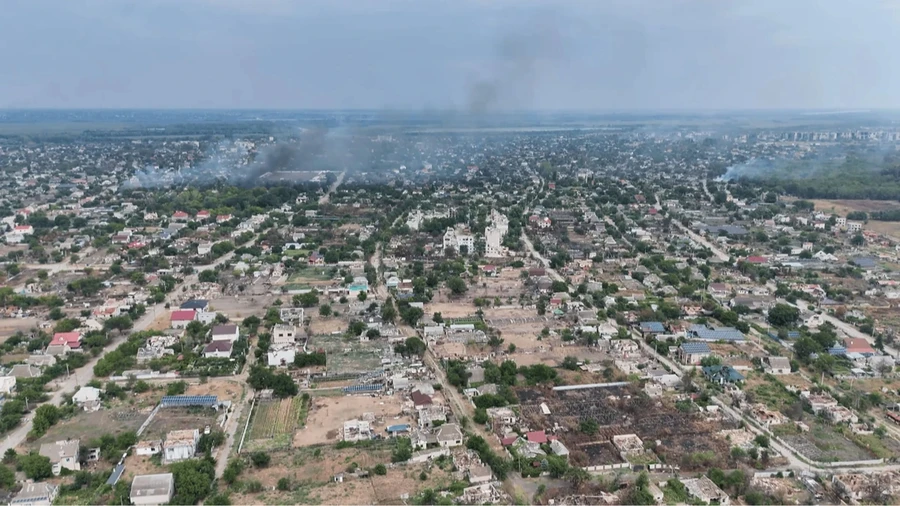
Ukrainian Foreign Minister Andrii Sybiha stated that Russian-occupied Oleshky, Kherson Oblast, has become critical, with residents facing severe shortages of food, clean water, medicine and medical care.
Sybiha said there is almost no food left in the town and that some civilians are reportedly surviving by eating grass and weeds. Children are among those affected, while electricity and access to medical services have also become increasingly difficult.
He called on the United Nations, the International Committee of the Red Cross and other international organizations to secure humanitarian access and help evacuate residents who want to leave. “People there cannot survive on statements of concern. Humanitarian access and safe evacuation must become a reality, because every day matters,” Sybiha said.
Sybiha blamed Russia, which has occupied Oleshky, for the humanitarian crisis.