


Russia targets Ukraine's internet as attacks on infrastructure in Kyiv escalate
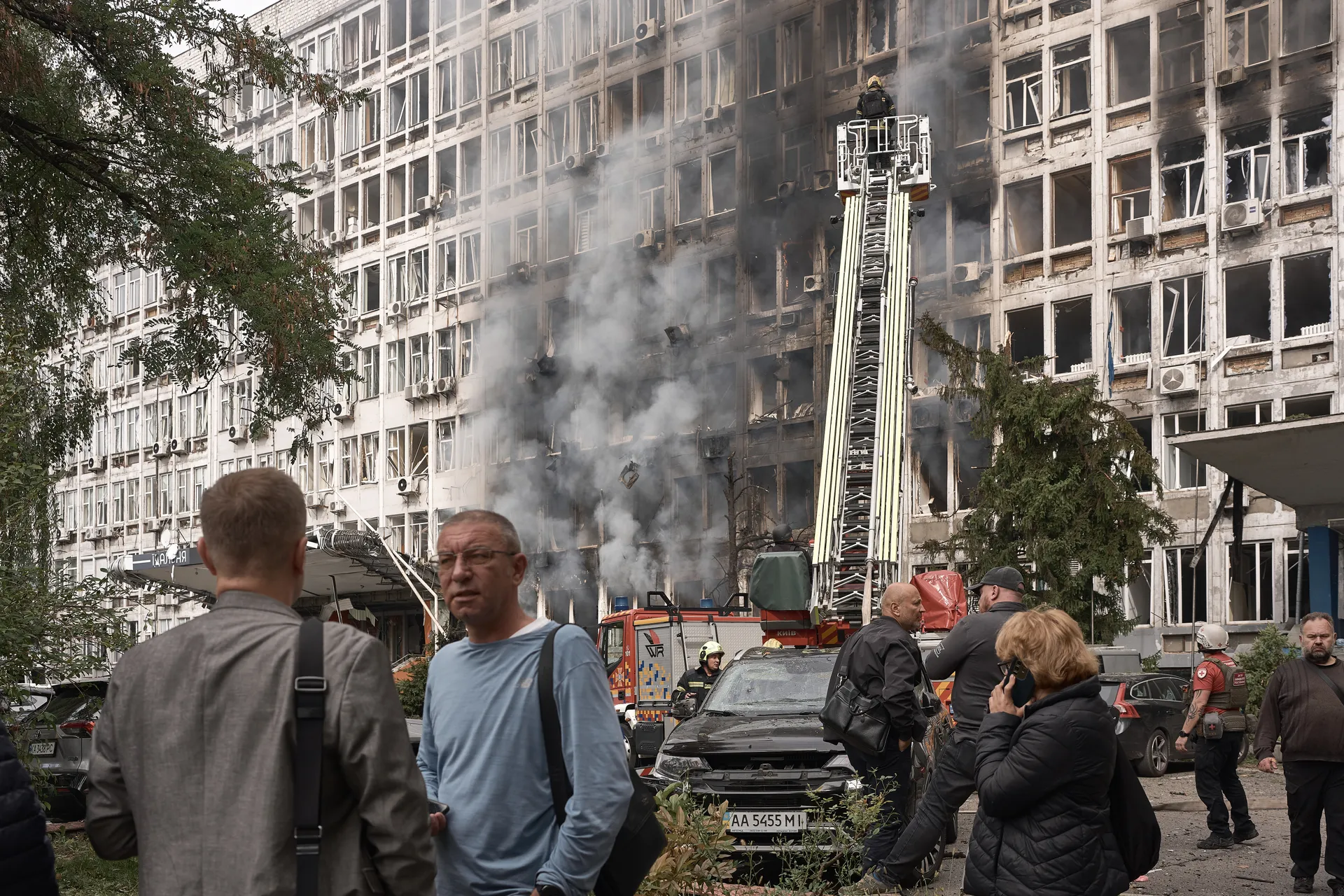
Russian strikes have damaged multiple data centers and internet providers in Kyiv over the past two days, disrupting service for about 100,000 households as Moscow intensifies attacks on Ukraine’s communications infrastructure.
Ukraine’s Digital Transformation Ministry said that around 100,000 households in Kyiv and Kyiv Oblast experienced internet disruptions following the Sept. 23 drone attack, while specialists worked to assess the damage and restore services. Several providers reported direct hits to their infrastructure. UTELS said a Kyiv data center housing its core equipment was damaged and left without power, while Pavutyna reported a strike on one of its data centers. Crazy Network said a central internet traffic exchange in Kyiv was damaged, affecting internet and telephone services in Kyiv, Vinnytsia and Khmelnytskyi oblasts. On September 24, Kyiv-based Etherlink said its main network node was damaged, forcing the company to relocate its network core.
Other providers reported more extensive losses. MiroHost founder Oleksandr Olshansky said a Ukrainian data center housing the company’s infrastructure was destroyed, although about 90-95% of its customers use infrastructure outside Ukraine and were unaffected. CityHost also said equipment stored at a Kyiv data center was destroyed. Russia’s Defense Ministry claimed responsibility for strikes on two Kyiv data centers, New-Telco and United DC, alleging they supported Ukraine’s Defense Ministry and security agencies. Those claims could not be independently verified. Ukrainian Foreign Minister Andrii Sybiha rejected Moscow’s characterization, saying the facilities were critical civilian infrastructure that helps people access life-saving information.
Anatolii Frolenkov, a representative of the 1-IX internet exchange point, said the recent strikes marked a significant escalation. “This is the beginning of a phase where, since September, they have started taking it out systematically,” he said. Frolenkov noted that attacks on communications infrastructure are not new, but said the recent targeting of data centers and network nodes represents a shift in intensity. He added that a nationwide internet blackout would be difficult to achieve because providers can duplicate equipment, maintain backup routes and distribute infrastructure across multiple locations, including abroad. “The internet will not disappear completely,” Frolenkov said. “There will be outages, there will be problems. It won't work as smoothly or as quickly, things may glitch, and operators may go down for a couple of hours because the infrastructure is being physically destroyed.”
The latest damage follows earlier Russian strikes on telecommunications infrastructure, including a July 2 attack that damaged a major Kyiv data center and September strikes affecting Kyivstar equipment. While the recent attacks have caused significant disruptions, providers say the impact remains scattered rather than amounting to a nationwide internet blackout. However, maintaining redundant infrastructure is costly, leaving some companies more exposed when equipment is destroyed.
Ukraine received Russia’s winter energy strike plans
Ukraine is preparing for another severe winter campaign by Russia targeting its energy infrastructure, according to Energy Minister Denys Shmyhal.
In recent statements, including an interview with Politico, Shmyhal said Moscow aims to further degrade Ukraine’s power system, disrupt the economy, and exhaust the civilian population in hopes of forcing political concessions. He noted that after previous winters focused on electricity and heating, Russia may expand its efforts to include water supply and sewage systems, which would be even harder for civilians to endure for prolonged periods.
“Putin wants to finish off our energy system and derail our economy and weapons production,” the Prime Minister said. “He also hopes in winter our society will break from exhaustion and pressure leadership to sign the surrender.”
While some reports have claimed Ukraine obtained specific Russian strike plans that single out major cities such as Kyiv, Odesa, and Kharkiv, these details have not been independently confirmed by official statements or major media outlets. What is clear is that Ukrainian authorities view the coming months as a critical test and are accelerating preparations.
These include repairing and restoring generation capacity, expanding decentralized and smaller-scale power sources, strengthening physical protection of key facilities, and building greater resilience into the grid so that damage to one site does not cascade across entire regions.
Ukraine has already suffered extensive losses to its energy infrastructure over the course of the war, with officials estimating that more than 80 percent of power generation capacity has been damaged or destroyed at various points. Rolling blackouts remain a regular feature in many areas.
Shmyhal has expressed cautious confidence that Ukraine can withstand another difficult winter, provided repairs, protection measures, and international support continue at pace. At the same time, Kyiv continues to pursue reciprocal de-escalation proposals, including a potential mutual halt to strikes on energy infrastructure, though no agreement has been reached with Moscow.
Another opportunity for negotiations arises: Putin and Zelensky invited to the G20 in Miami
The United States has invited Russian President Vladimir Putin to attend the G20 leaders’ summit in Miami on December 14-15, creating a potential setting for renewed high-level contacts over the war in Ukraine. U.S. Secretary of State Marco Rubio confirmed the invitation on September 23, saying Washington viewed the summit as an opportunity for Putin to engage with President Donald Trump and other world leaders. “We think it’s an opportunity for him to engage not just with the president but with other world leaders,” Rubio said.
The invitation does not mean that a meeting between Putin and Trump, or between Putin and Ukrainian President Volodymyr Zelensky, has been agreed. The Kremlin has not committed to Putin’s attendance, and Rubio said any face-to-face meeting would require preparation and a clear purpose. Zelenskyy has previously said he would be prepared to attend the Miami summit if it created an opportunity to meet Putin. Russia remains a G20 member, while the U.S. is chairing the group in 2026 and will host the December summit.
The possibility of such contacts follows renewed U.S. diplomatic efforts involving Russia and Ukraine. U.S. envoys Steve Witkoff and Jared Kushner traveled to Moscow in early September for talks with Putin before going to Kyiv to meet Zelenskyy. Washington has since pushed proposals for limited ceasefires, including an agreement to halt strikes on energy infrastructure. Rubio said Sept. 23 that an energy truce would not end the war but could reduce its consequences and potentially provide a basis for broader negotiations.
The Miami summit is also expected to include a number of countries invited by the United States in addition to the G20 members. The official participant list includes Poland, Azerbaijan, Finland, Ireland, Kazakhstan, the Netherlands, Norway, Qatar, Singapore, Spain, the United Arab Emirates and Uzbekistan. Poland is participating as an invited country for the first time.
For now, Putin’s attendance and any potential talks with Zelensky remain unconfirmed. The invitation creates a possible venue for direct contact, but whether either side uses it for negotiations will depend on decisions that have yet to be made.