


A massive missile and drone attack from Ukraine has set the Moscow Oil Refinery on fire
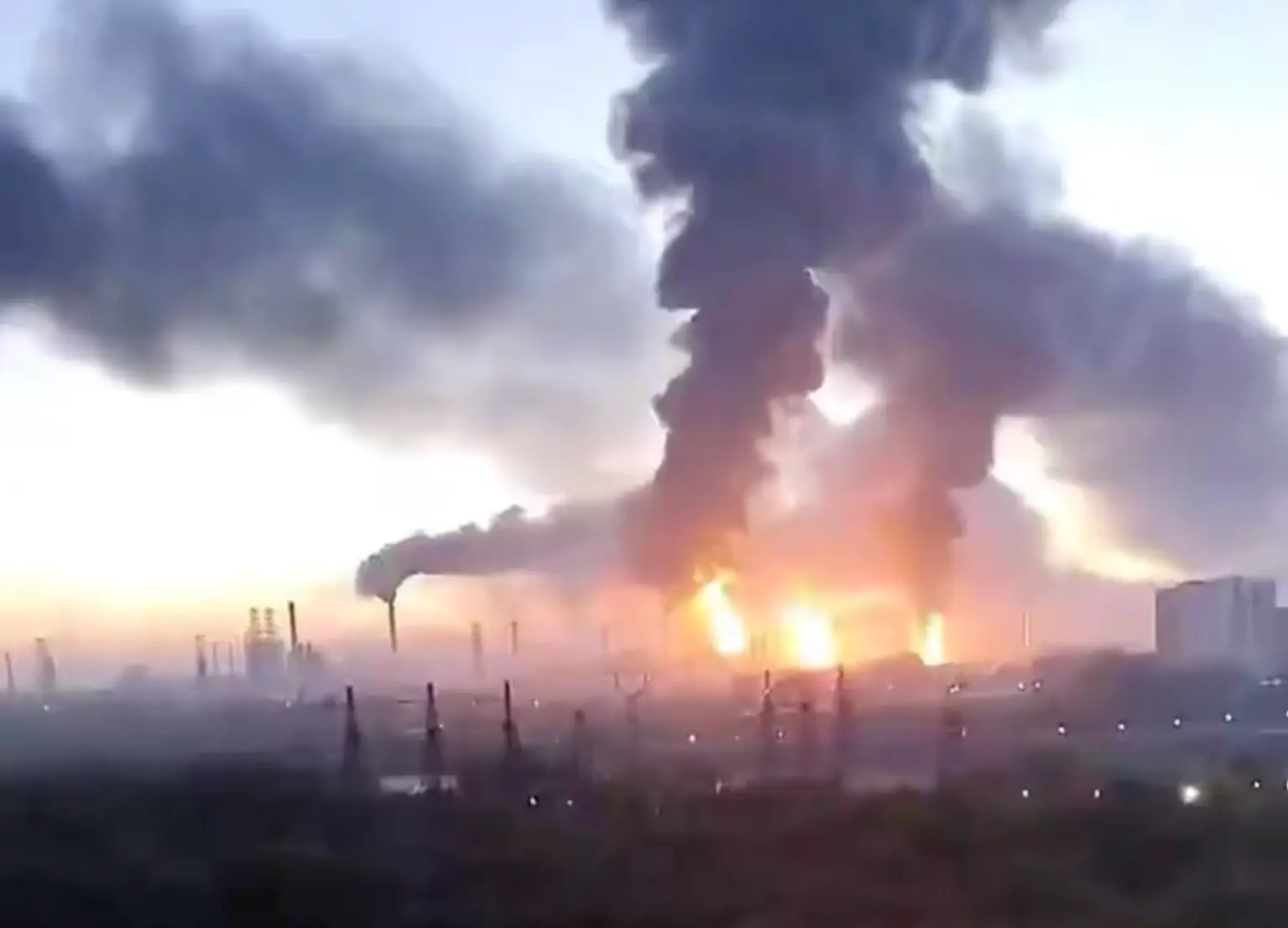
Ukraine launched a major drone and missile attack across Russia overnight Sept. 20, setting fire to the Moscow Oil Refinery and damaging other targets around the capital as Russia held the final day of its three-day parliamentary elections. Ukrainian President Volodymyr Zelenskyy and the General Staff confirmed the refinery in Moscow’s Kapotnya district was targeted. Videos posted on social media showed thick smoke rising over the city.
“Our long-range responses had a very significant impact in the Moscow region last night,” Zelenskyy said. Moscow Mayor Sergey Sobyanin claimed that more than 1,600 drones were intercepted or shot down across Russia, including 450 targeting Moscow. The Kyiv Independent could not independently verify the figures, which, if accurate, would represent one of the largest aerial attacks of the war.
Zelensky did not disclose the total number of drones and missiles used but said the attack involved several Ukrainian-made weapons, including the Flamingo cruise missile. He also mentioned a “Pelican,” which was initially misidentified by some media outlets as Ukraine’s new FP-7 ballistic missile. Later reports clarified that Pelican is a drone.
Ukraine’s General Staff said the attack damaged the AVT-6 primary refining unit, an integrated oil refining unit, and an isomerization unit at the Moscow refinery. The facility, located about 560 kilometers (350 miles) from Ukraine, is one of Russia’s largest oil refineries, with an annual capacity of about 12 million tons and a reported 40% share of Moscow’s fuel market. “Striking such facilities belonging to the Russian aggressor constitutes Ukraine's exercise of its inalienable right to self-defense,” the General Staff said.
The attack coincided with the final day of Russia’s parliamentary elections, the first State Duma vote since the start of the full-scale invasion in 2022. “Moscow must end its brutal war and choose peace instead of building layered rings of air defense at the expense of other regions,” Zelensky said. “Steps toward de-escalation are on the table — in energy and food security. What is needed is political will.”
Russian authorities also reported civilian casualties and damage. A drone struck a residential building in Sofyino, killing one woman and injuring five people, including two children, while falling debris caused a fire on the roof of a 21-story apartment building in Ramenskoye, prompting the evacuation of about 400 people. A man was also reportedly killed when a drone struck a private home. The Kyiv Independent could not independently verify the Russian claims.
Russian aviation authorities temporarily restricted operations at Domodedovo and Zhukovsky airports near Moscow, citing flight safety concerns. Similar restrictions were reported at several other airports, including Saratov, as the attacks continued.
Hungary's actions towards Ukraine: how Magyar aims to undermine Kyiv and obstruct its EU future
Hungary under Prime Minister Péter Magyar is pursuing a policy of deliberate humiliation toward Ukraine while continuing to block its path to European Union membership. On September 18, Ukraine hosted the first Carpathian Initiative summit, bringing together leaders from all countries connected by the Carpathian Mountains—Poland, Slovakia, Romania, Serbia, Czechia, Austria, and Ukraine itself. Hungary was the only one absent, sending merely a deputy ambassador. This was not a scheduling conflict but part of a broader pattern of contempt.
Two weeks earlier, Ukraine’s parliament had become the first in the world to officially condemn the Soviet-era repression of Hungarians known as “málenkij robot,” a gesture intended to improve relations. Ukrainian Parliament Speaker Ruslan Stefanchuk traveled to Budapest hoping for meetings, yet every Hungarian official, including National Assembly Speaker Ágnes Forsthoffer, refused to see him—even though she had previously issued an invitation. Shortly afterward, Forsthoffer met with Moldova’s parliamentary speaker instead, underscoring that the snub was targeted specifically at Ukraine. Magyar himself has repeatedly rejected proposed meetings with President Zelenskyy in various locations and has failed to follow through after promising talks at EU and NATO summits.
The core issue remains Hungary’s unexplained veto over Ukraine’s EU accession negotiations. Budapest demands “progress” on minority rights but offers no clear conditions for lifting the blockade, even as Ukraine continues to implement previously agreed legislative changes. Despite Magyar’s public opposition to Russia and the fact that two negotiating clusters have already been opened without domestic political cost, his government perpetuates the obstructionist approach of the Orbán era. Key diplomats appointed under Orbán remain in place, and the new leadership shows little willingness to engage in genuine dialogue.
This stance harms the very Hungarian minority in Zakarpattia that Budapest claims to protect, by delaying Ukraine’s EU integration and complicating the adoption of minority-rights laws. With no bilateral progress possible, the only realistic path forward is sustained pressure from key Western partners—particularly Germany, Poland, EU institutions, and the United States. Magyar’s approach also undermines broader efforts toward a postwar European security order that includes Ukrainian EU membership as a cornerstone.