


Zelensky introduced a new air raid system as Russia strikes Kyiv for the seventh consecutive day
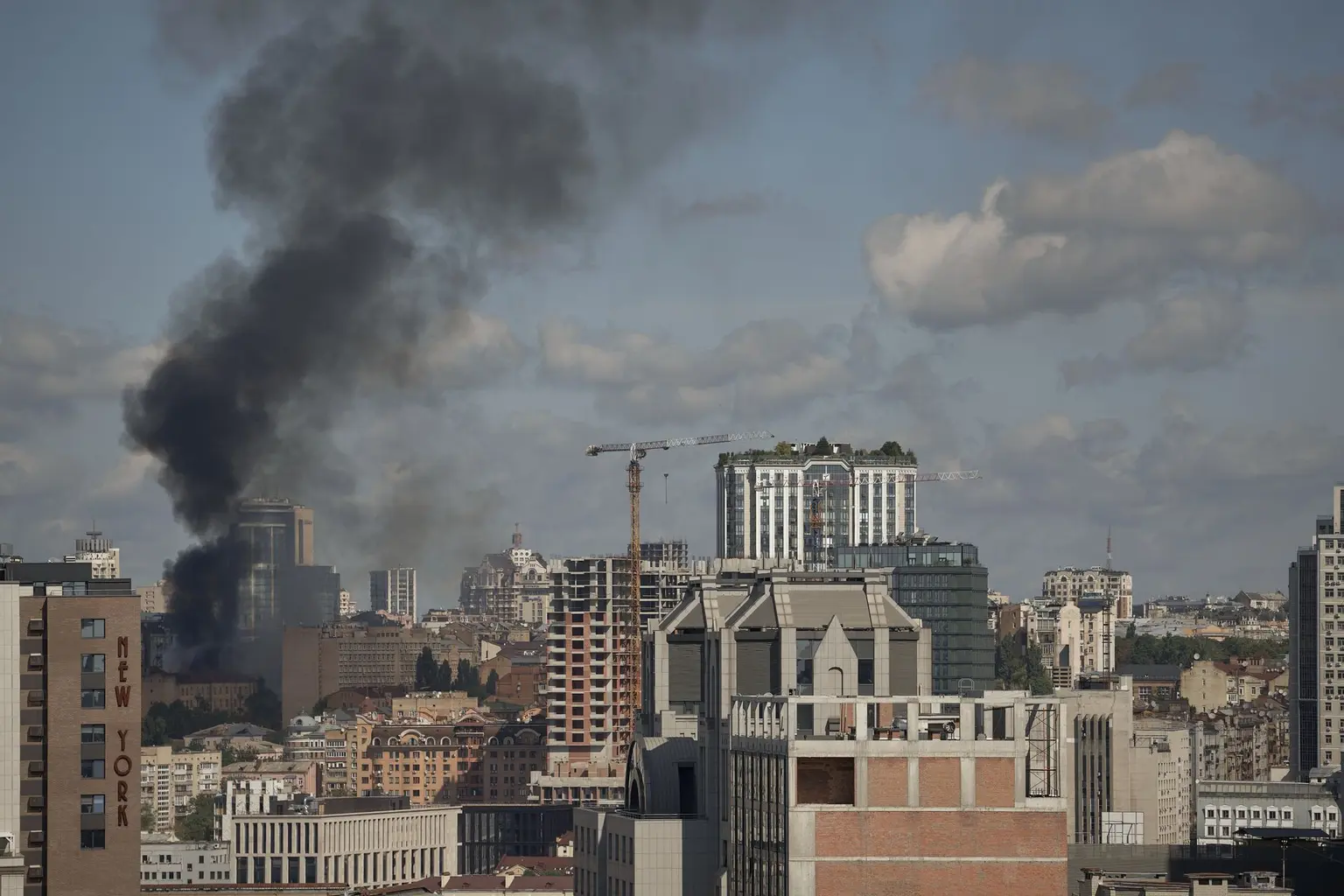
Ukraine will change how air raid alerts operate as Russia continues its relentless drone and missile attacks on Kyiv for a seventh consecutive day, President Volodymyr Zelenskyy announced.
Currently, a single air raid alert is issued for any type of aerial threat within a particular region. Under the new system, alerts will be divided into red and yellow levels.
The yellow level will indicate a threat from incoming drones, while the red level will be reserved for missile threats, including ballistic missiles, and large-scale combined attacks, Zelensky said. Each level will have a different siren signal, and warnings will be more localized based on the specific area facing a threat.
The changes are intended to give Ukrainians greater predictability and clearer guidance on how to respond to different types of attacks, Zelenskyy said.
During a yellow alert, public transportation in Kyiv will operate with modifications rather than shut down completely. Some metro lines may continue running partially or in full, while curfew restrictions will also be adjusted.
The General Staff and Air Force, together with the Cabinet, Defense Ministry, Interior Ministry and State Emergency Service, will review and determine the specific criteria for the yellow and red alert levels on a weekly basis, Zelenskyy said.
The president also announced plans to update standards for air raid shelters and expand their availability, particularly through the use of mobile shelters.
The rules for schools and kindergartens will remain unchanged. The announcement comes as Ukraine’s new school year began on Sept. 1, with thousands of children continuing to study under the threat of Russian air attacks.
Russia has targeted Kyiv with drones and missiles for seven consecutive days, forcing residents to spend long hours under air raid alerts.
Russia has been secretly helping Iran develop hypersonic cruise missiles since 2023
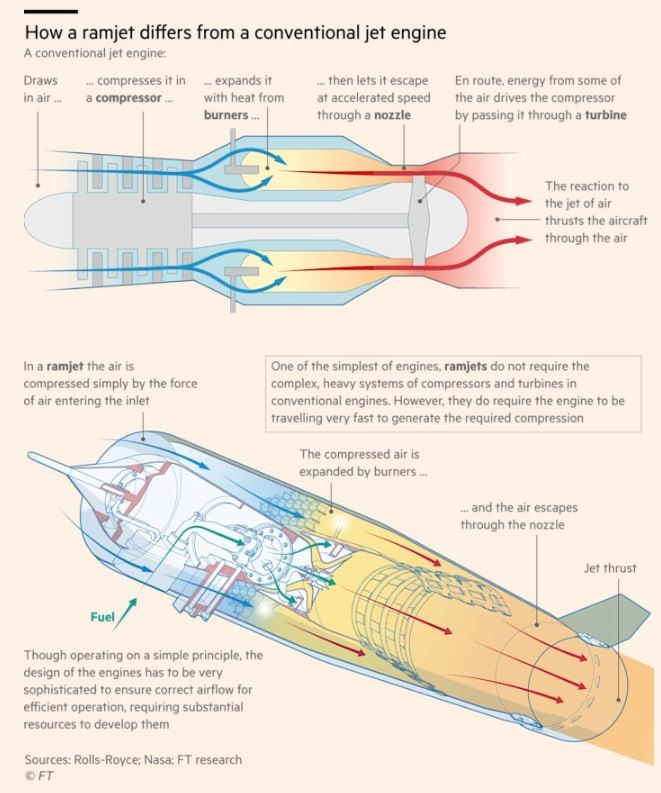
According to an investigation by the Financial Times, Russia has been secretly assisting Iran since 2023 in the development of advanced supersonic (and potentially hypersonic) cruise missiles under a classified programme codenamed C430L. The core of the cooperation involves helping Tehran design and build a ramjet engine that would allow the missiles to sustain flight at speeds several times faster than the speed of sound.
Russian engineers, including specialists from NPO Mashinostroyenia and representatives of Rosoboronexport, have made repeated visits to Iran. They reviewed test results, studied Iranian technical documentation, and provided expertise on high-speed propulsion systems. The programme continued even after the outbreak of the US-Israeli war against Iran in 2026, with the two sides still discussing further stages of cooperation and exchanging technical reports as late as mid-2026.
Experts describe this as one of the most significant known transfers of sensitive military technology from Moscow to Tehran. If successful, the new missiles would give Iran a qualitatively new capability, particularly for striking ships and land targets. Analysts warn that such weapons could pose a serious threat to US Navy vessels operating in the Middle East.
The situation in Ukraine is critical as arrivals increase before a severe winter, with Russian drones breaching the Ukrainian air defense system
The situation for Ukraine is becoming increasingly critical as Russian attacks intensify ahead of a difficult winter. Russia is conducting massive strikes using jet-powered drones that fly nearly twice as fast as earlier models and are launched in such large numbers that they overwhelm Ukrainian air-defense systems.
Ukrainian officials report that in August alone Russia launched more than 2,800 of these jet-powered drones against Ukraine. They believe Moscow is capable of producing tens of thousands of such unmanned systems annually, allowing it to sustain high-tempo attacks over a prolonged period.
Residents of Kyiv and other cities have grown accustomed to night-time air raids that last several hours. Continuous daytime alerts last week further paralyzed life in the capital, disrupting daily routines and economic activity.
The new models, known as Geran-4 and Geran-5 and developed on the basis of Iranian Shahed drones, can reach speeds of up to 400 km/h. In some cases, Ukrainian forces have been forced to scramble combat aircraft in attempts to intercept them, highlighting the growing strain on conventional air-defense resources.
Russia is waging a war against NATO, but it is below the "threshold of Article 5" and is systematically testing Europe for strength
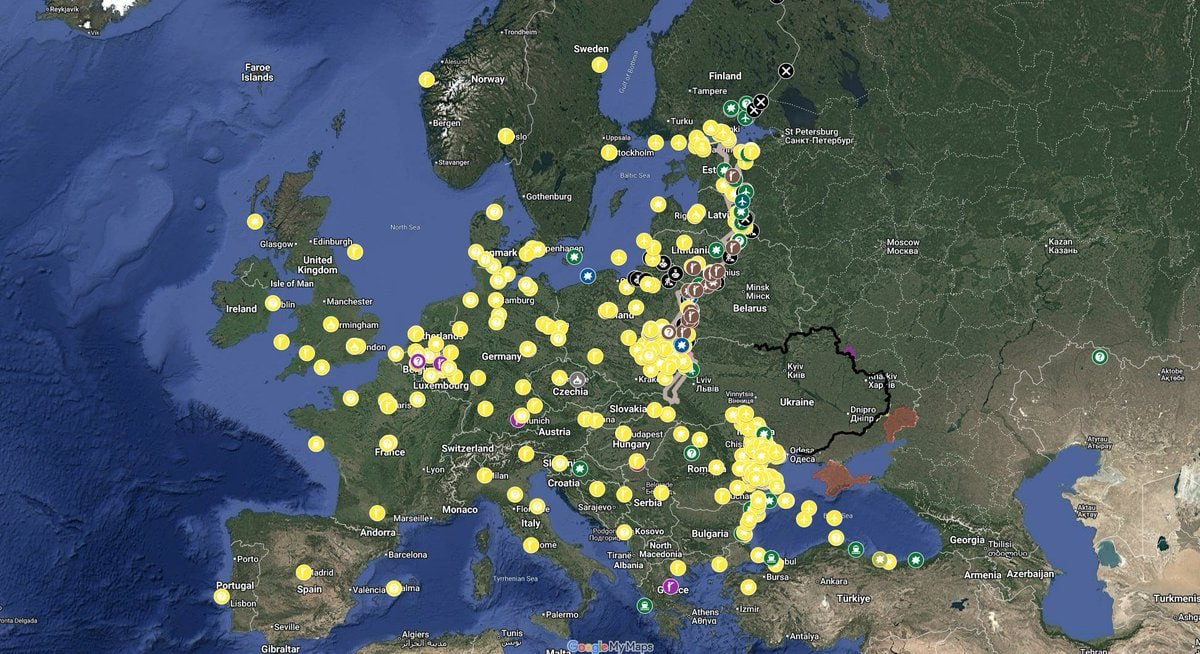
Russia is waging a form of hybrid warfare against NATO countries while carefully staying below the threshold of Article 5, according to InformNapalm. Since the start of the full-scale invasion of Ukraine, nearly 500 incidents have been recorded across Europe, with 454 of them linked to Russian or Belarusian activity. These include sabotage, arson, cyberattacks, assassination attempts, and damage to critical infrastructure.
In just the past two weeks, several notable cases have emerged. On 15 August, an object belonging to Milrem Robotics was set on fire in Estonia. On 25 August, an attempted arson attack on the Slovakian facility of Ukrainian drone manufacturer Skyeton was foiled. On 31 August, an intentional fire at the WB Electronics plant in Poland was reported and is being investigated as possible terrorism. On 1 September, a series of sabotage acts using improvised explosive devices targeted energy infrastructure in eastern Germany.
Analysts describe these actions as a systematic campaign to test Europe’s resilience and create pressure without triggering a direct military response from the Alliance. In effect, Moscow is already conducting a low-intensity war against NATO member states, designed to remain just below the level that would activate collective defence obligations.
Ten injured, university and residential buildings damaged in Russian attacks on Kyiv
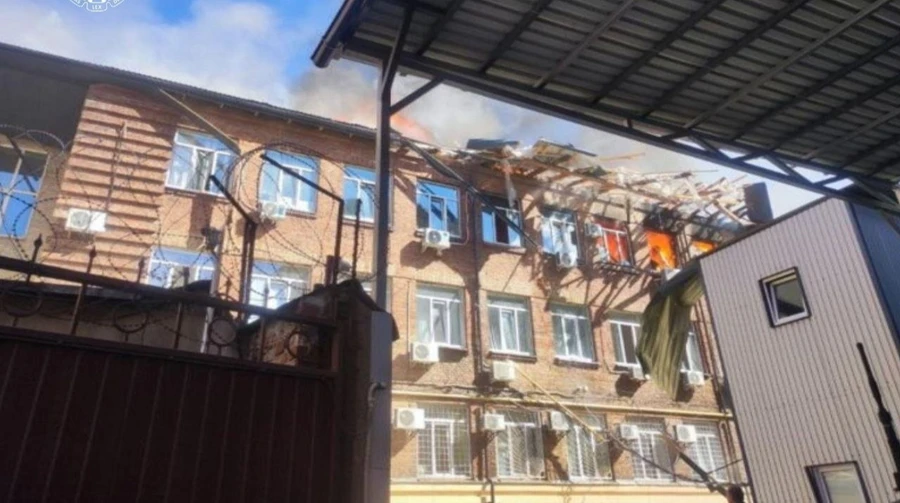
Ten people were injured in Russian attacks on Kyiv on September 2, while a university building, five residential buildings, a kindergarten, a medical facility and warehouse facilities were damaged, according to Ukrainian authorities.
Nine of the injured were taken to the hospital, Kyiv Mayor Vitali Klitschko said. The consequences of the Russian drone attacks were recorded in the Holosiivskyi, Sviatoshynskyi and Shevchenkivskyi districts of the capital.
A Russian drone struck a six-story residential building in the Shevchenkivskyi district, partially destroying it, Klitschko said. A fire also broke out in a nearby three-story building, with firefighters and rescue crews responding to the scene.
Authorities also reported a fire at an educational facility in the Holosiivskyi district after drone debris fell there. A medical facility in the Shevchenkivskyi district was also damaged.
The Kyiv City Prosecutor's Office said the Russian attack damaged a university building, five residential buildings, a kindergarten and warehouse facilities. None of the injured were university students, according to prosecutors, who have opened an investigation into the attack as a potential war crime.
President Volodymyr Zelensky later said Russian Shahed drones had specifically struck a university in Kyiv while classes were underway. He said 160 students were sheltering when the attack occurred.