


Russia has begun a three-day legislative election as the Kremlin aims to demonstrate support for the war
Today Russia began three days of voting o to elect the 450-member State Duma, the lower house of parliament, marking the first parliamentary elections since Moscow launched its full-scale invasion of Ukraine. Voters are also choosing 11 regional governors and members of 39 regional parliaments.
The elections are tightly controlled by the Kremlin and are expected to give Russian authorities an indication of public support for the war. The ruling United Russia party, backed by Russian President Vladimir Putin, is expected to retain control of the legislature. Other permitted parties, including the Communist Party and the Liberal Democratic Party, are considered part of the “systemic opposition” made up of Kremlin-aligned groups that provide limited political competition.
Russia’s only explicitly anti-war party, Yabloko, was barred from participating in the parliamentary elections in August. Other opposition politicians outside the Kremlin-approved system have faced prosecution, exile or death. Independent Russian media have also reported intimidation of election observers and pressure on voters ahead of the vote.
Putin presented the election as an opportunity for Russians to demonstrate support for the war. “Your choice and your will will once again demonstrate that millions of people stand behind our troops, that we are a single people, united by common values, historical memory and love for the Motherland,” he said in a Sept. 16 address.
Democracy watchdogs have described Russian elections as neither free nor fair. The last State Duma election was held in 2021, several months before the full-scale invasion. This year’s vote also marks the first time Russia is holding State Duma elections in Ukrainian territories it occupied after 2022, a move Kyiv and its international partners consider illegal.
Cargo rail transport in Ukraine’s frontline regions is under serious threat of grinding to a halt
In the second quarter of 2026, average daily freight loadings on Ukrainian Railways (UZ) fell 4% overall. On the Prydniprovske branch — which serves industrial plants closest to the fighting — the drop reached 17%. About 30 trains a day currently fail to leave the depot because of a shortage of locomotive drivers.
Since the full-scale invasion began, Russia has attacked UZ infrastructure 6,119 times, including more than 1,500 attacks in 2026 alone. A total of 508 locomotives have been damaged. If the current rate of attacks continues, the shortage of working locomotives will grow even worse in 2027 — especially once Black Sea ports reopen and export volumes start recovering.
Oleksandr Kalenkov, president of the Ukrainian metallurgical association Ukrmetalurgprom, is calling for an urgent government plan. Among the key proposals is a “railway Ramstein” — an international coordination mechanism similar to the military aid group, designed to bring in locomotives, spare parts, technical help, and funding from partners. The plan should also cover accelerated training of locomotive crews, better protection of key rail hubs and depots, faster wagon repairs, and daily monitoring of actual carrying capacity.
The warning is clear: Ukraine needs to fix these problems now. Otherwise, when export demand returns, the railway may simply lack the locomotives and crews needed to move the cargo.
The Kremlin wants to turn life in Europe into a living hell
Russian hybrid attacks on European infrastructure are becoming more frequent and dangerous. Officials across the continent are linking Moscow to a growing number of drone incidents, strikes on energy facilities and railways, and repeated violations of NATO airspace.
European governments believe Russia is deliberately staying below the threshold of open conflict with the Alliance while testing how far it can push and how NATO will respond. Bloomberg reports that Europe still lacks a unified strategy to counter this hybrid campaign.
A source close to the Kremlin told the outlet that Russia intends to make life in Europe “a living hell” through asymmetric hybrid operations as punishment for supporting Ukraine. Officials now fear that civilian casualties are only a matter of time.
Fugitive Prosecutor General likely to ask for asylum in Austria
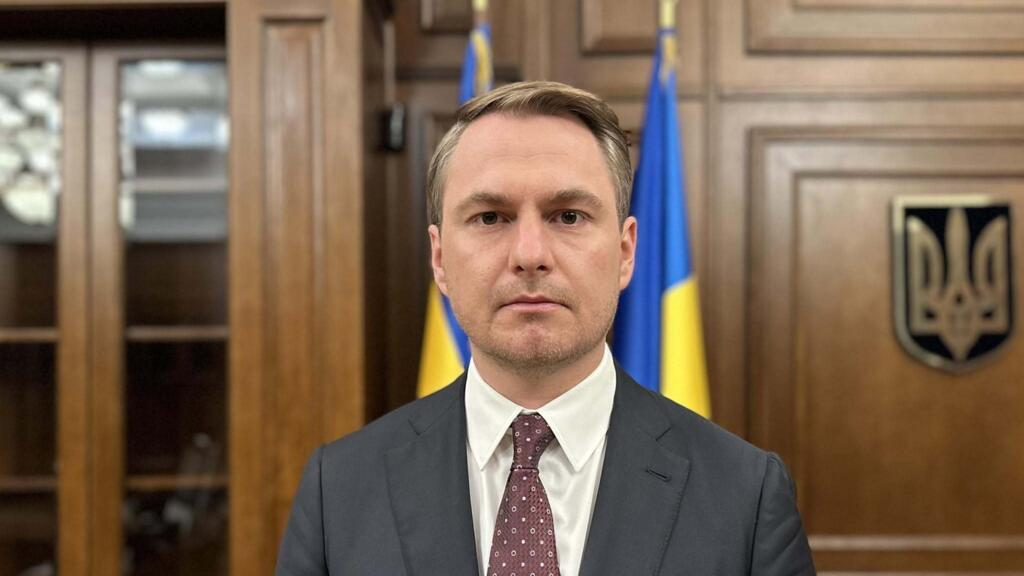
Former Ukrainian Prosecutor General Ruslan Kravchenko, who recently left the country, is reportedly preparing to request political asylum in Vienna, Austria.
According to Ukrainian media citing their own sources and political observers, Kravchenko is currently abroad. He left Ukraine under the official pretext of a business trip. Shortly afterward, reports emerged that he is working with lawyers to formalize political refugee status in Austria.
The former head of the Prosecutor General’s Office is also said to be preparing for possible court proceedings related to his potential extradition back to Ukraine.