


At least 20 people, including children, were injured in Kyiv following a Russian missile and drone attack
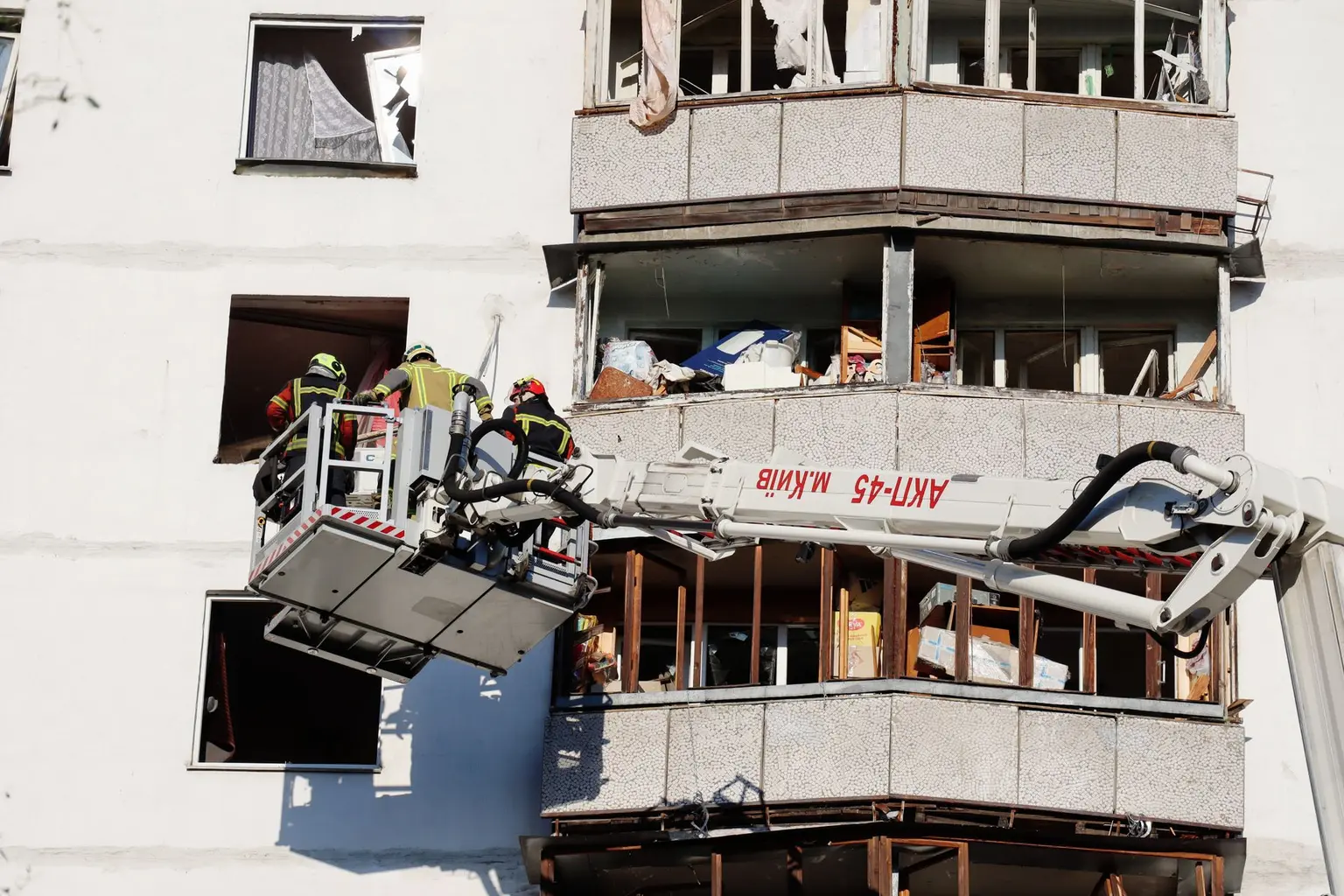
Russia launched a combined drone and missile attack on Kyiv overnight Sept. 16-17, damaging a higher education facility and injuring at least 20 people, Ukrainian officials reported. The attack came as the U.S. government backed legislation that would allow tariffs of up to 100% on countries purchasing Russian oil and gas.
Explosions were reported across Kyiv beginning around 12:30 a.m. local time, followed by a series of ballistic missile strikes shortly after 2 a.m. Another eight explosions were reported minutes later. Air raid alerts were declared across much of Ukraine, including briefly in western Lviv Oblast, while Russian drones remained active around Kyiv until after 7 a.m.
Kyiv Mayor Vitali Klitschko initially said 16 people were injured, including two children, with at least nine hospitalized. The State Emergency Service said a small fire broke out at a higher education institution in Kyiv’s Holosiivskyi district and was quickly extinguished. “The facade and windows of a four-story building of a higher education institution in the Holosiivskyi district were damaged,” the agency said.
A separate fire broke out at a private property in Brovary district, east of Kyiv, damaging a utility building, agricultural equipment, semi-trailers and a car. Homes and commercial infrastructure were also damaged in the Fastiv district of Kyiv Oblast, authorities said.
Polish PM believes Russia is preparing hybrid attacks against countries supporting Ukraine
Polish Prime Minister Donald Tusk said 17 that intelligence assessments indicate Russia may be preparing hybrid attacks involving drones and missiles against countries supporting Ukraine, including Poland.
Tusk said the latest intelligence was “very consistent and convincing” and warned that Russia could seek to portray any incidents as accidental. “There is a real risk that drones or other types of projectiles could be launched into the territory of one or several NATO countries on the eastern flank and could even cause damage, while the official version will be that it is an accident and that no one has reason to count on any response from NATO,” he said.
According to Tusk, the alleged strategy would be aimed at paralyzing or weakening NATO’s willingness to invoke its collective-defense provisions. He said Russia could seek to undermine confidence in Article 5 by creating incidents that fall short of an openly declared act of war.
“The objective will be to undermine NATO's integrity as a whole and, above all, to convince member states that Article 5 is more theoretical than practical – that is, to proceed from the assumption that no one will want to die for Latvia or Lithuania, given that we are dealing with incidents rather than a declaration of war,” Tusk said.
Russia is using North Korean laborers, who are on student visas, to illegally construct drones
Russia is increasingly using North Korean workers to manufacture military drones in violation of international sanctions on Pyongyang, according to a report published Sept. 16 by the Multilateral Sanctions Monitoring Team, a group of 11 countries that tracks efforts to evade U.N. sanctions against North Korea.
The report says Russia created a scheme allowing North Korean workers to enter the country on student visas, disguising them as students and generating revenue for Pyongyang’s “unlawful weapons programs.” Moscow and Pyongyang have reportedly built an “extensive ecosystem of state-led sanctions evasion activities and corruption,” including the use of student and tourist visas, changes to Russian law allowing students to earn income and alleged bribery of Russian universities.
An estimated 15,000 to 30,000 North Korean workers were illegally employed in Russia in 2025, according to the report. Most were reportedly involved in manufacturing military drones, including at the Alabuga drone plant in Tatarstan. The report estimates that North Korea’s overseas labor program generated between $450 million and $800 million in 2025, with each worker earning an estimated $7,500 in annual wages.
North Korea has become one of Russia’s closest partners since the full-scale invasion of Ukraine. Pyongyang has supplied Moscow with large quantities of military equipment, including ballistic missiles, artillery shells, and rocket launchers, and has officially deployed troops to support Russian forces in the war. In April, North Korean leader Kim Jong Un opened a museum honoring North Korean soldiers who fought alongside Russian forces in Ukraine.