


Russian drone terror continues against Ukraine, hitting a Kyiv-Warsaw train near the Polish border; nationwide attacks killed 6, injured 43
Russia continued to terrorize Ukraine, carrying out a large-scale drone attack across the country over the past day, killing at least six civilians and injuring more than 40 others, according to regional authorities. Ukraine’s Air Force reported that Russia launched 453 Shahed-type and Gerbera drones — including some jet-powered models — along with Parodiya decoys and S8000 Banderol missiles. Ukrainian defenses intercepted 405 of the drones and six of the missiles. Hits were recorded at 13 locations, with falling debris reported at seven more sites.
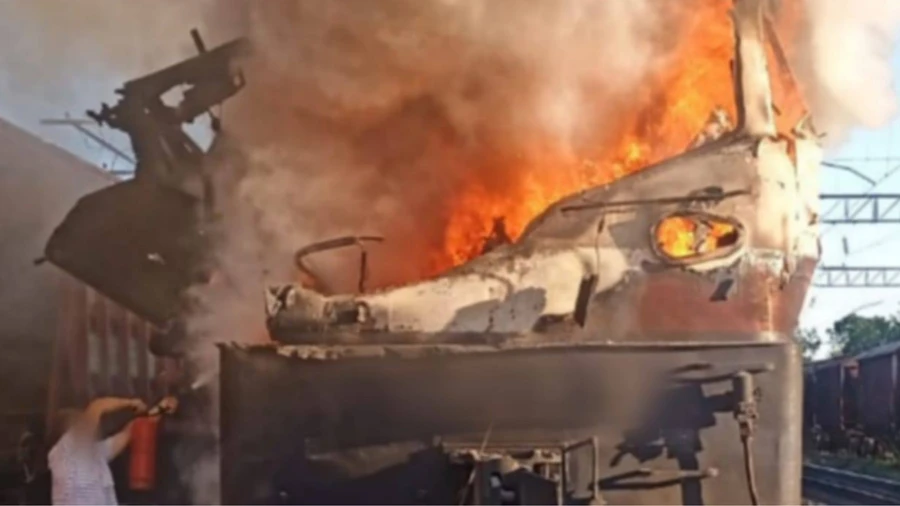
The assault heavily targeted western regions far from the front lines, an area that usually sees fewer attacks. In Volyn Oblast, near the Polish border, drones injured at least five people. A Russian drone also struck a gas station close to the Yahodyn–Dorohusk border crossing with Poland, setting the station and several nearby trucks on fire. The crossing itself was not directly hit, but operations were briefly suspended for safety. Debris from another drone struck the locomotive of a Kyiv–Warsaw passenger train just two kilometers from the Polish border; no passengers were injured after the crew received advance warning.
Ukrainian Foreign Minister Andrii Sybiha called the strikes near the border “Putin’s terror knocking directly on the doors of the EU and NATO,” warning that Russian attacks are reaching the alliance’s frontier. The assault triggered air-raid alerts in neighboring Polish counties in the Lublin Voivodeship.
In other western regions, drones caused power outages in parts of Rivne Oblast, damaged an industrial facility and an apartment building in Ivano-Frankivsk Oblast (one person injured), and hit transport and industrial sites in Ternopil (one injured). Falling debris sparked a fire at a business in Khmelnytskyi Oblast, while residential buildings, utility structures, and a school were damaged in Lviv Oblast.
Further south and east, the attacks continued. In Odesa Oblast, residential buildings, private homes, warehouses, and a children’s sanatorium were damaged. A 71-year-old woman was killed in Mykolaiv Oblast, where energy infrastructure was also hit.
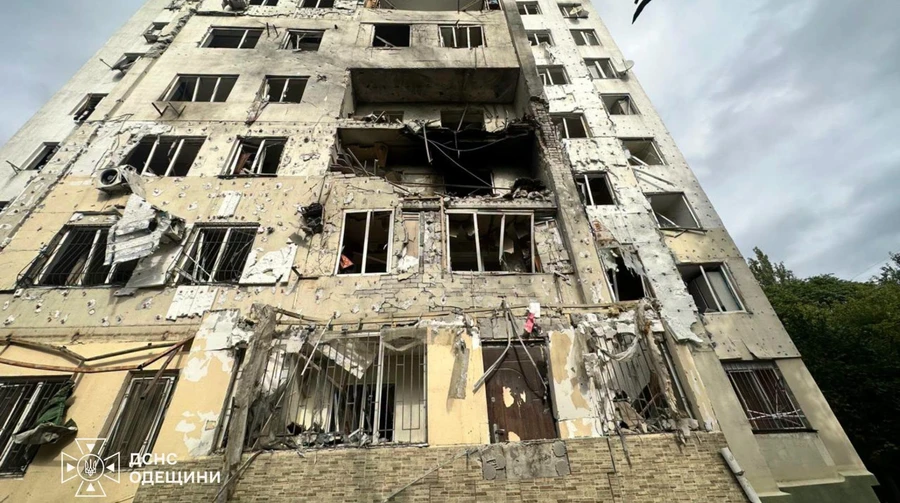
Four people were injured in Zaporizhzhia Oblast amid hundreds of strikes.
In Donetsk Oblast, three people were killed and 11 injured; one person was killed and three injured in Chernihiv Oblast; three were injured in Kharkiv Oblast; one was killed and nine injured in Kherson Oblast; and six people, including a six-month-old child, were injured in Sumy Oblast.
Western Ukraine has increasingly come under long-range drone attack in recent large-scale assaults. Although these regions are hit less often than Kyiv, Odesa, or frontline areas, Russia has shown a growing ability to reach deep into the country’s rear, including critical border infrastructure with NATO member Poland.
Iran requests advanced jet-powered “Geran” drones from Russia
Iran has asked Russia to supply advanced versions of the Geran drones for use in its conflict against Israel and the United States, according to the Financial Times, citing Western experts and a source close to the Kremlin.
These drones are upgraded derivatives of the Iranian Shahed models that Tehran originally supplied to Russia. The newer Russian modifications can reach speeds of up to 600 km/h, carry a warhead of up to 90 kg, and fly distances of up to 1,000 km. They are also equipped with thermal-imaging cameras, AI-based guidance systems, anti-jamming protection, and Chinese modems for mesh radio networks.
According to the FT, Ukraine currently intercepts only about 60% of these jet-powered drones, compared with the usual 90–95% interception rate for other types of aerial targets.
Russians received a new batch of tanks with upgraded anti-drone protection
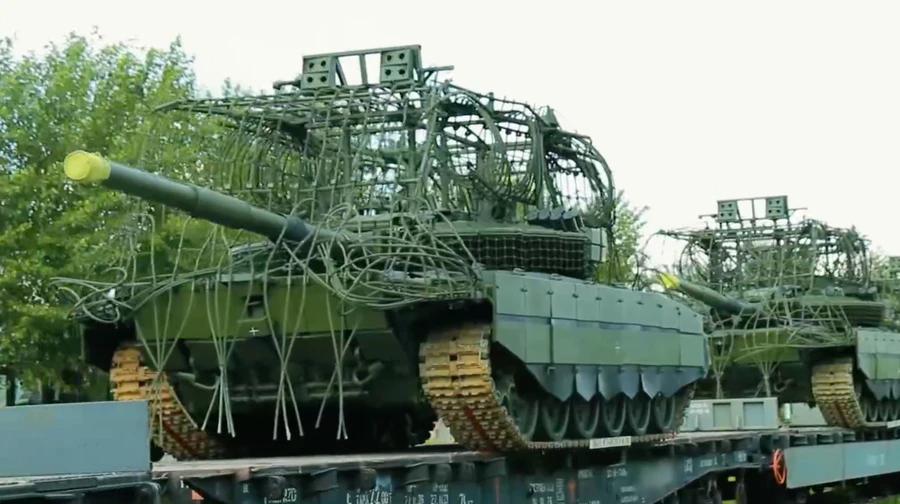
Russian forces have received a new batch of T-90M Proryv and T-72B3M tanks equipped with upgraded protection against attack drones, Russia’s state-owned defense corporation Rostec said.
The tanks, produced at the sanctioned Uralvagonzavod plant, have been fitted with additional all-around protection designed to defend against UAV attacks. Rostec released video showing the turrets covered with metal cables, grilles and chains, with additional protection installed along the sides.
“Additional protection is being developed, primarily against unmanned aerial vehicles. Certain innovations are also being introduced in the additional equipment section, which helps operate in combat conditions,” Rostec said.
The corporation said each tank must travel at least 100 kilometers (62 miles) before being sent to the front to test the vehicles and identify defects. Rostec did not disclose how many tanks were delivered or where they would be deployed.