


Ukraine is preparing to possibility of Russia's increase jet drones speed
Russia could increase the speed of its jet-powered drones to 800-900 km/h, Ukraine’s Air Force projects, Deputy Commander Yurii Cherevashenko said.
Russian jet drones currently reach speeds of up to 600 km/h, and speeds of 800-900 km/h have not yet been recorded. Their use has increased significantly since July, with jet-powered drones now accounting for about 40% of Russia’s UAV launches. The Air Force expects that share could eventually rise to 80%.
Ukraine is working with manufacturers to develop interceptor drones capable of countering the faster weapons. Twenty companies are currently working with the Air Force, while 14 are conducting test flights. Six have already achieved results in destroying jet drones, and three have shown what the Air Force considers promising results.
Cherevashenko said interceptor drones are not expected to be available on the required scale until “not earlier than the end of November.”
12 people reached Ukraine-controlled territory in September, makining their way ouf Oleshky
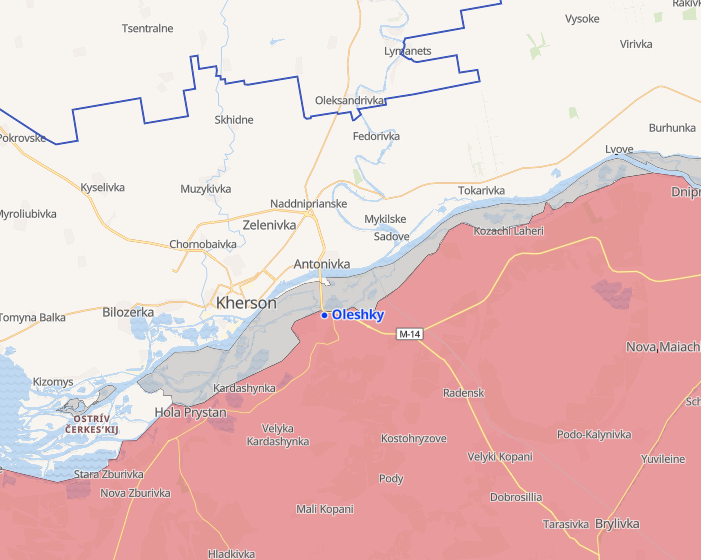
Only 12 people from the Russian-occupied city of Oleshky in Kherson Oblast reached Ukrainian-controlled territory in September, despite more than 60 residents attempting to leave, the head of the city’s exiled military administration shared with the media on October 6.
The others either remained in Rusian-occupied territory or traveled to the nearby village of Radensk, about 10 miles away, to find food. Some were forced to return because they had children or relatives who could not make the dangerous journey through mined roads, Tetiana Hasanenko said.
“Most of those who left the city in September are still in the occupied territory,” Hasanenko said. “Some people have no documents, and most of them were forced to return to Oleshky because they have relatives there who cannot get about on their own, or they have children whom they simply cannot lead through a minefield.”
Evacuation has become increasingly dangerous as Russian forces have mined routes out of the city and continue drone attacks. In late September, four civilians were injured by a mine while trying to leave, while another man was killed by a mine while collecting nuts, Hasanenko said.
Conditions inside Oleshky remain critical. The local hospital has no basic medical supplies, electricity or running water, with four elderly doctors still working there. Ukraine’s Foreign Ministry estimates that about 2,000 people, including nearly 50 children, remain in the city with severely limited access to food, drinking water and other essential services.
Moscow threatens Lithuania over plans to allow stationing nuclear weapons
Kremlin spokesman Dmitry Peskov warned that Russia would take “necessary measures” if Lithuania lifts its ban on stationing nuclear weapons on its territory.
Peskov said allowing nuclear weapons in Lithuania would be “a step towards escalating tensions” and would undermine stability and predictability in Europe. He was also asked about U.S. consideration of a proposal to establish a permanent military base in Lithuania.
“All this would not contribute to stability and predictability on the European continent but, on the contrary, would become another significant stage in heightening tensions,” Peskov said.
“Of course, Russia will be forced to take all necessary measures to reliably ensure its own security,” he added.