


Evacuation convoys from Russian-occupied Oleshky split toward Ukraine and Russia
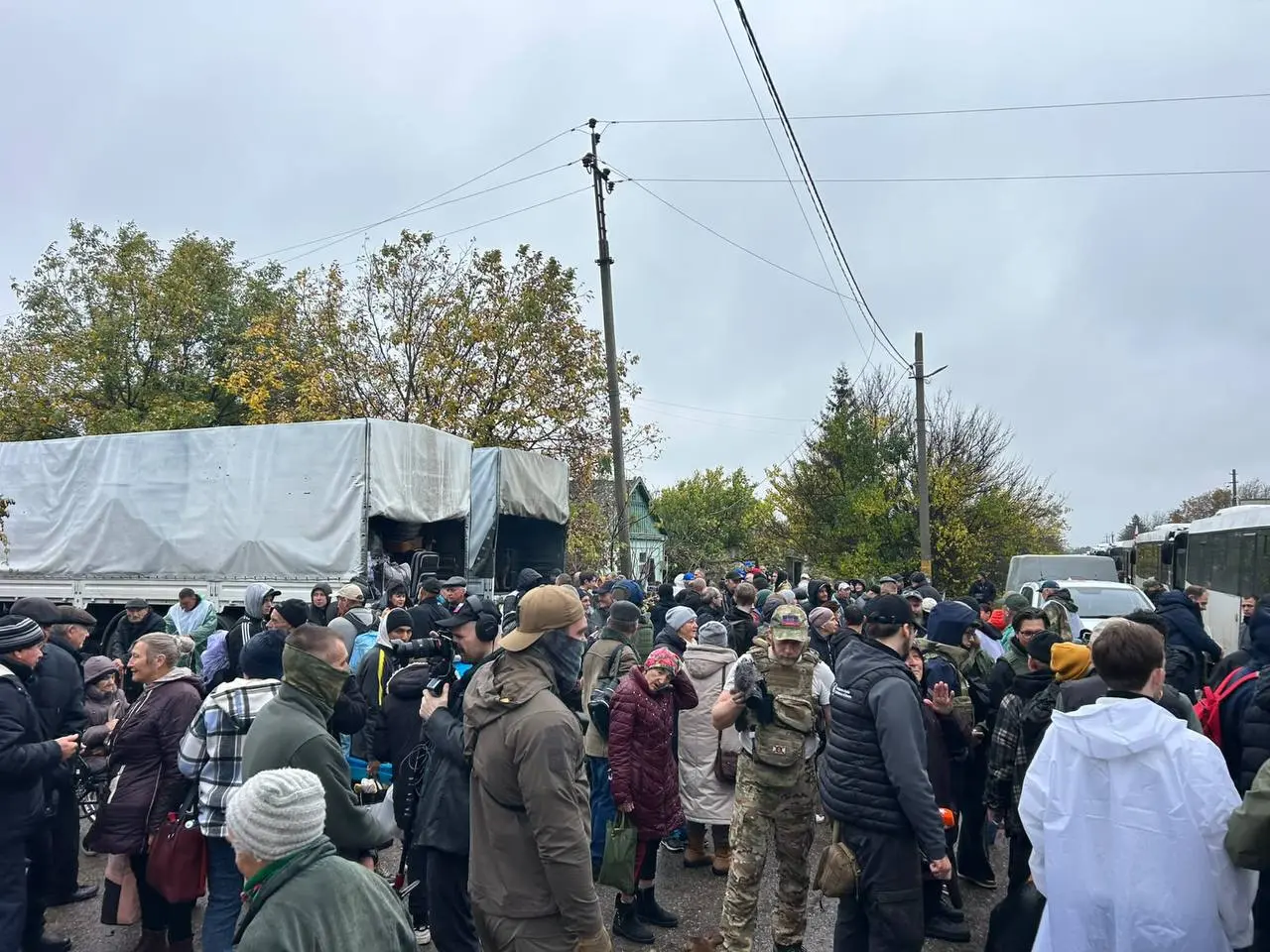
Evacuation convoys carrying residents of Russian-occupied Oleshky in Kherson Oblast have separated, with some heading toward Ukrainian-controlled territory and others toward Russia, Ukrainian and Russian officials said on October 30. Ukraine’s Human Rights Ombudsman Dmytro Lubinets said he was continuing to personally coordinate the humanitarian mission and was heading back to Ukrainian-controlled territory. Russia’s Commissioner for Human Rights Yana Lantratova reported that buses carrying evacuees had reached Armiansk in Russian-occupied Crimea, where they were to split into two convoys.
The Ukrainian delegation had traveled to Oleshky via Anapa in Russia’s Krasnodar Krai, from where they reportedly flew to Belarus before continuing by bus toward Ukrainian-controlled territory, according to David Arakhamia, head of President Volodymyr Zelensky’s parliamentary faction. Around 11:30 a.m. Kyiv time, the Ukrainian side safely reached Oleshky. Lubinets noted that the local ceasefire had been in effect for 80 hours and was still holding. He said he was speaking with local residents to assess their needs while humanitarian aid was delivered and technical support provided to those wishing to leave.
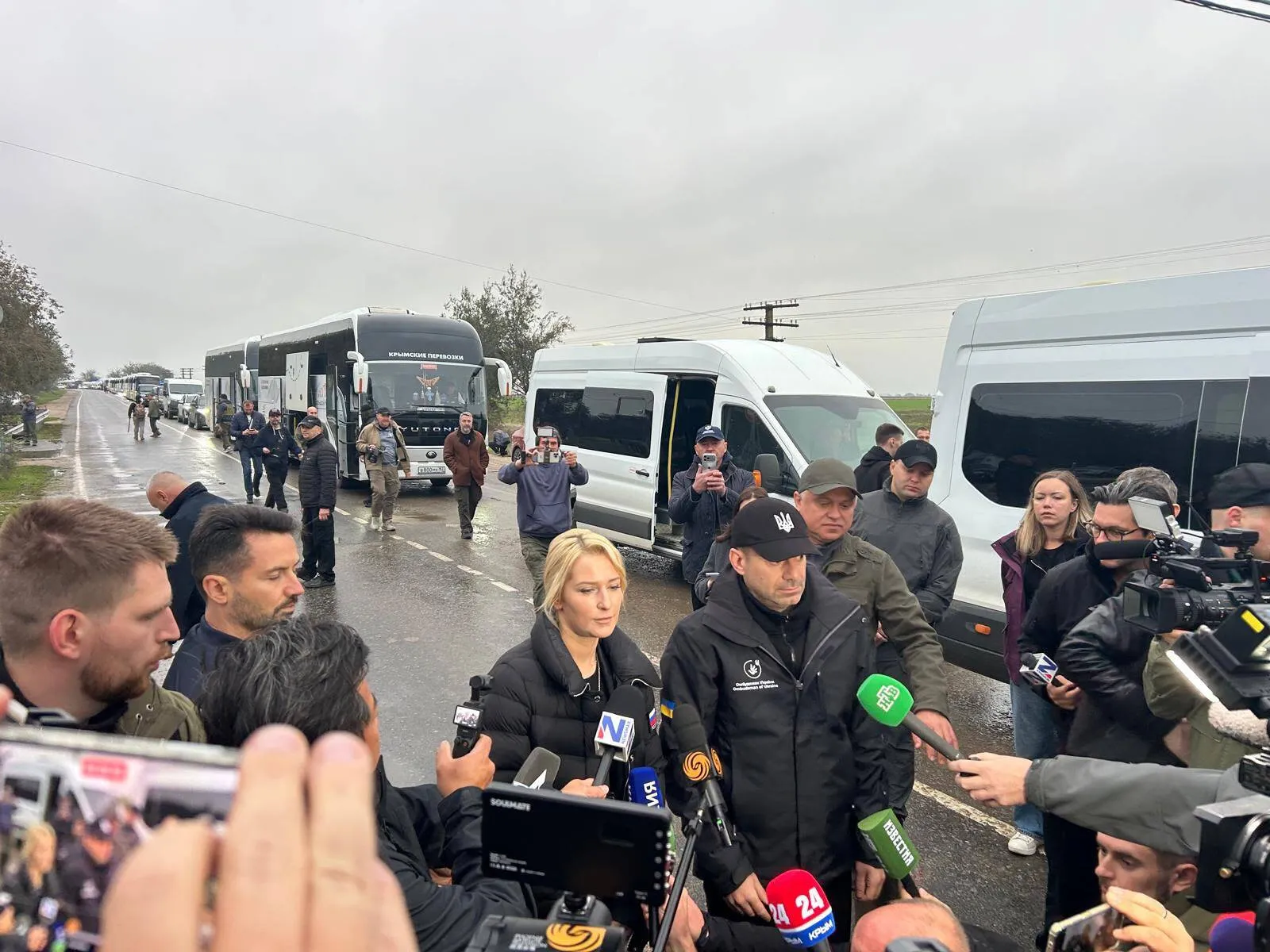
Twenty-five buses with a combined capacity of 750 passengers, along with ambulances for people with limited mobility, had been prepared for the operation. Lubinets and Lantratova held a joint press briefing in Armiansk ahead of the departure. Lantratova confirmed that the evacuation had begun, with some residents choosing to travel to Russia and others to Ukrainian-controlled territory, though exact numbers for each group were not specified. Ukrainian Prime Minister Serhii Koretskyi initially cited a figure of 527 residents planning to head to Ukrainian territory but later clarified that no exact numbers were available.
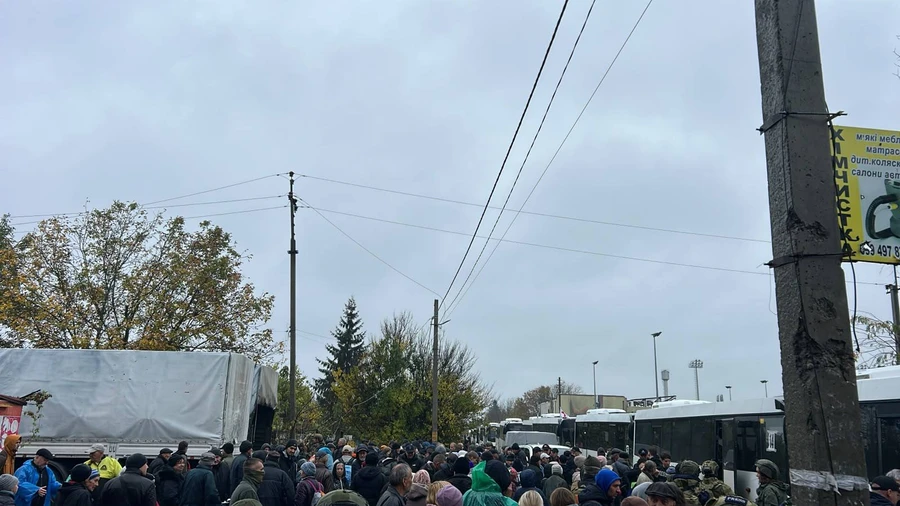
Oleshky has been under Russian occupation since the early days of the full-scale invasion and sits across the Dnipro River from Kherson. Russian forces had effectively blockaded the city, leaving residents with severe shortages of food, water, and electricity. Mined roads and frequent drone attacks had made independent escape extremely dangerous. Despite earlier efforts by the United Nations, the International Committee of the Red Cross, and others, the limited ceasefire enabling this operation took shape following mediation involving Melania Trump.
Reports emerged that Russia had begun moving some residents ahead of the agreed October 30 schedule. An evacuation volunteer from Oleshky said this violated the terms of the agreement. Footage from Russian state media appeared to show civilians being transported with only Russian forces present before the planned date. Ukrainian officials and sources on the ground expressed concern that Russian authorities were taking steps to limit the number of people heading to Ukrainian-controlled territory, including warnings about filtration procedures and restricted information for sick or immobile residents.
Lubinets stated that everyone who wished to leave would be given the opportunity to do so safely, while those who chose to stay would receive humanitarian support. He later proposed that similar humanitarian missions coordinated with U.S. involvement become a regular practice, saying the Oleshky operation showed such agreements could help civilians in need.
Russia hit the Dnipro railway station again just a day after the attack killed 15
Russian forces launched new strikes on the railway station in Dnipro on October 30, Ukrainian Railways reported. Dnipropetrovsk Oblast Governor Oleksandr Hanzha said a fire had broken out at the station and that a woman had been injured in the latest attack.
The station was hit for the second day in a row. A Russian drone strike on October 29 killed 15 people and injured 14 others. Ukrainian Railways said an evacuation had been announced ahead of the new strikes and that areas for extended stays had been prepared in the station’s underground facilities for passengers seeking shelter.
The company warned that trains arriving in and departing from Dnipro could face significant delays because of the repeated attacks on the station and locomotives.
Russians teach children to operate drones and fire assault rifles in occupied Crimea
Russian occupation authorities in Crimea are training children and young people to operate drones, fire assault rifles and disassemble weapons, using equipment belonging to the Russian military, Ukraine’s Defense Intelligence (DIU) said.
In late October, around 50 schoolchildren aged 7 to 18 in Sevastopol qualified for the regional stage of competitions organized by the Russian Movement of the First and the so-called Drone Racing Federation.
Russian authorities are also teaching university students in the city to operate drones using simulators, actual drones and equipment deployed by Russian forces in the war against Ukraine.
“Russia is creating an environment in the temporarily occupied territories where military technology and participation in war are becoming a normal part of childhood,” DIU said.
Schools across occupied Crimea also hold classes where children learn to shoot and disassemble Kalashnikov rifles and march in formation. The occupation authorities organize so-called military-patriotic games and competitions involving participants in Russia’s war against Ukraine, while students are required to learn songs by Russian pro-war performers.
The occupation authorities are also recruiting people into Russian security agencies and encouraging them to sign contracts to serve in Russia’s Unmanned Systems Forces. Former participants in the war against Ukraine are being appointed to senior positions in occupation administrations, while schools are installing memorial plaques commemorating Russian soldiers killed in the war.
DIU said the measures are intended to justify Russia’s aggression and teach children to view war as a normal part of life.
“The goal is not only to maintain control over Crimea, but also to raise a generation for whom Russia’s war, military training from an early age and hatred of Ukraine will become the norm,” the agency said.