


Russia's drone strike on Dnipro station kills 14 amid deadly daytime attacks in Chernihiv and Kremenchuk
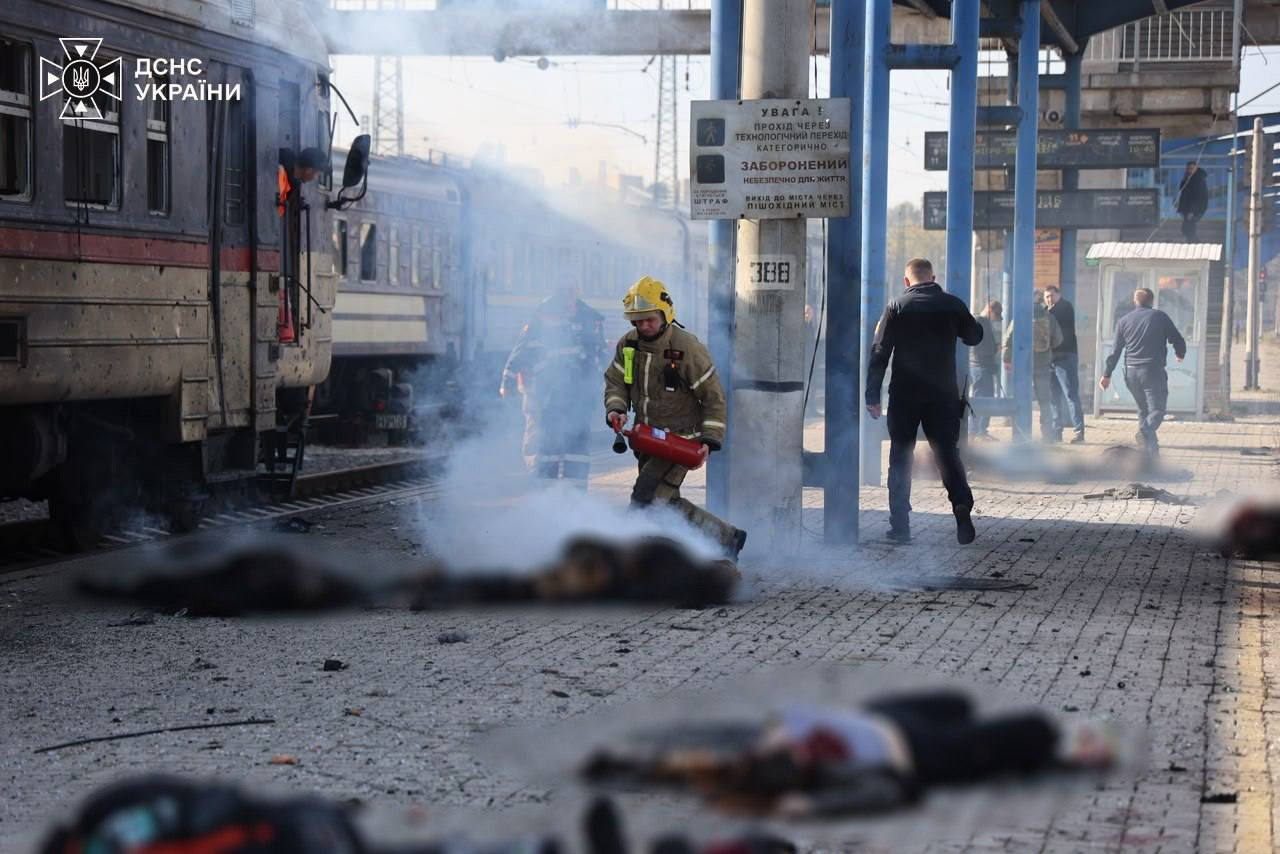
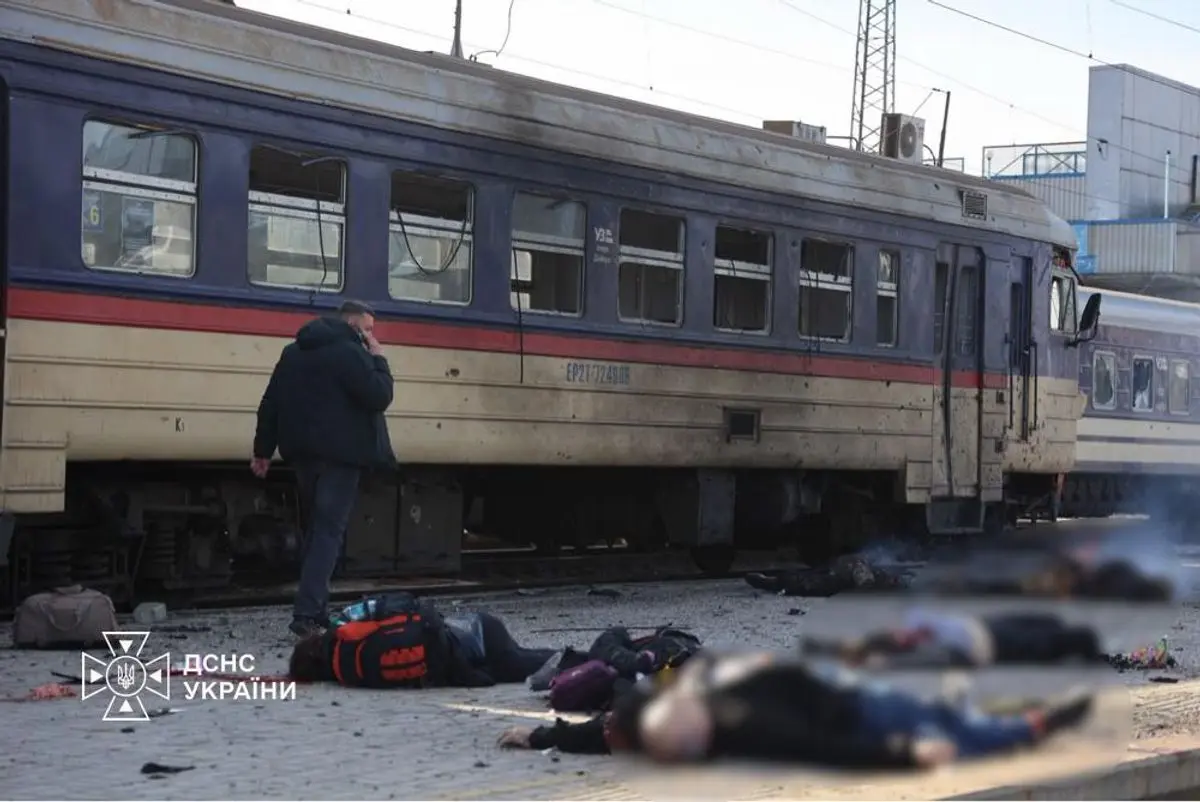
A Russian jet-powered drone struck a crowded platform at the main railway station in Dnipro on the morning of October 29, killing at least 14 people and injuring about 14 others. The attack hit while a passenger train bound for Zaporizhzhia stood at the platform. Many travelers were still waiting nearby despite an earlier air-raid warning and evacuation order.
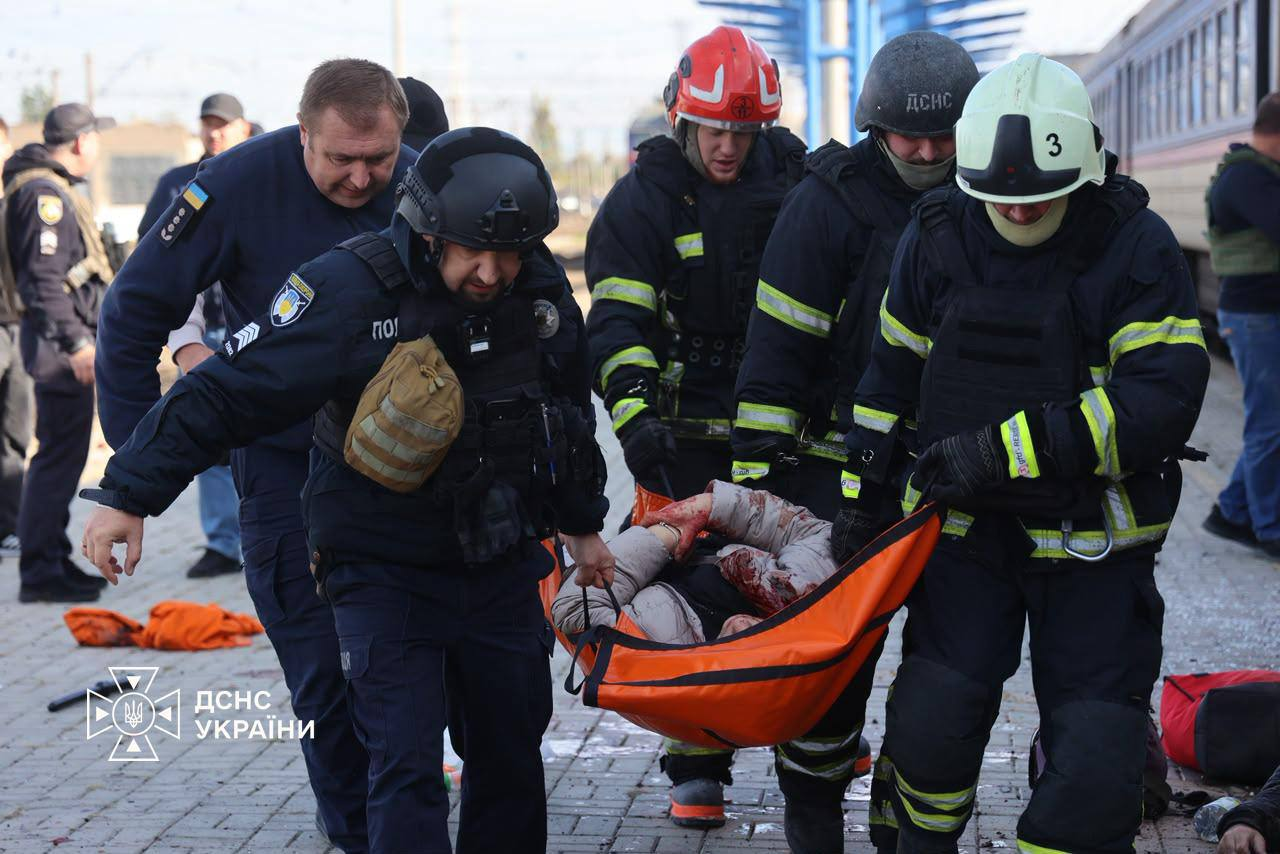
Ukrainian air defenses destroyed three of the four jet drones launched at the region, but one got through and caused heavy casualties on the platform. Among the wounded was an 11-year-old boy; several people suffered serious shrapnel injuries. Photos from the scene showed bodies on the platform and a damaged train with shattered windows.
President Zelensky called the strike “horrific” and accused Russia of deliberately targeting civilians. He renewed his call for stronger sanctions from the United States, the European Union, and the G7, arguing that easing pressure on Moscow only encourages further attacks.
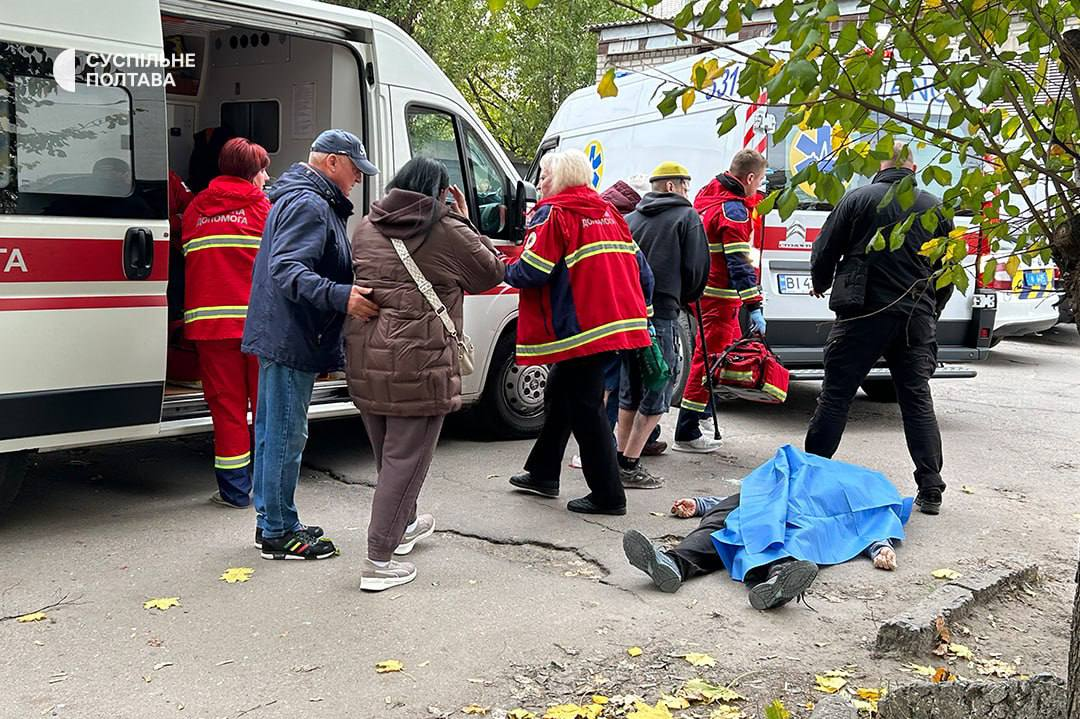
Separate daytime drone strikes hit other cities the same day. In Chernihiv, an attack on a busy central street killed two 15-year-old girls and injured more than 20 people, including children. In Kremenchuk, a drone struck a multi-story residential building, killing three people and wounding at least 15 others, among them several children.
Ukrainian advisor warns of Russian AI drones that hunt targets independently
Russian drones equipped with artificial intelligence can already locate and attack targets such as trains, warehouses, and vehicles without continuous operator control. Ukrainian presidential adviser on defense technologies Serhiy Beskrestnov, known as “Flash,” said the systems are already in use on Molniya drones, certain Geran variants, Lancets, and other platforms.
The drones can navigate using visual imagery of the terrain without relying on GPS. They can be tasked to follow railway lines, detect a train, and strike the locomotive, or to identify warehouses by their appearance and the presence of trucks nearby before attacking. Neural networks trained on large sets of images enable them to recognize these objects autonomously.
“You can launch a thousand drones, and they will autonomously search for targets and attack them. This is truly a terrible future,” Flash warned. He noted that traditional electronic warfare systems may prove far less effective against such autonomous platforms.
Talks on ending the war depend on the battlefield, Kremlin says
The start of planned trilateral negotiations between Russia, the United States, and Ukraine will depend on the situation on the battlefield, Kremlin aide Yuri Ushakov said on October 28. Moscow has signaled openness to resuming the talks in Abu Dhabi for the first time in more than eight months, though no date has been confirmed. Ushakov indicated the meeting could take place after November 4 and ruled out any European participation.
Ukrainian President Volodymyr Zelensky said he expects the negotiations in mid-November, while noting that Washington has yet to set a firm date. The talks come amid a renewed U.S. push to restart diplomacy that has largely stalled over Russia’s demand that Ukraine surrender parts of the Donbas region. Ukrainian officials do not anticipate a breakthrough but hope the meeting will help restore regular contacts.
The technical discussions are expected to address a possible energy and maritime ceasefire, exchanges of military and civilian prisoners, and the return of Ukrainian children abducted by Russia. The composition of the Russian delegation has not been finalized, though Ushakov said the core group is already in place.
Oleshky ceasefire holds for the third day
The local ceasefire around the Russian-occupied city of Oleshky in Kherson Oblast has entered its third day without major violations. The arrangement, announced by the White House on October 23 and confirmed by both Ukraine and Russia, is intended to allow humanitarian aid deliveries, demining of key roads, and the evacuation of civilians. It is expected to continue into early November.
As of the morning of October 29, demining operations were ongoing. Ukraine’s Ombudsman Dmytro Lubinets departed with a Ukrainian delegation to the occupied town that morning. Oleshky, which had a pre-war population of around 24,000, has been under Russian control since the early days of the full-scale invasion and sits across the Dnipro River from Kherson. Russian forces had effectively blockaded the city, preventing humanitarian aid from reaching residents.
Kherson Oblast Governor Oleksandr Prokudin reported that no strikes against civilian or critical infrastructure targets and no civilian casualties were recorded in the region during the ceasefire period.