


Moscow ready to resume trilateral talks with Ukraine and the US after November 4
The Kremlin is ready to resume trilateral talks with Ukraine and the U.S. after November 4, when Russia celebrates National Unity Day, Russian President Vladimir Putin’s foreign policy aide Yuri Ushakov told the state-controlled outlet Vesti on October 25.
The statement follows Ukrainian President Volodymyr Zelensky’s remarks on Oct. 23 that another round of trilateral talks was expected in the first half of November, with Abu Dhabi under consideration as a venue.
“The next deadline is now Nov. 4, our major holiday. After that, we will be ready to resume negotiations,” Ushakov said.
The Kremlin has repeatedly rejected ceasefire proposals, instead demanding that Kyiv surrender the parts of Donbas in eastern Ukraine that Russian forces have been unable to capture fully. Ukraine, by contrast, has agreed to multiple U.S.-backed ceasefire proposals.
Ushakov said he did not expect the first trilateral meeting after the pause to produce significant results, describing it as a “trial run.” A peace agreement between Russia and Ukraine “still needs work,” he added.
On October 20, U.S. envoys Steve Witkoff and Jared Kushner met with Zelensky and European partners, including Finnish President Alexander Stubb and Norwegian Prime Minister Jonas Gahr Støre.
The following day, Witkoff held a three-hour meeting with Putin in St. Petersburg. Afterward, the Kremlin said it was ready to resume trilateral talks in November. Witkoff said on October 21 that discussions among Ukrainian, U.S. and Russian representatives would “continue at the technical level.”
Putin has long avoided meeting with Zelensky. Instead, the Russian leader is reportedly seeking a meeting with U.S. President Donald Trump in China next month, potentially pursuing a peace deal on terms favorable to Moscow without Ukraine’s participation.
In recent weeks, Trump has criticized Zelensky, unilaterally announced an energy ceasefire between Russia and Ukraine that ultimately failed, threatened to cut off intelligence-sharing with Kyiv, and eased sanctions on Russian oil exports.
Trump has defended the sanctions relief, arguing that it could encourage Moscow to participate in peace negotiations with Kyiv.
National Guard delivered children’s aid to occupied Oleshky as localized ceasefire approaches
Ukrainian National Guard units have delivered more than 600 kilograms of essential supplies for children to the Russian-occupied town of Oleshky in Kherson Oblast using drones. Interior Minister Ivan Vyhovskyi announced that fighters from the “Bolharychi” special-purpose company of the 11th Brigade transported 15 packages containing dry breakfasts, milk, educational games, and toys.
The operation targeted families with children who remain trapped in the blockaded town. Among the children still in Oleshky are some who were born after the full-scale invasion began and have known only life under occupation and constant threat. Vyhovskyi thanked everyone involved in collecting the packages, operating the drones, and providing cover during the high-risk mission.
The delivery is part of ongoing efforts to support civilians in Oleshky, where a severe humanitarian crisis continues. The town has been without regular food deliveries since late May, and critical infrastructure is largely destroyed. Residents face shortages of food, clean water, medicine, electricity, and medical care. The local hospital remains the only functioning medical facility, operating at a minimal level with almost no supplies.
A localized ceasefire aimed to enable larger-scale humanitarian aid deliveries and the safe evacuation of civilians is scheduled to begin on October 27 at 03:00 Kyiv time (04:00 Moscow time). Both Ukrainian and Russian sides have confirmed the arrangement, which was facilitated with the involvement of U.S. First Lady Melania Trump. The operation is expected to include demining of access routes, delivery of aid, and the voluntary evacuation of residents who wish to leave.
Russian drone strike hit an apartment building in Vinnytsia, injuring six
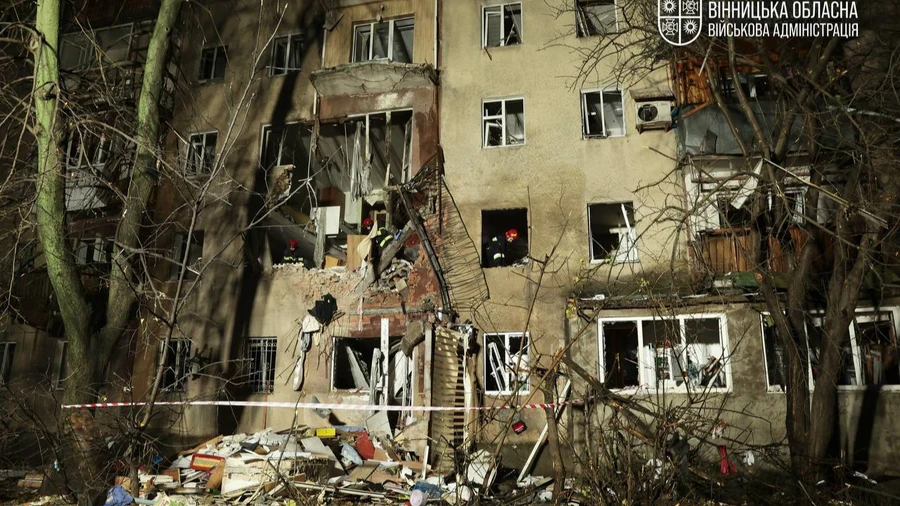
A Russian drone struck a five-story apartment building in Vinnytsia in the early hours of October 25, injuring six people and completely destroying four apartments, according to Natalia Zabolotna, head of the Vinnytsia Oblast Military Administration.
The strike damaged the building’s structure between the first and second floors, as well as nearby parked cars. One person was hospitalized.
The wider attack on Vinnytsia Oblast also damaged critical infrastructure, civilian facilities, and residential houses. A private care home for the elderly was hit, prompting the evacuation of 15 residents.
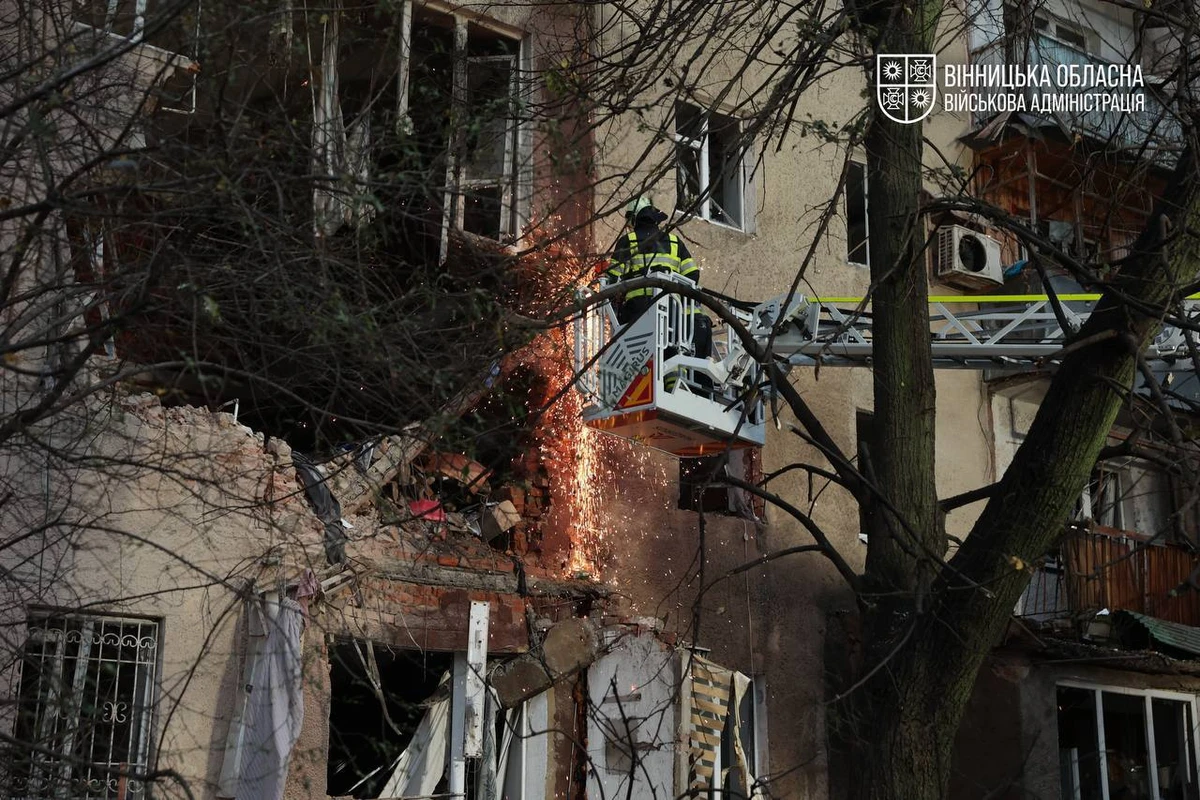
Firefighters have extinguished all fires and are continuing to clear the rubble. More than 60 emergency responders and 14 fire engines are working at the scene.
Russia destroyed four hardware hypermarkets Epicentr, across Ukraine in under 24 hours
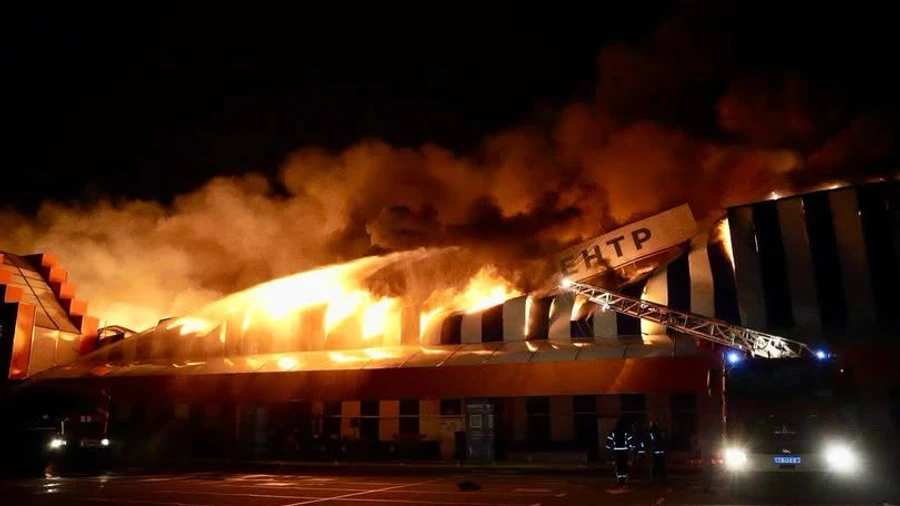
Russian forces hit Epicentr hardware hypermarkets in four Ukrainian cities within less than a day, the company’s head of public relations, Yuliia Chudnovets, said on October 25.
The stores in Kharkiv, Zaporizhzhia, Vinnytsia, and Poltava were attacked in rapid succession. Epicentr described the coordinated strikes as “the total destruction of the chain.”
On the morning of October 25, a strike on the Poltava store injured one person. The attacks form part of a broader wave of Russian strikes overnight and into the morning that also targeted energy infrastructure, including a thermal power plant, substations, coal mines, grain storage facilities, shopping centres, and a postal logistics hub.
Russia is ready to supply any volume of diesel to the United States
Russia has stated it is prepared to deliver any quantity of diesel fuel the United States requests, within the limits of its available export volumes. Russian Deputy Prime Minister Alexander Novak said Moscow can fully meet American demand from the volumes it plans to export.
The comments come after an October 9 agreement between Presidents Vladimir Putin and Donald Trump that led Russia to ease its self-imposed diesel export ban and prompted the U.S. Treasury to issue a temporary license allowing Russian diesel transactions through April 2027. Planned volumes include more than 300,000 metric tons in October, 500,000 tons in November, and 1 million tons shortly afterward, with potential further increases.
The first tanker carrying about 40,000 metric tons of ultra-low-sulfur diesel left a Russian Baltic port around October 22 and is expected to arrive in the United States in early November. Additional shipments have followed. Novak noted that Russia aims to restore full monthly diesel export capacity of 3–3.5 million tons by the end of 2026.