


Ukraine and Russia are close to an agreement on the evacuation of civilians from occupied Oleshky
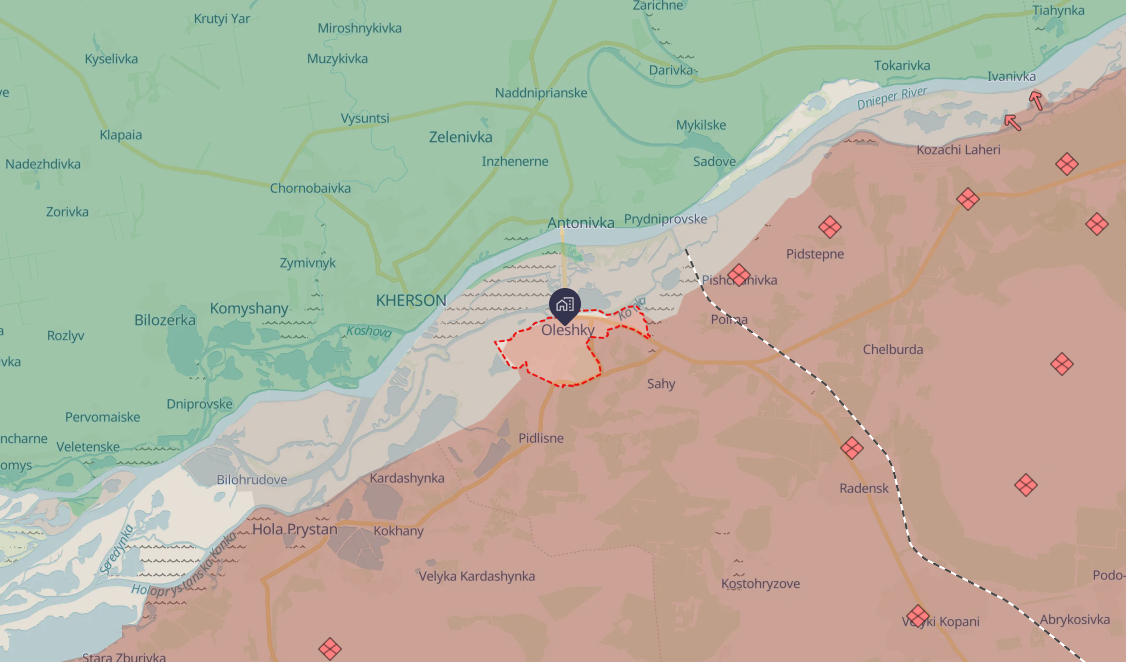
Ukraine and Russia are close to finalizing the details of a civilian evacuation from the front-line town of Oleshky and nearby settlements in Russian-occupied Kherson Oblast, Ukrainian Human Rights Ombudsman Dmytro Lubinets said on October 18.
Oleshky has been under Russian occupation since the first days of the full-scale invasion. Residents face severe shortages of food, water and electricity, while mined roads, constant drone attacks and interrogations at Russian checkpoints make safe departure almost impossible. According to Lubinets, the two sides are discussing a local ceasefire that would allow people to be evacuated directly to Ukrainian-controlled territory instead of traveling through occupied areas in Russia and Belarus.
“We are making as much progress as possible. We are now moving toward agreeing on the final details to ensure a ceasefire and evacuate everyone… directly to territory controlled by the Ukrainian government,” Lubinets told Ukrainian broadcaster Espreso. One possible route could involve transferring civilians across the Dnipro River to the Ukrainian-controlled western bank.
Kyiv has been holding daily negotiations on the issue, and Moscow has begun considering a proposal that Ukraine put forward earlier. Lubinets acknowledged that difficult issues remain but expressed hope for concrete results in the near future. No final agreement has been announced, and the timing of any evacuation is still unclear.
Earlier estimates suggest that more than 6,000 people, including around 200 children, may still remain in Oleshky and the surrounding area. Only a small number of residents have managed to reach Ukrainian-controlled territory in recent months, often through dangerous routes or by walking across mined roads.
U.S. Congressman vows full support for Ukraine and threatens consequences over Starshield Restrictions
U.S. Representative Brian Fitzpatrick announced that he will meet with Ukrainian President Volodymyr Zelensky and his team this week to discuss Starshield, sanctions, and other matters related to Ukraine’s defense. In a strongly worded statement, the congressman pledged to assure Zelensky that any attempt to limit Ukraine’s access to Starshield will be fully investigated and met with public congressional oversight hearings, as well as immediate harsh budget cuts to the responsible agency or its leadership.
Fitzpatrick emphasized that Congress views Ukraine as an indispensable ally of the United States and Russia as a self-declared enemy. He stated that the United States must provide Ukraine with all necessary defensive equipment, stop importing any Russian oil, and impose the harshest sanctions yet against the Russian regime. According to the congressman, each of these measures will be brought to the House floor and pass by an overwhelming margin.
“This is, after all, what Ronald Reagan would do. And this is what we will do now. Ukraine can, and will, defeat Russia,” Fitzpatrick wrote, concluding with the hashtag #PeaceThroughStrength.
Businesses have lost almost US$8bn due to Russian attacks in 2026
Ukrainian businesses have lost an estimated US$7.7 billion in 2026 as a result of Russian attacks that destroyed premises, production facilities and goods stored in warehouses, Prime Minister Serhii Koretskyi told the BBC. He noted that the figure is continuing to grow.
According to Koretskyi, more than one million square metres of various types of property — particularly warehouse and logistics facilities — have been destroyed or significantly damaged this year. Despite the losses, he said, businesses are adapting and finding ways to continue operating.
The government shares intelligence and information briefings with companies about Russian strike patterns and potential consequences. At a recent online meeting with large businesses, the authorities proposed a 1% increase in VAT to create a special compensation fund for war-related insurance risks.
Prime Minister also addressed the issue of reserving employees from mobilisation, noting that large-scale consultations with businesses have not yet taken place. He argued that his own background in business allows him to understand the challenges entrepreneurs face.