


Ukraine shaken by Trump's Putin pivot
When Ukrainian negotiators arrived in the United States on October 9 expecting to discuss a possible energy ceasefire with Russia, they instead got into a diplomatic ambush. U.S. envoys Steve Witkoff and Jared Kushner informed the Ukrainian and European delegations that President Donald Trump was preparing to lift sanctions on Russian diesel exports. The room fell silent. One senior Ukrainian official later described the moment with bitter clarity: “Everyone was sitting there like fools.”
What made the revelation especially painful was the timing and the one-sided nature of the demand. Washington was simultaneously pressing Kyiv to stop striking Russian oil refineries — a key tool for degrading Moscow’s war economy — while offering Russia a lucrative economic concession that would generate fresh revenue for its military machine. Ukrainian officials had repeatedly insisted that any energy truce must be reciprocal. Instead, they found themselves being asked to disarm unilaterally while Russia continued pounding Ukraine’s power grid.
The sense of betrayal only deepened when Trump publicly announced that Russia would supply millions of tons of diesel to global markets following a phone call with Vladimir Putin via his account on Truth Social. Kyiv had not been given advance details. One Ukrainian official noted that the temporary sanctions lift was set to expire on April 7 — exactly six months later — calling it “a birthday present for Putin” delivered on the Russian leader’s own birthday.
Behind closed doors, U.S. negotiators went further, warning that continued Ukrainian strikes on Russian energy targets could lead to the cutoff of critical intelligence sharing that has enabled many of Kyiv’s deep strikes. For Ukrainian officials present, the message was unmistakable: Washington was prepared to protect the very infrastructure financing Russia’s war while stripping Ukraine of one of its few remaining levers of pressure.
Hours after the announcement, Ukrainian drones hit an oil terminal in Rostov-on-Don, while Russia launched fresh missile and drone attacks on Kyiv’s energy infrastructure. President Zelensky publicly called the American decision “weak” and accused partners of using the Ukrainian delegation as a “smokescreen.” In Kyiv, the prevailing feeling was not surprise, but a cold recognition that the rules of the game had once again been rewritten without Ukraine’s consent.
Russian glide bombs killed 17 in a Zaporizhzhia residential strike, including three children
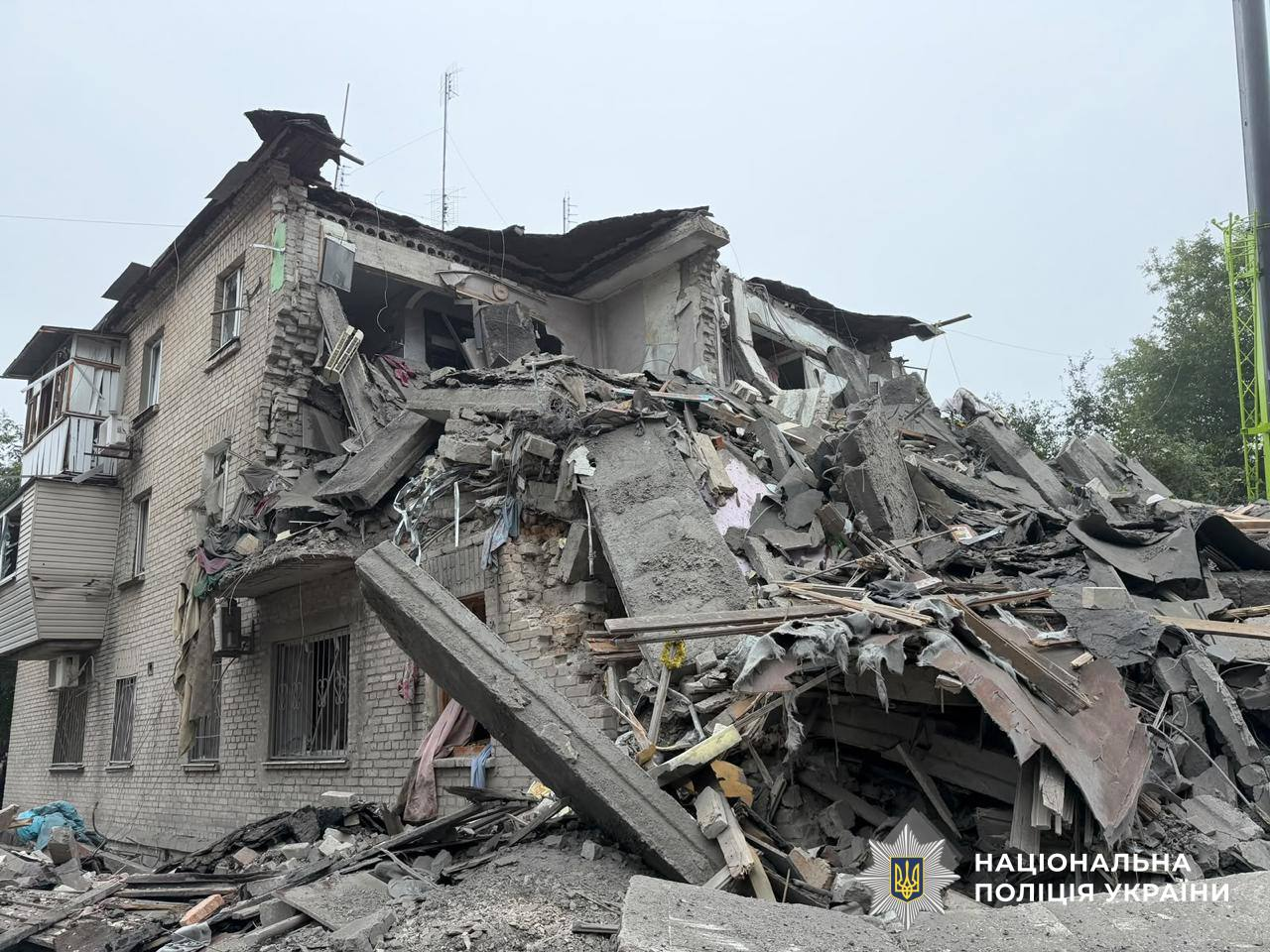
Russian forces struck a residential area of Zaporizhzhia with guided aerial bombs early on the morning of October 10, partially destroying a five-storey apartment building and damaging dozens of other homes.
The death toll rose throughout the day as rescue teams worked through the rubble. By mid-afternoon, 17 people were confirmed killed, among them three children. At least 16 others were injured, several in serious or critical condition. Emergency services managed to pull one woman out alive after she had been trapped under the debris for more than eight hours.
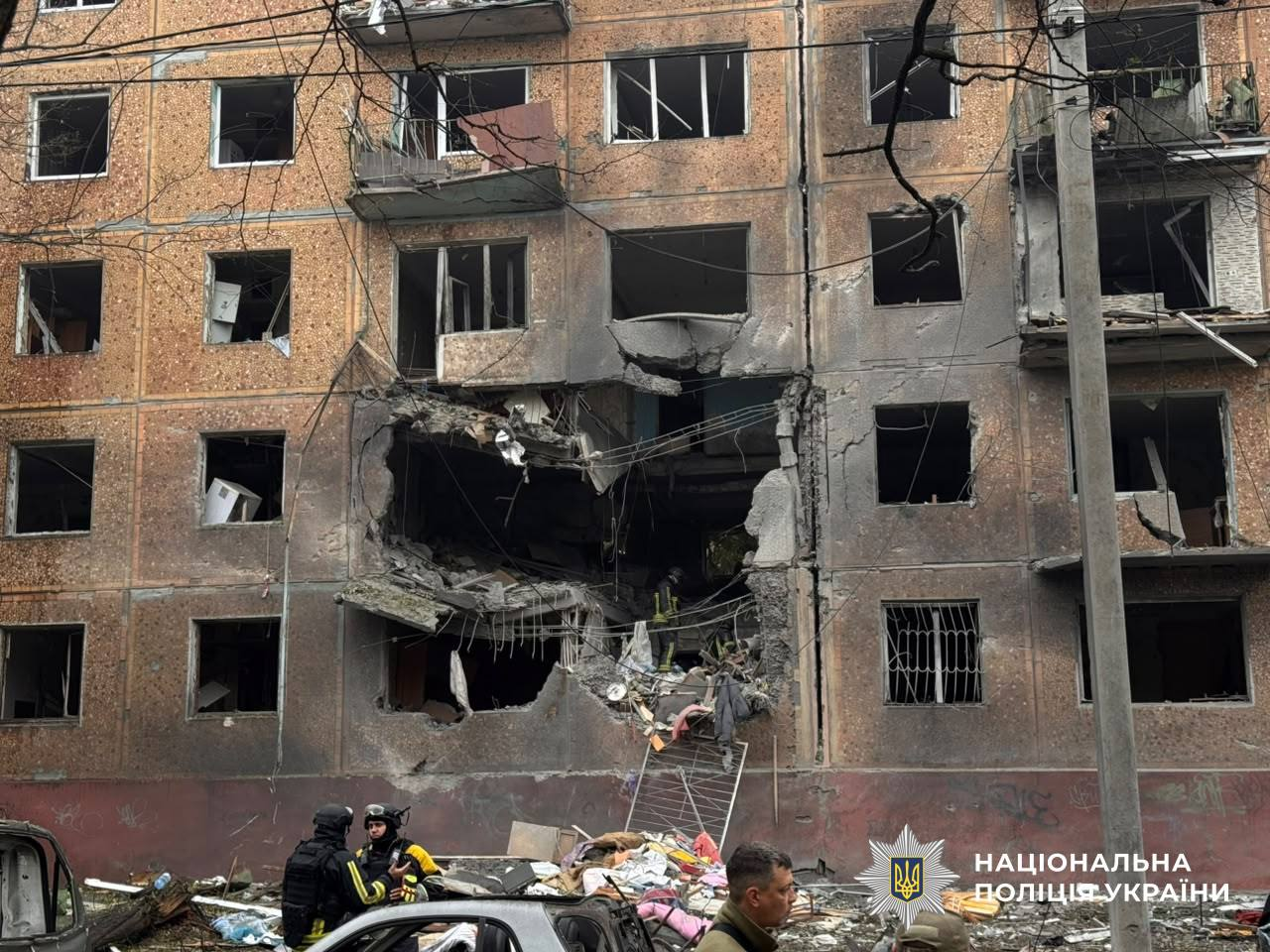
Local authorities reported that structural elements of the apartment block collapsed, and search-and-rescue operations continued for hours as the number of victims climbed. At least 26 residential buildings were damaged in the attack.
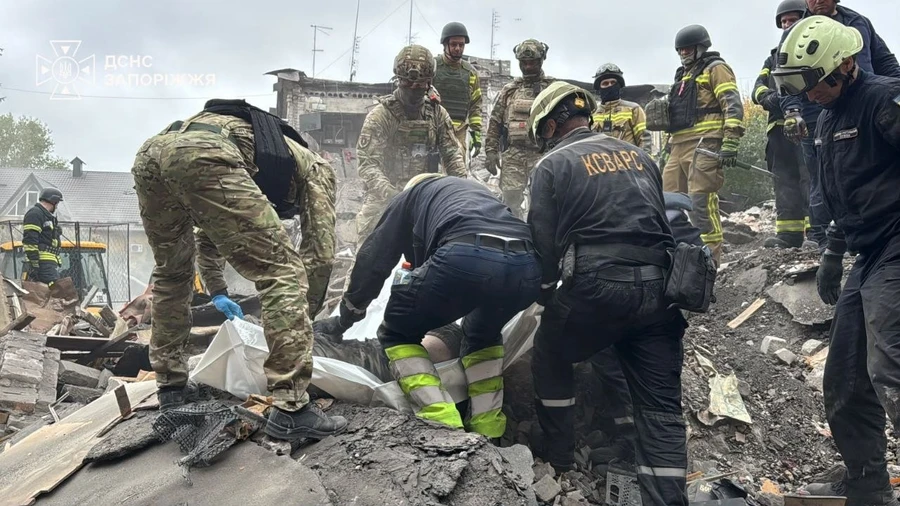
October 11 has been declared a day of mourning in Zaporizhzhia for those killed in the strike.
'Every extra billion will be spent on this' — Zelensky warned as missiles hit Kyiv right after Russia sanctions relief
Loud explosions echoed across Kyiv around 2 p.m. on October 10 as Russia followed up a morning drone assault on energy infrastructure with a series of missile strikes on the capital. By late afternoon, at least seven people had been injured in a northern residential area of the city, with five hospitalized and three in serious condition, according to Mayor Vitali Klitschko.
President Volodymyr Zelensky linked the attack directly to the recent U.S. decision to ease restrictions on Russian diesel exports. “The consequences of allowing Russia to sell oil products were most clearly felt in Kyiv today,” he said, noting that the morning drone attacks on energy facilities were followed by ballistic missiles. Zelensky warned that every additional billion dollars Russia earns from exports will be used to produce more weapons, upgrade drones, and recruit fighters.
Missile debris fell on the grounds of residential buildings in a northern district, sparking a fire of more than 200 square meters near a popular riverside park and boat station. A single-story structure and nearby high-rise courtyards were damaged. One boat station worker was caught in the blast wave and hospitalized. Earlier in the day, Russian strikes on energy infrastructure caused power outages and water supply disruptions across parts of the city, temporarily halting metro services.
The attack continues a pattern of intensified Russian strikes on Ukraine’s energy grid that began in early October. Zelensky called for stronger signals from the United States, Europe, and other partners to limit Russia’s ability to finance and continue its war.
US presses Ukraine with a “firm demand” to halt strikes on Russian oil refineries, threat to cut off intelligence
The United States has issued a “firm demand from the US President” requiring Ukraine to halt attacks on Russian oil refineries, according to senior Ukrainian officials. The message was delivered during nearly eight hours of talks in Miami on October 9 by US envoys Steve Witkoff and Jared Kushner.
Ukrainian sources say the envoys also raised the possibility of suspending intelligence sharing if Kyiv continued the strikes. A US official later denied that an explicit threat was made, stating that the Americans instead stressed that Ukraine should avoid actions harming US consumers amid high diesel prices. President Zelensky had offered a reciprocal energy ceasefire, but Washington insisted on a unilateral Ukrainian pause.