


Russian ballistic missiles struck Kyiv, damaging the Northern Bridge
Several waves of Russian ballistic missiles hit Kyiv overnight from November 6 to 7, just hours after President Volodymyr Zelensky warned that Russia was preparing a major attack on bridges, energy facilities, and civilian infrastructure. Russia fired 36 ballistic missiles, all aimed at Kyiv and the surrounding region, along with 172 drones. Ukrainian air defenses intercepted four ballistic missiles and 149 drones. At least nine people were injured across the attacks, including a child; in the capital itself, at least six were hurt, among them a 14-year-old girl, with two people hospitalized.
The strikes damaged Kyiv’s critical Northern Bridge, closing it to traffic in both directions after the roadbed, trolleybus contact lines, and power lines were hit. Residential buildings, a kindergarten, and non-residential structures were also damaged in the city. In Kyiv Oblast, energy facilities were struck, including substations linking the Rivne and Khmelnytskyi nuclear power plants to the capital and central regions. Additional energy infrastructure was damaged in Vinnytsia, Zhytomyr, Rivne, Kharkiv, and Dnipro oblasts, leading to power and water disruptions.
Zelensky said Russia was preparing for upcoming trilateral talks by launching ballistic missiles at critical infrastructure and trying to push Kyiv and the country into a blackout. He called for increased bilateral support from the United States and greater attention from the U.S. Congress. Russia’s Defense Ministry claimed it targeted the Northern Bridge, an industrial facility, a power station, and other sites it described as military-related.
Putin threatens to destroy all of Ukraine’s infrastructure by 2027
Russian President Vladimir Putin has threatened to destroy Ukraine’s entire infrastructure by next year unless Kyiv agrees to his terms, according to sources cited by the Financial Times. One interlocutor conveyed Putin’s position as: “I will destroy all your infrastructure until you agree. By next year Ukraine won’t have any infrastructure left. All the bridges, ports, railways, energy infrastructure, power stations… will have been destroyed.”
Sources said Putin views Russia’s ongoing air strikes as retaliation for Ukrainian drone attacks on Russian oil refineries and commercial warehouses. He has also accused Kyiv of undermining previous ceasefire arrangements. As a precondition for any ceasefire, Putin is demanding that Ukraine cede the remaining Ukrainian-controlled parts of eastern Donbas and expects further territorial concessions in exchange for any future security guarantees from NATO countries.
Participants in informal back-channel efforts to end the war told the FT that talks in Abu Dhabi are unlikely to produce a meaningful ceasefire. They said Putin is focused on regaining the initiative through a harsh winter campaign of strikes on Ukraine’s energy infrastructure, while using discussions of security guarantees as a way to prolong negotiations and weaken Ukraine’s position.
Military intelligence identifies Russian soldiers involved in deadly Komyshuvakha aid center strike
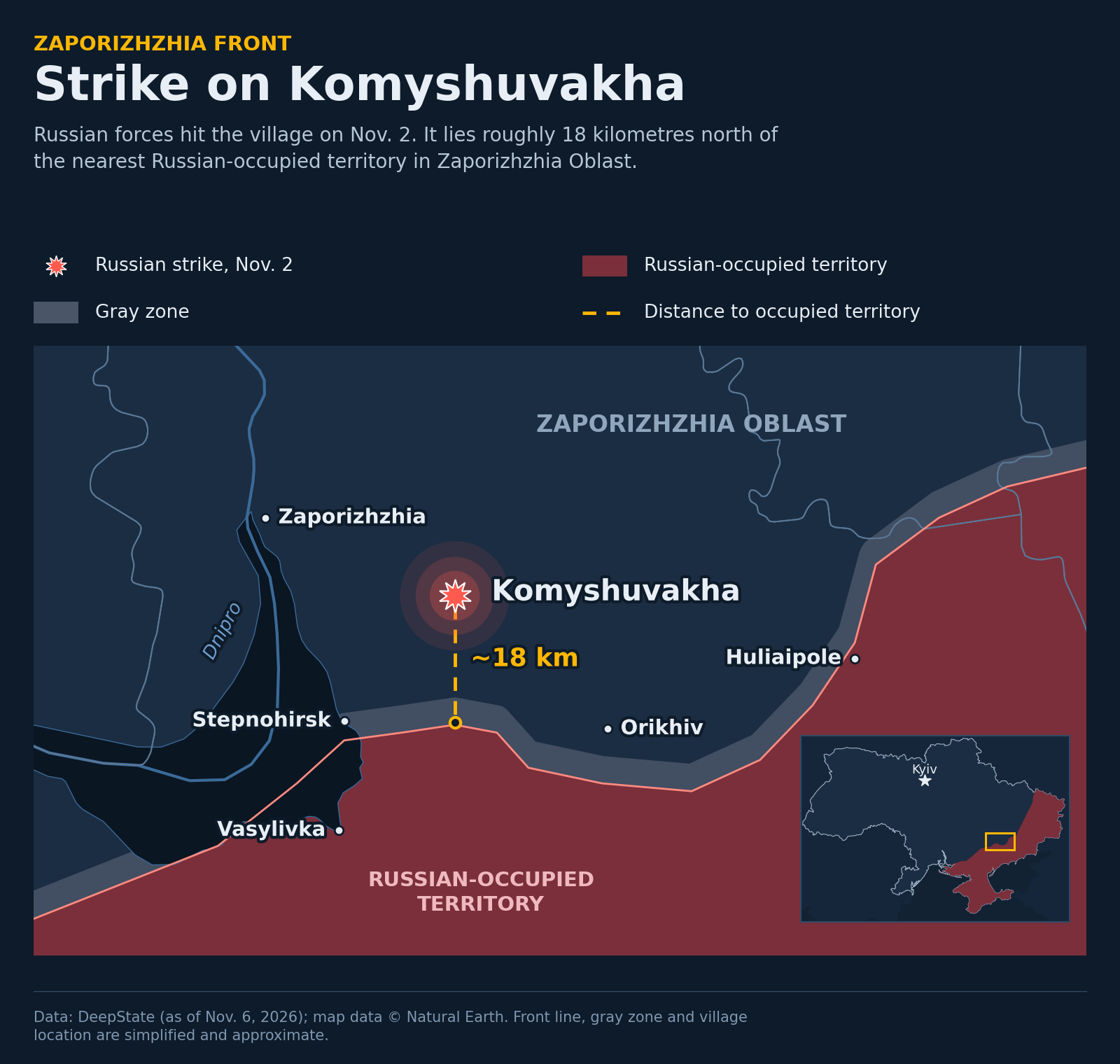
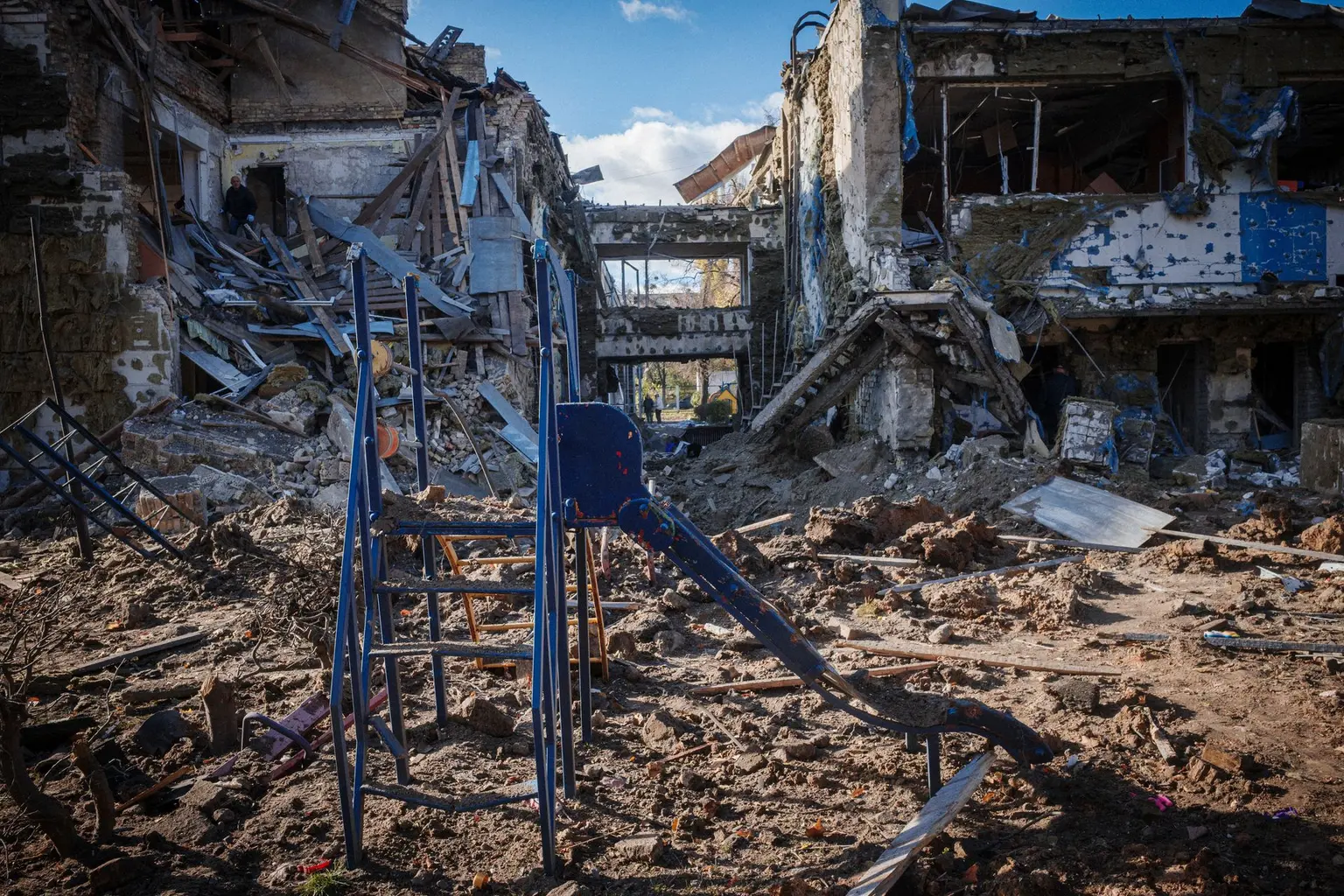
Ukraine’s military intelligence (HUR) has identified Russian military personnel allegedly responsible for the November 2 airstrike on a school in Komyshuvakha, Zaporizhzhia Oblast, that was being used as a humanitarian aid distribution center. At least 55 people were killed in the attack, with more than 50 others still missing as search-and-rescue operations enter a sixth day. Russian forces struck the frontline village multiple times, including with a 3-ton FAB-3000 bomb containing more than 1,000 kilograms of explosives.
HUR named Colonel Fedor Zubakov, head of the fire-strike planning group at the headquarters of Russia’s Dnepr Group of Forces, as the officer who planned the attack. The agency also identified six pilots who allegedly carried out the bombing: Captains Sergei Yeliseyev and Dmitry Zverev, Senior Lieutenants Rodion Plotnikov, Nikita Ignatyev and Maksim Sokolenko, and Lieutenant Vadim Perekhrest. The crew of a seventh aircraft is still being identified. At least four Russian Su-34 fighter-bombers took part in the operation.
According to the Intelligence, the identifications form part of ongoing efforts to document Russian war crimes. President Volodymyr Zelensky has criticized the limited international response to the strike, calling it “insane” and urging stronger support, particularly additional air defense systems. Rescuers at the site can work only short periods before the threat of further drone and bomb attacks forces them to withdraw. The underground facility destroyed in the strike had been the only relatively safe place left for remaining residents to shelter and receive aid.