


The USA extends Russian oil sanctions waiver for 30 days more
The United States has extended a temporary license allowing certain countries to continue purchasing Russian oil already stranded at sea for another 30 days, U.S. Treasury Secretary Scott Bessent announced on X.
Bessent said the extension is intended to help “the most vulnerable nations” maintain access to energy supplies and avoid disruptions to global oil markets. According to him, the temporary measure will provide additional flexibility while Washington works with affected countries on issuing specific licenses where necessary.
“This general licence will help stabilise the physical crude market and ensure oil reaches the most energy-vulnerable countries,” Bessent said.
The move comes just two days after the United States reinstated sanctions on Russian oil by allowing the previous exemption to expire. The renewed temporary license effectively softens the immediate impact of those sanctions by permitting cargoes that are already in transit to be delivered.
The decision highlights ongoing concerns in Washington about balancing pressure on Russia with the need to prevent instability in global energy markets, particularly for countries heavily dependent on imported fuel.
Russia calls for Ukraine peace talks to resume after months of downplaying them
U.S.-mediated peace talks aimed at ending Russia’s war against Ukraine are currently on pause, though the Kremlin says it hopes negotiations will eventually resume. Kremlin spokesperson Dmitry Peskov made the remarks on May 18, signaling a notable shift in Moscow’s rhetoric after Russian Foreign Minister Sergey Lavrov stated in April that negotiations with Ukraine were not a priority for Russia.
“We expect that the peace process will resume after all,” Peskov said. “And we expect our American colleagues to continue their peacemaking and mediation efforts in this regard.”
The latest trilateral talks involving Ukraine, Russia and the United States took place on Feb. 16. A follow-up meeting that had initially been scheduled for late February and later postponed to early March was ultimately canceled shortly before U.S.-Israeli strikes on Iran shifted Washington’s attention toward the Middle East.
Despite the pause in negotiations, Ukrainian President Volodymyr Zelenskyy has repeatedly called for diplomacy to continue. Zelensky said he does not believe the peace process has reached a dead end and argued that Ukraine’s position has strengthened in recent months.
“We’re much stronger today than we’ve been over the past six months,” Zelensky said in March.
On May 8, Zelensky also announced that Kyiv expects envoys from U.S. President Donald Trump to visit Ukraine later this spring or early summer in an attempt to revive negotiations.
Major disagreements continue to prevent progress toward a settlement. Ukraine maintains that freezing the current front line is the most realistic basis for a ceasefire, while Russia continues to insist that Ukrainian troops withdraw from parts of Donbas as a precondition for any agreement — a demand Kyiv has firmly rejected.
The shift in Moscow’s tone comes as Ukraine is increasingly viewed as regaining momentum both on the battlefield and through long-range strikes deep inside Russian territory.
Russian missile strike on residential area in Dnipro killed 28
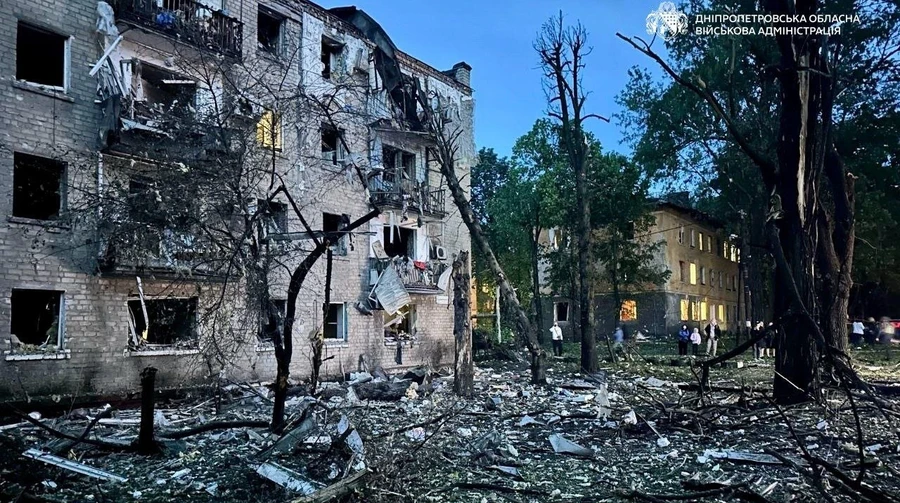
On the night of May 17-18, Russian forces launched a missile strike on a residential area in the city of Dnipro. The attack hit civilian apartment buildings, causing significant destruction, fires, and damage to surrounding infrastructure. Rescue and recovery operations continued for hours as emergency services worked to clear debris and assist those affected in the densely populated neighborhood.
According to the latest reports, the total number of casualties from the strike has risen to 28 people injured, including several children. Some victims are in serious condition and remain hospitalized. The strike is part of Russia’s continued pattern of targeting civilian areas far from the frontline, resulting in widespread damage to residential zones in Dnipro.