


Forest fire affecting 2,400 hectares burns near the Ukrainian border with Russia due to attacks
A large forest fire covering around 2,400 hectares has broken out near Ukraine’s border with Russia in Chernihiv Oblast, reportedly as a result of ongoing attacks in the area.
According to Forests of Ukraine, the fire is spreading through forest areas managed by the Yeline and Tykhonovychi forestry offices within the Koriukivka forestry district.
The affected territory lies within a five-kilometer border zone where access has long been restricted because of security threats linked to the war.
The fire was first detected by surveillance cameras operated by the forestry agency. Forest protection teams have since deployed all available resources to try to contain the blaze within the inaccessible border area and prevent it from spreading farther into zones that can still be reached safely.
Authorities said firefighting efforts are focused on creating additional firebreaks. Tractors are reportedly operating under the protection of electronic warfare systems because Russian forces are targeting equipment operating near the border.
On May 6, representatives of Forests of Ukraine held a coordination meeting with the Ukrainian military, the State Emergency Service, and local authorities to organize the response.
“It is crucial to prevent the fire from spreading to settlements in the frontline zone,” the organization said.
Officials added that although all newly acquired firefighting equipment has been mobilized, the ability to fully use it remains limited because of constant Russian drone activity in the area.
Russia caused a severe humanitarian crisis in occupied Oleshky, Kherson Oblast
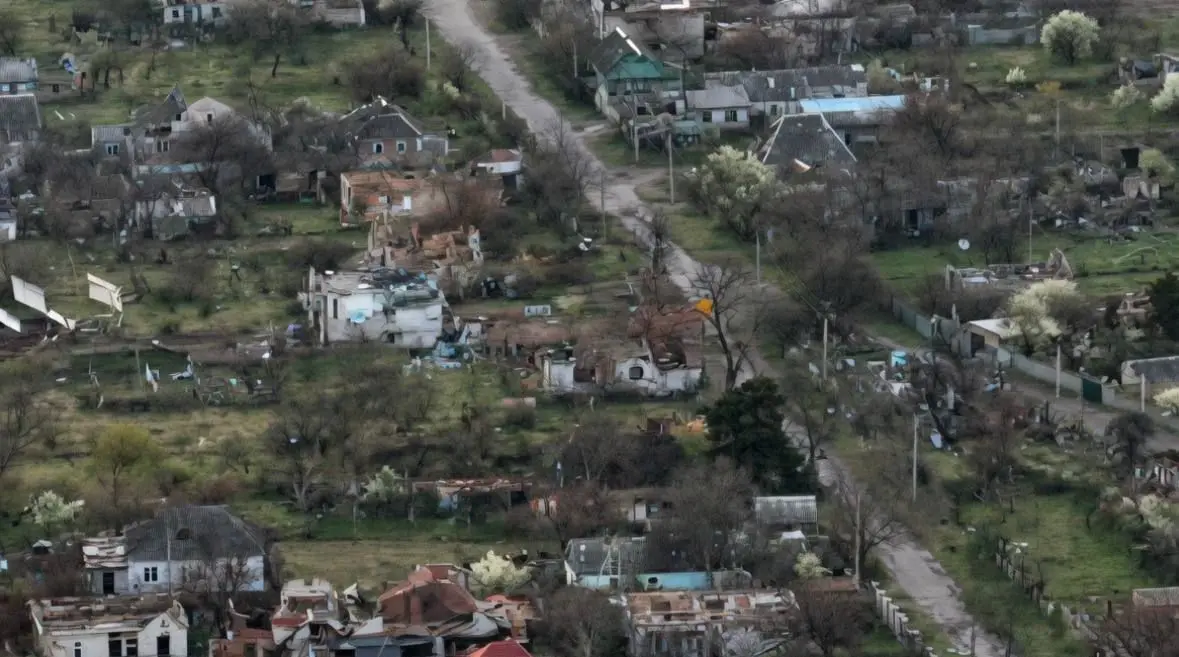
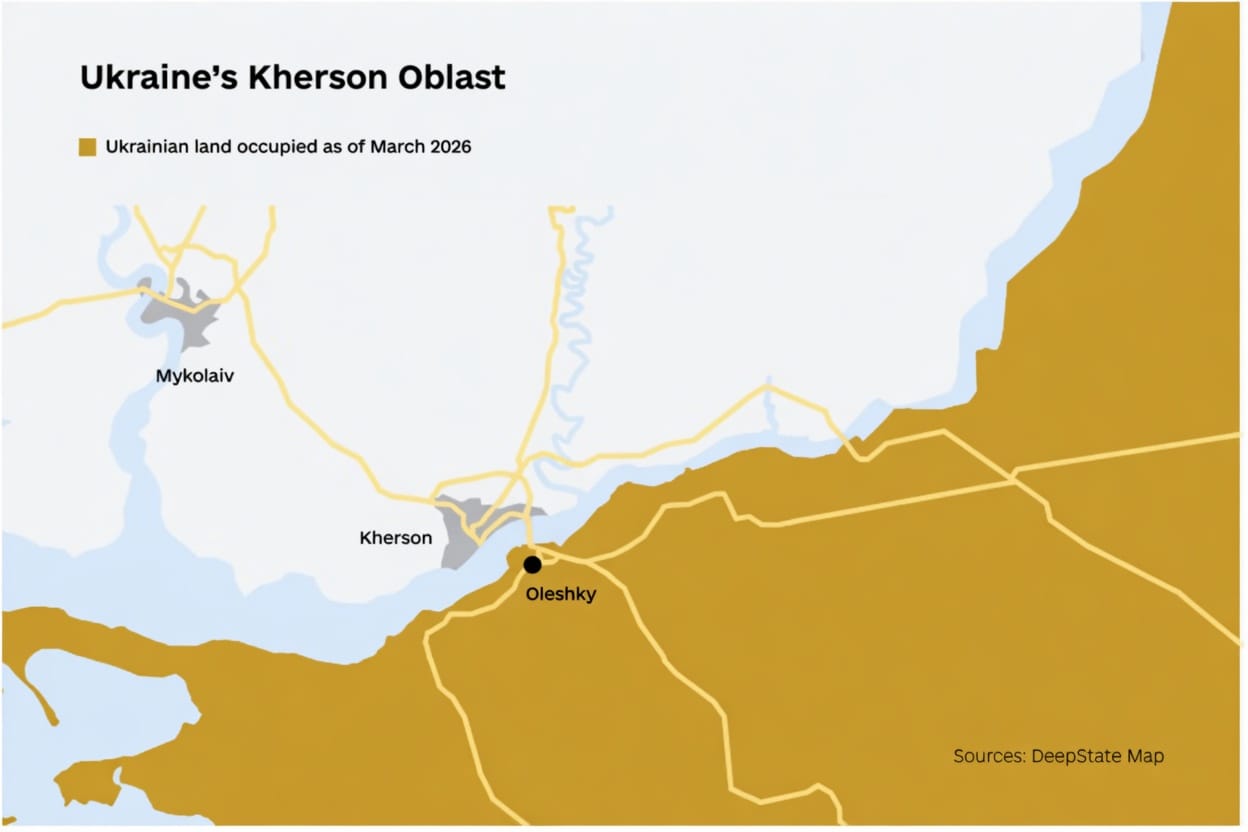
Ukraine’s Foreign Ministry on May 6 condemned what it described as a severe humanitarian crisis in the Russian-occupied part of Kherson Oblast, accusing Russia of violating international humanitarian law and preventing civilians from safely evacuating frontline areas.
According to the ministry, the situation is especially critical in the occupied city of Oleshky, where around 2,000 civilians remain trapped with almost no access to food, drinking water, electricity, gas, or medical supplies. Residents are reportedly living amid a heavy Russian military presence and constant shelling and drone attacks.
“If the situation doesn't improve, people will just die there from hunger,” one resident who escaped the city in early April told one of the media outlets. “There’s no way out and no food supplies coming in.”
The ministry said Russian forces are blocking evacuation efforts and obstructing the delivery of humanitarian aid, including food and medicine, to Oleshky and nearby settlements such as Hola Prystan, Stara Zburivka, and Nova Zburivka.
Officials warned that basic living conditions in these areas have effectively collapsed. Critical infrastructure has reportedly been destroyed, while civilians attempting to leave or purchase food are allegedly being targeted by Russian drones.
According to Ukraine’s Foreign Ministry, the population of the affected region has dramatically declined. The number of residents in Oleshky has reportedly fallen from around 24,000 before the full-scale invasion to about 2,000 today. More than 6,000 people across the occupied area may urgently require humanitarian assistance, including around 200 children, many of whom have limited mobility.
The ministry also said it has received more than 220 direct requests for evacuation from civilians trapped in the area.
Although Russian troops reportedly mine roads leading out of Oleshky and conduct interrogations at checkpoints, some residents continue trying to escape. On May 2, a local Telegram channel reported that around 30 civilians had been evacuated from the city.
Ukraine said it has initiated urgent discussions with the United Nations and the International Committee of the Red Cross to explore options for evacuating civilians and delivering humanitarian aid.
The Foreign Ministry called on international partners to increase pressure on Russia to comply with international humanitarian law and establish humanitarian corridors for safe evacuation.
“For Ukraine, nothing is more valuable than human life,” the ministry said. “We urge the international community to take immediate, concrete action to save our citizens in the occupied Kherson region.”
Under the Geneva Conventions, the forced displacement of civilians from occupied territories and the use of starvation against civilians as a method of warfare are considered war crimes.
Russian forces continue using settlements on the eastern bank of the Dnipro River in Kherson Oblast to launch attacks on Ukrainian-controlled territory, including the city of Kherson, which Ukraine liberated in November 2022.
Russia plans to expand the exploitation of resources in Ukraine's occupied territories
President Volodymyr Zelensky said on May 6 that Russia is preparing to expand its exploitation of natural resources and agricultural production in Ukraine’s occupied territories, including the extraction of valuable minerals and the seizure of grain harvests.
In a statement published on Telegram, Zelensky said he had received intelligence reports from HUR chief Oleh Ivashchenko outlining Moscow’s plans.
“In the southern Ukrainian lands currently under occupation, Russia plans to implement the same processes of looting and deindustrialization that it carried out in the captured Donbas region,” Zelensky said.
According to the president, Russian authorities are preparing additional measures to confiscate and export this year’s grain harvest from occupied areas. Ukraine, he said, is preparing countermeasures.
Russia has repeatedly been accused by Kyiv of systematically stealing Ukrainian grain from occupied territories and exporting it through international trade networks since the start of the full-scale invasion in 2022.
Zelensky also said Russia plans to intensify geological exploration and extraction operations at at least 18 mineral deposits located in occupied territories. The targeted resources reportedly include titanium, lithium, tantalum, niobium, zircon, molybdenum, and graphite — minerals considered strategically important for high-tech industries and defense production.
At the same time, Zelensky claimed Ukrainian long-range strikes on Russian military and industrial infrastructure are increasingly affecting Russia’s economy.
“The direct damages and the consequences of production and export process disruptions in Russia are increasing,” he said, adding that the financial strain is particularly affecting regional budgets across Russia.
According to Zelensky, Russia’s internal assessments show growing economic pressure, which he described as “virtual bankruptcy” in many Russian regions.