


Russia has violated the ceasefire
President Volodymyr Zelensky said that Russia has violated the ceasefire introduced by Ukraine starting May 6, adding that Kyiv will respond in kind.
In a statement posted on X, Zelenskyy said Russian forces continued active combat operations and shelling despite the declared truce, following what he described as “savage strikes” on cities including Dnipro, Zaporizhzhia, and Kramatorsk.
“Russia's choice is an obvious spurning of a ceasefire and of saving lives,” Zelensky said, noting that assaults were ongoing along key sections of the front line. According to him, nearly 30 assaults had already been carried out since the beginning of the day, alongside more than 20 airstrikes involving over 70 aerial bombs overnight and in the morning.
Zelenskyy reported that by 10:00 a.m., Russian forces had committed 1,820 ceasefire violations, including bombardments, attempted ground assaults, airstrikes, and drone attacks.
He added that Ukraine would respond proportionally, taking into account Russia’s repeated public appeals for a ceasefire during the upcoming Victory Day parade in Moscow on May 9.
“It is obvious to any reasonable person that a full-scale war and the daily murdering of people are a bad time for public ‘celebrations’,” Zelensky said, concluding that Russia had effectively undermined the ceasefire regime.
17 dead after recent Russian aerial strikes on Kramatorsk, Zaporizhzhia
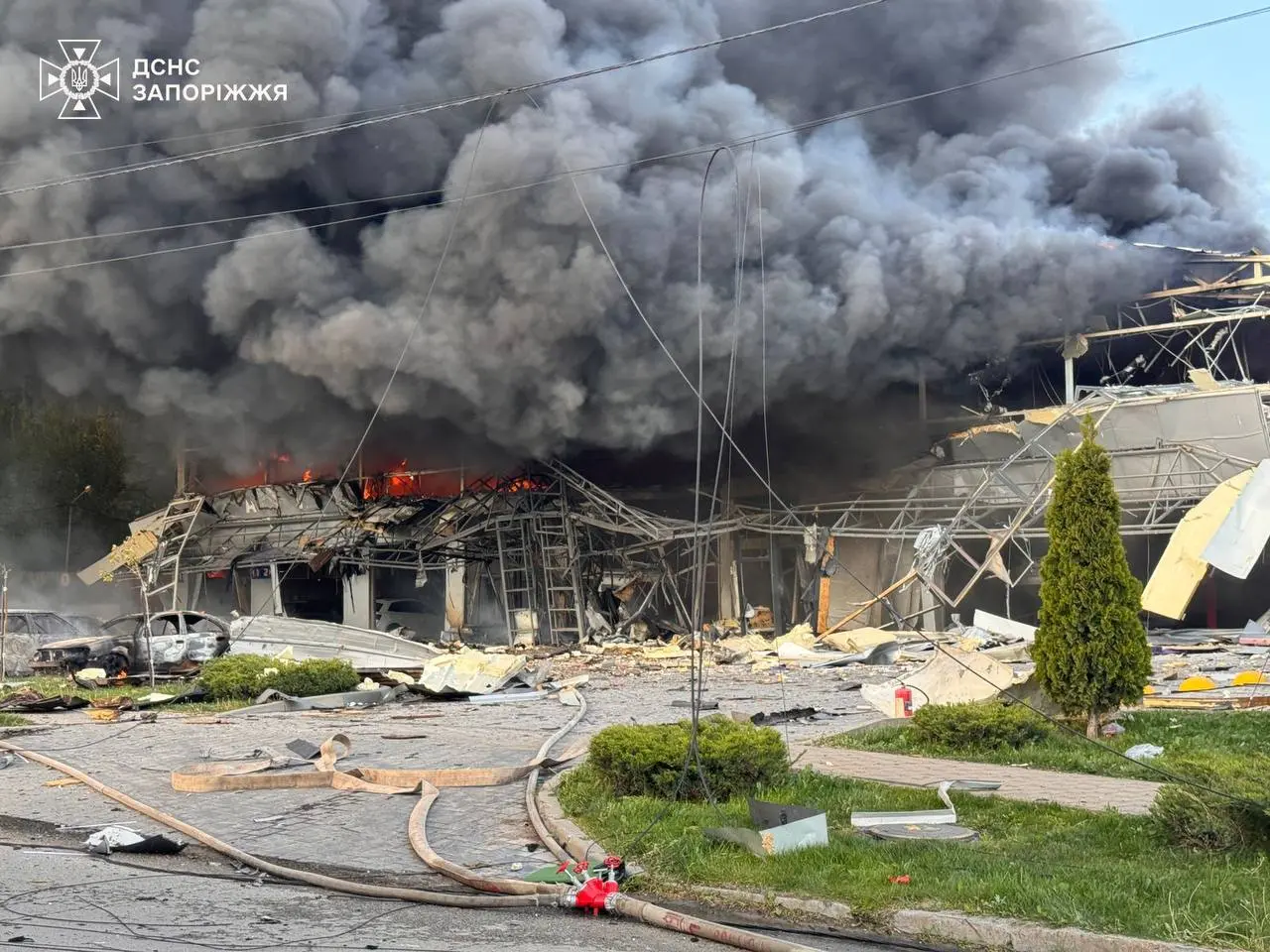
Russian forces launched a series of strikes on May 5 targeting the cities of Kramatorsk in Donetsk Oblast and Zaporizhzhia in southeastern Ukraine, killing at least 17 people and injuring 56 others, according to local authorities.
In Zaporizhzhia, Russian troops dropped four guided aerial bombs on the city, striking an automobile repair facility at around 4 p.m. local time. The attack caused widespread destruction, damaging nearby car washes, vehicles, a shop, and residential buildings, regional governor Ivan Fedorov reported. The strike killed 12 people and injured 43 others, including four in critical condition, while 14 sustained moderate injuries. At least 18 of the wounded were hospitalized.
As emergency services worked at the scene, Russian forces reportedly launched additional drone strikes, complicating rescue efforts. Crews continued clearing debris amid fears that more people could still be trapped under the rubble. In response to the tragedy, local authorities declared a day of mourning, city council secretary Regina Kharchenko said.
Later the same day, Russian forces struck central Kramatorsk with aerial bombs at around 5 p.m., killing at least five people and injuring 13 others, according to Donetsk Oblast Governor Vadym Filashkin. The attack damaged residential buildings and vehicles and left parts of the city without electricity.
Both Donetsk and Zaporizhzhia oblasts lie close to active front lines and are frequently targeted by Russian strikes. Large parts of these regions remain under Russian occupation — Donetsk Oblast since 2014 and parts of Zaporizhzhia Oblast since the start of the full-scale invasion in 2022.
Russian drones hit a kindergarten in Sumy, one dead and two injured
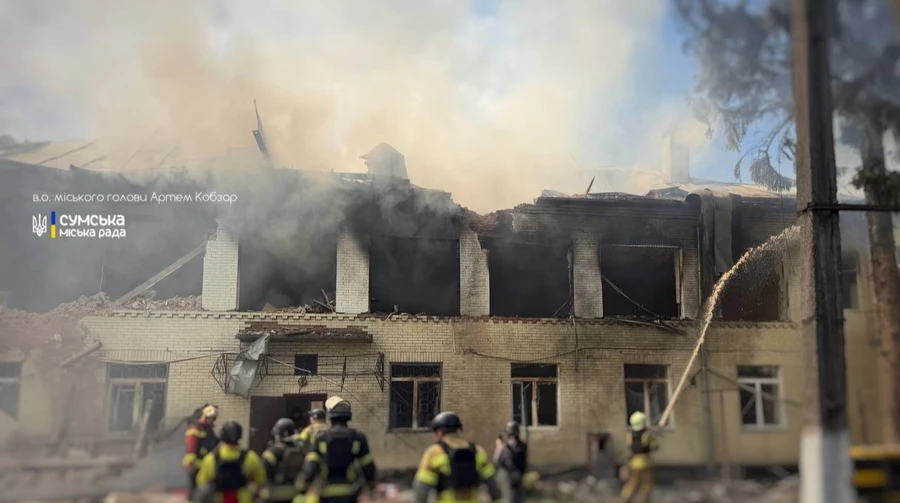
Russian forces attacked a kindergarten in central Sumy with strike drones on May 6, killing a security guard and injuring two other people, local authorities reported.
According to preliminary information, two UAVs struck the preschool building. A woman working as a security guard was killed in the attack. Officials confirmed that no children were present at the facility at the time of the strike.
Two other people were injured and taken to hospital, where they are receiving medical care. Emergency services are continuing to work at the scene as authorities assess the full extent of the damage.
Officials warned that the attack may still be ongoing and urged residents to remain in safe places.
Hungary returned seized funds and gold belonging to the Ukrainian bank
President Volodymyr Zelensky announced that Hungary has fully returned funds and valuables belonging to Oschadbank that were seized by Hungarian special services in March.
In a statement posted on X on May 6, Zelensky said the assets have now been brought back to Ukrainian territory in full. He added that Hungarian authorities had previously detained Ukrainian cash-in-transit personnel during the incident, though those individuals were returned earlier.
“Today, the funds and valuables of Oschadbank that were seized by Hungarian special services in March of this year were returned. At the time, the Hungarian side unlawfully detained Ukrainian cash-in-transit officers. We brought our people back sooner, and now both the funds and the valuables are back on Ukrainian territory in full,” Zelensky said.
The president thanked Hungary for what he described as a constructive and civilised step, and also expressed gratitude to the Ukrainian officials and teams who worked to secure the return of the assets and defend the country’s interests.
China keeps supplying Shahed components to Russia and Iran despite US sanctions
Chinese companies are continuing to supply engines, microchips, and other key components used in the production of Shahed kamikaze drones to Iran and Russia, despite existing U.S. sanctions, according to a report by The Wall Street Journal.
Citing Chinese customs data, the report says companies in China are shipping hundreds of containers of drone-related components to factories in Iran and Russia. One example is Xiamen Victory Technology, which has been supplying Limbach L550 engines — a critical component of the Shahed-136 drones frequently used by Russia in attacks on Ukrainian cities.
While Chinese exporters previously attempted to bypass sanctions by mislabeling shipments, U.S. Treasury officials and arms analysts say many companies are no longer making such efforts. Instead, components are being shipped more openly, reflecting what analysts describe as a growing willingness to ignore Western restrictions.
Former U.S. Treasury officials also noted that China has long acted as a transit hub for American- and European-made components, which are rerouted to drone production facilities in Iran and Russia. Increasingly, however, these parts are being manufactured directly in China, often by smaller factories that appear undeterred by sanctions.
A U.S. Treasury investigation found that many Western-made components are initially sent through authorized distributors to retailers in mainland China or Hong Kong, before being forwarded to Iran or Russia. Payments are frequently routed through shell companies, often registered in Hong Kong, to obscure the final destination of the goods.
In 2024, the U.S. Treasury sanctioned a network of Hong Kong-based shell companies linked to Iranian trader Hamed Dehghan, whose firm was a key supplier for Iran’s drone and missile programs. Officials say a new network of companies was established shortly afterward to continue similar activities.
Miad Maleki, a former U.S. Treasury official, said Chinese authorities have effectively turned a blind eye to the flow of such components, even as their role has been repeatedly highlighted in sanctions and public reporting.
Conflict Armament Research also reported a noticeable increase in the use of Chinese-made components in Shahed drones, further indicating the scale of the supply chain.
Despite ongoing sanctions efforts, U.S. officials acknowledge that it is difficult to fully halt this trade. Instead, Washington’s strategy is focused on increasing the cost and complexity for Iran and Russia to sustain their drone production.