


Ukraine condemns Egypt for allowing the transit of stolen grain
Ukraine condemned Egypt on May 5 for allowing 26,900 tons of Ukrainian grain allegedly stolen by Russia to be unloaded at one of its ports, marking the fourth such reported case since April.
According to Foreign Minister Andrii Sybiha, Egypt permitted the vessel Asomatos to unload the cargo at the port of Abu Qir just four days after Ukraine formally requested legal assistance from Egypt’s Justice Ministry. Kyiv said it had provided all necessary documentation and legal grounds to seize both the vessel and its cargo.
“Ukraine is a country that has played the role of a reliable food security guarantor for Egypt for many years — and we don't understand why Egyptian partners pay us back by continuing to accept stolen Ukrainian grain,” Sybiha wrote.
He urged Egypt to comply with international law and uphold its commitments to Ukraine.
“We urge our Egyptian partners to uphold international law, their own promises made to us, and the principles of our bilateral relations. Stolen goods from occupied territories must be seized, not accepted. Looting is not trade, and complicity only fuels further aggression,” the minister said.
In his appeal, Sybiha also referenced the Holodomor — the Soviet-orchestrated famine in the 1930s that killed millions of Ukrainians through the confiscation of grain and other food supplies — drawing parallels between historical and current acts of agricultural theft.
Ukrainian officials say Russia has systematically seized grain from occupied Ukrainian territories and exported it through networks linked to the occupation authorities since the beginning of the full-scale invasion.
Kyiv argues that these exports violate both international law and the domestic legislation of countries that accept the shipments.
The diplomatic dispute follows similar incidents involving other countries. In late April, Israel denied entry to a vessel carrying grain that Ukraine said had been stolen by Russia. The decision was viewed in Kyiv as a diplomatic success after tensions earlier escalated when another ship transporting allegedly stolen Ukrainian grain had been allowed to unload at an Israeli port.
Russian fiber-optic FPV drones now reach Kramatorsk, Ukraine's Donbas stronghold
Russian first-person-view (FPV) drones are reportedly reaching deeper into Ukraine’s heavily fortified Donbas defense belt, raising concerns about a growing threat to cities previously considered relatively protected from such attacks.
Photos published on X on May 5 by Iryna Rybakova, a press officer for Ukraine’s 93rd Separate Mechanized Brigade, showed the aftermath of a drone strike on a civilian vehicle in a residential area of Kramatorsk, the temporary administrative center of Ukrainian-controlled Donetsk Oblast.
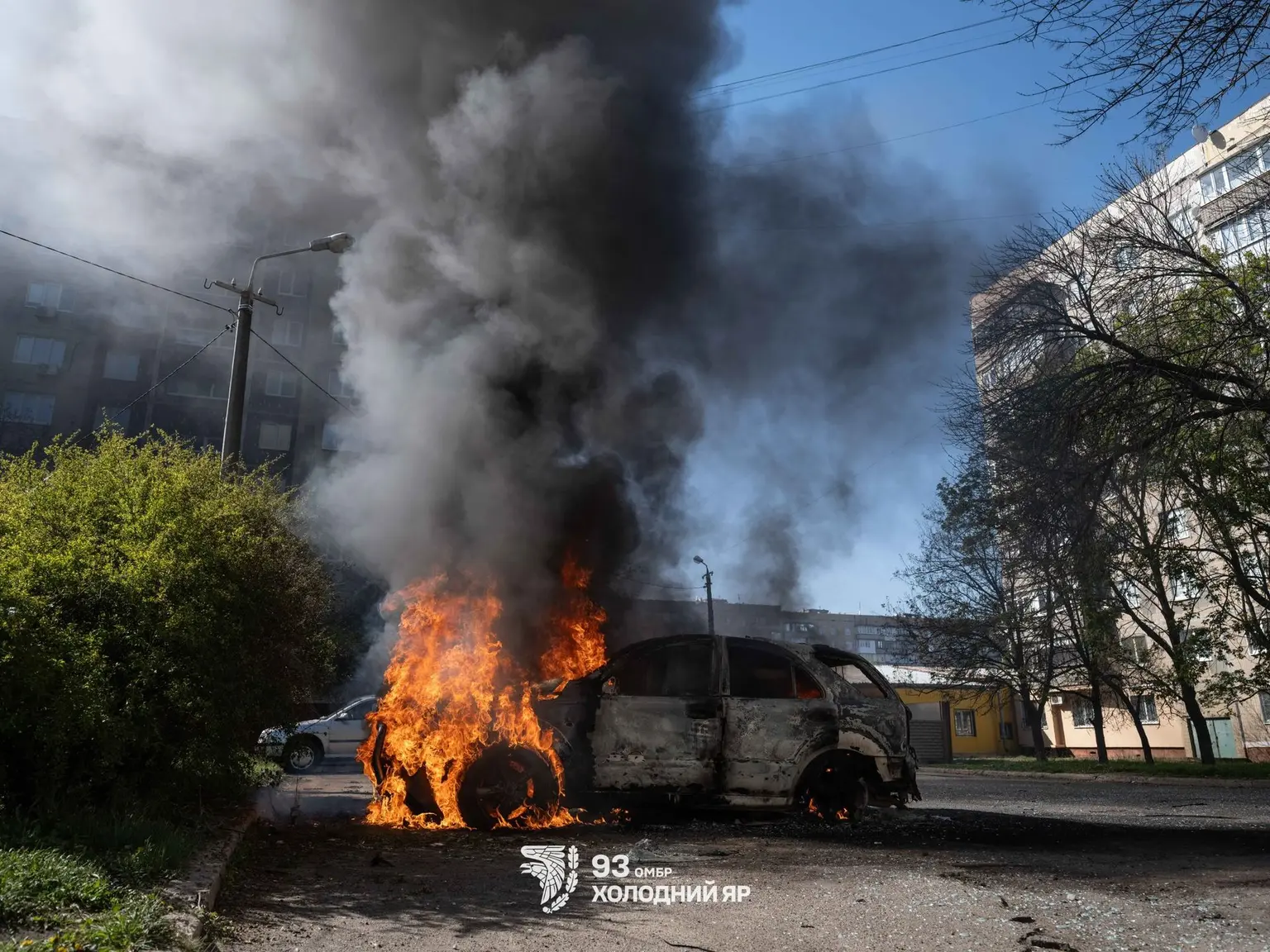
The attack was carried out using a fiber-optic FPV drone — a type of weapon that until recently had not posed a major threat to Kramatorsk.
Unlike conventional FPV drones that rely on radio signals, fiber-optic drones are connected to operators through a physical cable, making them far more resistant to electronic warfare measures such as jamming, spoofing, or signal disruption. They also maintain stable communication even beyond direct line of sight.
In urban environments, however, buildings and dense infrastructure can complicate operations for such drones. Despite this, fiber-optic FPVs have already demonstrated their effectiveness in attacks on civilian areas, particularly in Kherson, where Russian forces have repeatedly used them against vehicles and residents.
According to the report, Russia receives most of its fiber-optic spools directly from China, while Ukrainian drone manufacturers often rely on intermediaries, resulting in shorter-range and less reliable systems.
Russian UAVs attacked railway infrastructure in three oblasts, damaging train carriages and a locomotive
Russian drones struck railway infrastructure in several regions of Ukraine on the morning of May 5, damaging train equipment and rail facilities but causing no casualties, Ukrainian officials said.
In Kharkiv Oblast, a Russian UAV hit and destroyed a train carriage at around 7:30 a.m., according to Deputy Prime Minister for Restoration and Infrastructure Minister Oleksii Kuleba.
Kuleba said railway staff avoided injuries thanks to emergency protocols and monitoring systems that warned workers about the incoming threat.
“Most importantly, people are safe,” Kuleba wrote on Telegram. “The monitoring center was operational, thanks to which the conductor was able to move to a mobile shelter in time. The locomotive crew was also safe.”
In Poltava Oblast, another Russian drone exploded between railway tracks near a diesel locomotive. The blast damaged a carriage and sparked a fire, though no injuries were reported.
A separate strike targeted a railway station in Dnipropetrovsk Oblast, where an electric locomotive standing on the tracks was damaged during the UAV attack.
Kuleba noted that the train had already been stopped because of a drone threat warning, allowing railway workers to take shelter before the strike.
“Staff had been warned in advance and were in shelters. There are no casualties,” he said.
Russia has increasingly targeted Ukraine’s railway infrastructure in recent months, disrupting both civilian transportation and logistics across the country.
Another attack on Kramatorsk
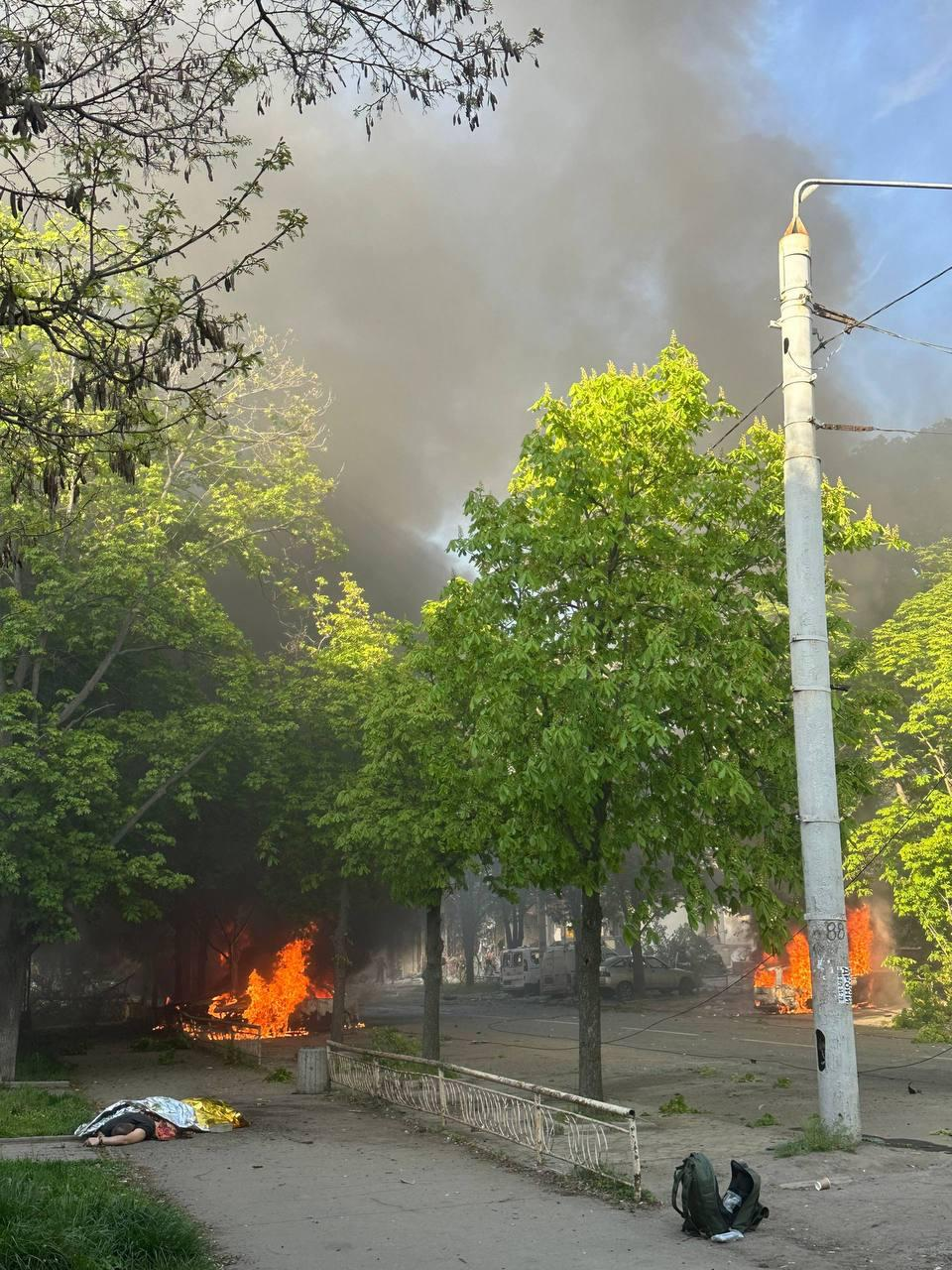
Russian forces have attacked Kramatorsk once again on May 5 with a glide bomb, according to local authorities. The central part of the town was hit. The attack caused a fire at the scene. Several pedestrians were reportedly killed.
Kramatorsk has already endured frequent Russian missile and glide bomb attacks throughout the war. The arrival of fiber-optic FPV drones could further undermine civilian safety and daily life in the city.
Several glide bombs hit Zaporizhzhia

Russian forces attacked the city of Zaporizhzhia with glide bombs, striking civilian areas including cars, shops, and several businesses, local authorities reported.
According to Zaporizhzhia Oblast Governor Ivan Fedorov, the attack caused large fires, with vehicles, stores, and commercial facilities burning across the affected area.
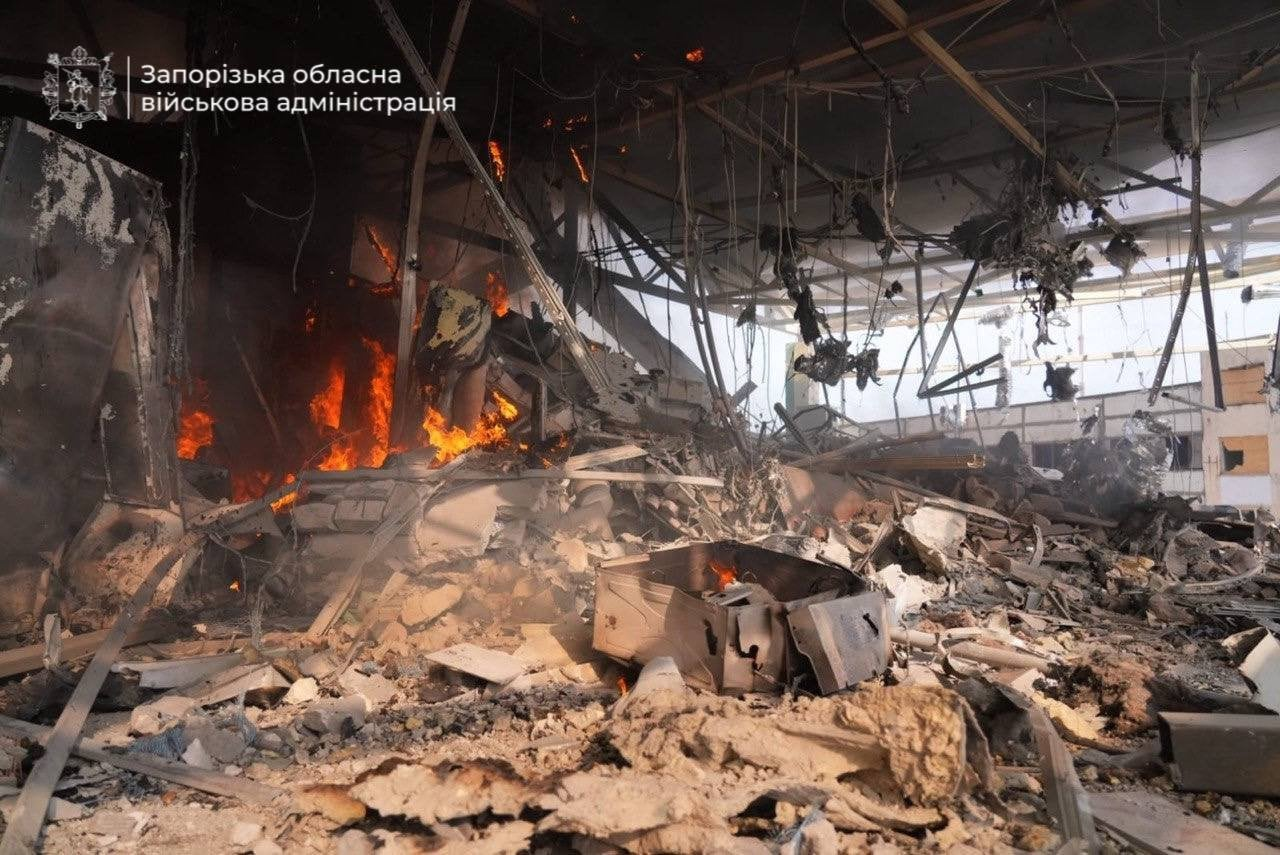
“One person was killed, and others were injured,” Fedorov said in a statement published on his official Telegram channel.
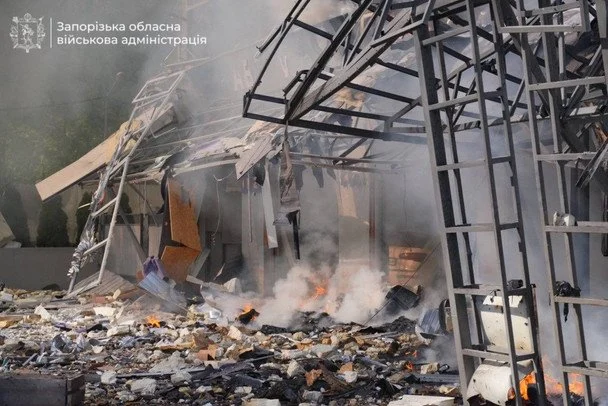
Emergency crews are currently working at the scene as authorities continue to assess the full extent of the damage and the number of casualties.
Russia has repeatedly used glide bombs against frontline and southern Ukrainian cities, causing widespread destruction to civilian infrastructure and residential areas.