


Russia uses 695 forms of torture against Ukrainian prisoners; 406 people tortured to death
Ukrainian Parliament Commissioner for Human Rights Dmytro Lubinets said Ukraine has documented 695 different forms of torture allegedly used by Russia against Ukrainian prisoners of war and civilian detainees. According to Lubinets, 406 Ukrainian captives with confirmed prisoner-of-war status have died as a result of torture in Russian custody.
Speaking during the presentation of the “Made in Russia. Delivered into Captivity” project, Lubinets described systematic physical and psychological abuse, including sexual violence, carried out against Ukrainian POWs.
He said prisoners are allegedly strangled, beaten, electrocuted, attacked by dogs and forced to stand motionless for up to 18 hours. According to Lubinets, detainees who collapse or attempt to squat are beaten again. He also described a torture method referred to as the “hairdresser,” in which guards deliberately cut prisoners’ scalps while shaving their heads and then allegedly use beatings and electric shocks if the victims scream.
Lubinets said Ukraine has recorded 860 cases involving improper detention conditions, including unsanitary facilities and starvation allegedly used as methods of coercion.
According to the ombudsman, international partners have identified 29 detention sites holding Ukrainian captives — 18 in Russia and 11 in Russian-occupied parts of Ukraine. Ukrainian intelligence agencies, he added, have verified a total of 186 detention locations across Russia and occupied territories, including facilities in Siberia.
Lubinets said detention conditions at these facilities are largely identical and do not meet international standards for the treatment of prisoners.
He also criticized the response of the International Committee of the Red Cross, saying its representatives had been invited to the event but did not attend. Lubinets argued that the international response to documented torture cases has been too weak and warned that this encourages further abuses.
Referring to the 2022 explosion at the prison colony in Olenivka, where Ukrainian prisoners of war were killed, Lubinets said the lack of accountability has reinforced a sense of impunity.
He stressed that Ukraine is calling for increased international pressure and accountability measures against those responsible for abuses committed against Ukrainian prisoners and civilian hostages.
The threat of an offensive on Kyiv: Putin has taken full control of Lukashenko
According to the Institute for the Study of War (ISW), the threat of a new Russian offensive on Kyiv from Belarusian territory has become significantly more realistic. ISW reports that Russian President Vladimir Putin has established full control over Belarusian leader Alexander Lukashenko, effectively turning Belarus into a subordinate platform for Russian military operations. This deepened integration allows Russia to potentially use Belarusian territory and forces for a renewed northern assault on the Ukrainian capital.
The possibility of a large-scale offensive from the north poses a serious strategic challenge for Ukraine. Such an attack could force Ukrainian forces to divert significant resources from the eastern front to defend Kyiv and the surrounding regions. ISW analysts note that Lukashenko’s complete dependence on Putin has removed previous political constraints, making a Belarusian-front offensive a tangible threat that Ukrainian command and Western partners must take into serious consideration in their defense planning.
Ukraine denies Russian claim that drone strike killed civilians in occupied Luhansk Oblast
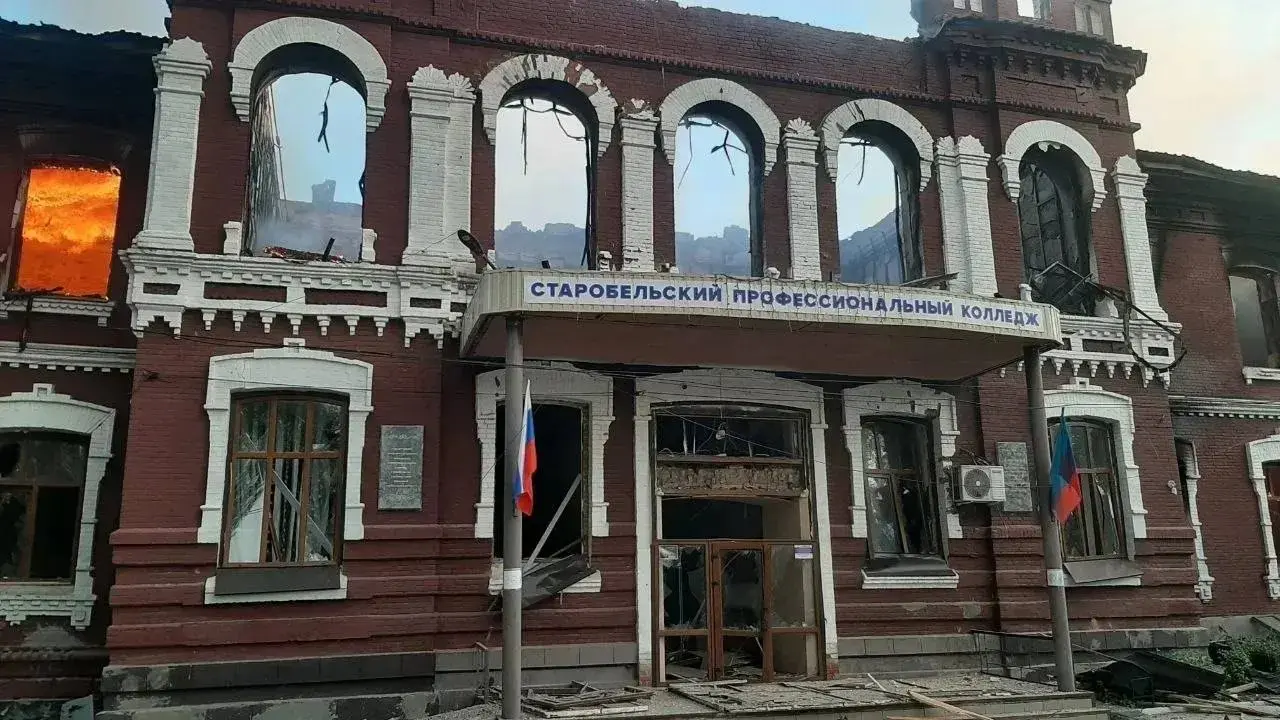
General Staff of the Armed Forces of Ukraine rejected Russian claims that a Ukrainian overnight drone strike in occupied Luhansk Oblast killed six people and injured dozens of children, saying Ukrainian forces had targeted Russian military infrastructure in the area instead.
According to the Ukrainian military, the strike targeted several Russian facilities overnight on May 22, including an oil refinery, ammunition depots, air defence systems, command posts and one of the headquarters of Russia’s elite drone warfare unit known as the Rubikon Center for Unmanned Technologies near the town of Starobilsk.
The General Staff stated that the Ukrainian military strictly follows international humanitarian law and only strikes military infrastructure and facilities used for military purposes. Ukrainian officials described the Russian accusations as “misleading information.”
Earlier, Russian Human Rights Commissioner Yana Lantratova claimed Ukrainian drones had struck a dormitory and a nearby building belonging to a college affiliated with the Luhansk Pedagogical University in Starobilsk. She alleged that 35 children were injured in the attack.
Russian leader Vladimir Putin condemned the alleged strike and claimed there were no military facilities near the dormitory. Moscow also announced it had requested an emergency meeting of the United Nations Security Council over the incident.
The Ukrainian General Staff said the Rubikon unit targeted in the strike is known for conducting drone attacks against civilians and civilian infrastructure in Ukraine.
Meanwhile, the report noted that Russia has repeatedly used civilian facilities such as schools and hospitals for military purposes throughout the war, practices prohibited under international humanitarian law. Russia has also continued efforts to militarize education in occupied territories.
On the same day, Russian Sports Minister Mikhail Degtyarev announced that Russian students who pass drone operation tests will receive additional points for university admissions beginning in 2027.
The head of Russian-installed authorities in occupied Luhansk Oblast, Leonid Pasechnik, claimed that 84 children aged 14 to 18 had been inside the building at the time of the alleged strike and said rescue operations were continuing.
The incident comes amid continuing Russian attacks across Ukraine. According to a recent United Nations report, April 2026 became the deadliest month for civilians in Ukraine since July 2025, with at least 238 people killed.