


Russians couldn't have assembled missiles for strike on Kyiv without components from Europe, Japan and US
Volodymyr Zelensky said Ukraine’s key priority is to block all supply channels providing Russia with foreign-made components used in missile and drone production.
Speaking in his evening address, Zelensky stressed that Russia remains heavily dependent on imported technology and parts from Western countries for manufacturing weapons used in attacks against Ukraine.
“We are also working actively on the traditional sanctions track. The key thing is to cut off all supply channels of components for the production of missiles and drones in Russia,” Zelenskyy said.
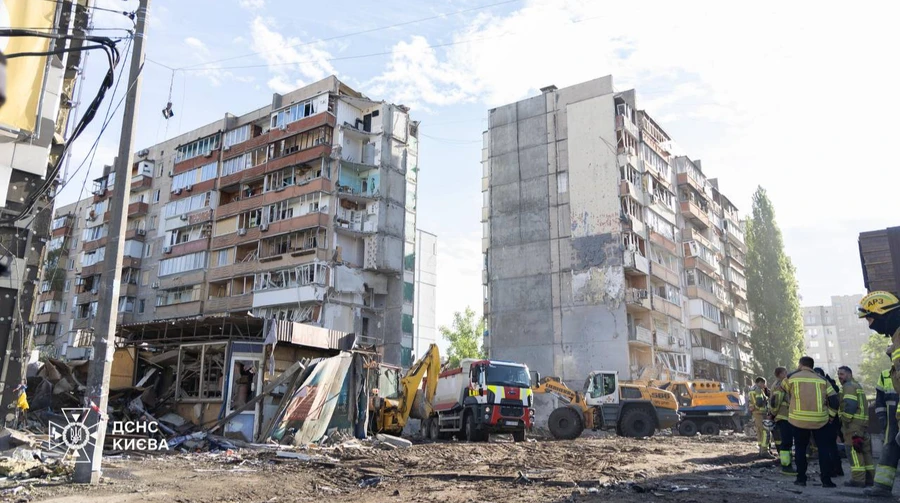
He stated that missiles used in a recent Russian strike on Kyiv had been produced this year and contained foreign-made components.
“Without components from companies in Europe, Japan and the United States, the Russians simply would not have been able to produce these missiles,” Zelensky said.
According to the Ukrainian president, the same dependence applies to many other Russian weapons used in attacks on Ukrainian cities and civilian infrastructure.
Zelensky also warned that if Russia’s military-industrial system remains intact, the threat could eventually extend beyond Ukraine.
“If the Russian war machine survives, its next strikes could be against Europe and other neighbours of Russia, and even in more distant regions,” he said, pointing to Russia’s previous involvement in conflicts in Syria and several African countries.
He argued that Ukraine’s resistance is currently limiting Russia’s ability to expand aggression further and called for stronger international pressure on Moscow.
“We need determination to push this country so that it becomes safer for the world. Sanctions and all other forms of pressure are the best tool for this,” Zelensky added.
France is ready to develop ballistic missile defense with Ukraine
France is prepared to cooperate with Ukraine on developing a ballistic missile defense system, according to Volodymyr Zelensky following a phone call with French President Emmanuel Macron on May 16.
The announcement comes as Kyiv intensifies efforts to build what Zelenskyy has called an “anti-ballistic coalition” aimed at strengthening Ukraine’s protection against Russian missile attacks.
“France is ready to work on anti-ballistic measures. This is a strong decision and an important step. We discussed strengthening our capabilities to repel Russian attacks right now,” Zelensky said.
The talks followed several deadly Russian strikes against Ukrainian cities, including a large-scale missile and drone attack on Kyiv on May 14 that reportedly killed 24 people and injured 48 others.
Ukraine has repeatedly appealed to Western allies for additional air defense systems and technologies as Russia continues long-range missile and drone strikes targeting civilian infrastructure and urban areas.
Earlier in the week, Zelenskyy said representatives from 13 countries and the office of the NATO secretary general met on May 12 to discuss joint anti-ballistic missile defense cooperation.
“We are forming an anti-ballistic missile coalition. It is the right thing to do, and we are closer to achieving this goal now than ever before,” Zelensky said at the time.
The Ukrainian president also noted in April that he expects Ukraine and European partners to eventually jointly produce missile defense systems as part of broader defense-industrial cooperation.
Putin to visit China days after Trump, as Russia looks to deepen partnership
Vladimir Putin will pay an official visit to China on May 19–20 at the invitation of Chinese President Xi Jinping, the Kremlin announced on May 16.
According to the Kremlin, the two leaders are expected to discuss bilateral relations as well as ways to deepen what Moscow described as the countries’ “partnership and strategic cooperation.”
The Kremlin added that several agreements and joint documents are expected to be signed following the talks, including intergovernmental and inter-agency cooperation deals.
Putin’s trip comes only days after Donald Trump visited China from May 13–15, marking the first visit by a sitting U.S. president to China since 2017.
During Trump’s visit, discussions reportedly included Russia’s war against Ukraine, alongside trade and economic relations between Washington and Beijing.
Following the meetings, Trump described the talks and resulting economic agreements as “fantastic” trade deals.
A White House official told the Kyiv Independent that the U.S. and Chinese sides discussed expanding economic cooperation, including greater market access for American companies and increased Chinese investment in U.S. industries.
China has remained a crucial economic partner for Russia throughout the full-scale war against Ukraine. Beijing has continued purchasing large volumes of Russian oil while also supplying dual-use goods that Western officials say can support Russia’s military-industrial sector.
Although China officially presents itself as neutral in the war, Kyiv and Western governments have repeatedly expressed concern over Chinese exports of technologies and components that could assist Russia’s military production.
Putin last visited China in late August and early September 2025.