
Daily Flyer - March 30, 2026
A voice of Ukraine to the West


Ukraine and Bulgaria will jointly produce drones under the new security deal
Ukraine and Bulgaria signed a 10-year security agreement on March 30, committing Sofia to help fund Ukrainian air defenses and expand joint arms production. The deal was signed in Kyiv by President Volodymyr Zelensky and Bulgarian Prime Minister Andrey Gyurov, and includes plans to co-produce weapons such as drones under the EU’s SAFE initiative.
Under the agreement, Bulgaria will also support Ukraine by purchasing U.S.-made air defense systems through NATO’s PURL mechanism and cooperating on demining efforts in the Black Sea. Zelenskyy highlighted joint weapons production as a key pillar of the partnership, emphasizing deeper defense-industrial cooperation between the two countries.
Beyond military support, the deal includes cooperation on energy and Bulgaria’s backing of Ukraine’s EU membership bid. As a NATO and EU member, Bulgaria has supported Kyiv since the start of Russia’s full-scale invasion, particularly by supplying Soviet-era equipment. The agreement comes as Bulgaria heads into parliamentary elections in April, which could influence its future policy toward Ukraine.
Eleven injured in Russian guided bomb attack on residential buildings in Sumy oblast
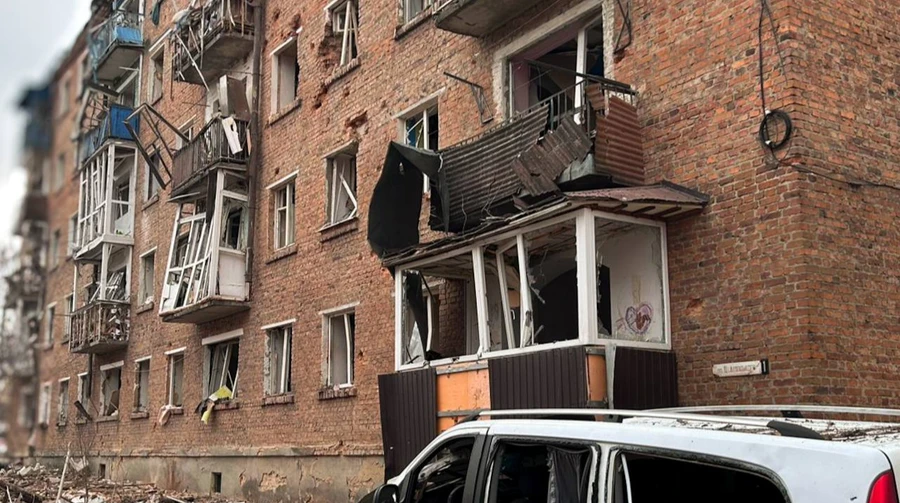
At least 11 people, including a child, were injured after Russian forces struck residential areas in Hlukhiv, Sumy Oblast, using guided aerial bombs, local authorities said. All the injured were hospitalized, with one 50-year-old man reported to be in serious condition.
Officials said the attack directly targeted civilian infrastructure, causing damage to homes and surrounding areas. Emergency services are continuing to assess the последствия and provide assistance to those affected.
The strike is part of ongoing attacks by Russia on the border regions of Ukraine, where communities frequently come under fire from aerial bombs, drones, and artillery.
Russia has recruited over 27,000 people from 135 countries for the war in Ukraine
Ukraine has gathered intelligence on 27,407 foreign nationals from 135 countries recruited by Russia to fight in its war against Ukraine, according to the Coordination Headquarters for the Treatment of Prisoners of War.
The agency said citizens from across the Middle East and Africa — including Egypt, Yemen, Somalia, Iraq, Algeria, Syria, Morocco, and Jordan — have been enlisted by Moscow, though this list is not exhaustive.
According to Ukrainian intelligence, recruitment of foreign fighters intensified in 2025, with many individuals reportedly joining under the promise of financial gain, only to be deployed to the front lines.
The project recently released a documentary featuring five recruits from Egypt, Yemen, and Somalia. All said they had traveled to Russia seeking work but were instead sent to fight in Ukraine.
Ukraine will help open the Strait of Hormuz as part of Gulf weapons deals - Zelensky
Ukraine will supply weapons and defense technologies — including systems capable of helping reopen the Strait of Hormuz — under new long-term agreements with Gulf countries, President Volodymyr Zelensky.
“All agreements that will be legally formalized are extremely important for our country,” Zelenskyy told reporters. “Ukraine has never had such agreements with this region before.”
The deals follow Zelensky’s recent visits to Saudi Arabia, the United Arab Emirates, and Qatar, where defense cooperation agreements were signed. While many details remain undisclosed, the partnerships are expected to last at least 10 years and include the export of Ukrainian military technologies.
A key element of the cooperation is Ukraine’s experience in securing maritime trade routes during wartime. Zelenskyy highlighted Kyiv’s success in maintaining the Black Sea shipping corridor despite Russian attacks, suggesting this expertise could be applied in the Persian Gulf.
“The experience of unblocking sea trade routes, including with the help of sea drones, could this help unblock the Strait of Hormuz?” Zelensky said. “They know they can count on our expertise.”
The strategic waterway, through which roughly 20% of global oil supply passes in peacetime, has been disrupted after Iran moved to close it following U.S.-Israeli strikes, triggering a surge in global energy prices.
Ukraine is expected to provide a range of capabilities under the agreements, including naval drones, electronic warfare systems, interceptor drones, and specialized defense software. Interest in Ukraine’s air defense innovations has grown sharply after its success in countering mass drone attacks, particularly Iranian-designed Shahed drones used extensively by Russia.
Zelensky also indicated that Gulf partners would provide energy support to Ukraine as part of the arrangements.
“Without a doubt, we are talking about energy support from Gulf leaders. We are not just counting on this — we have agreements,” he said.
The deals mark a significant expansion of Ukraine’s defense partnerships beyond Europe and underscore Kyiv’s growing role as a security and technology provider amid ongoing global conflicts.