
Daily Flyer - March 17, 2026
A voice of Ukraine to the West


Russia shifts to daytime drone strikes
Pavlo Lakiichuk, director of security programs at the Strategy XXI Center, said Russia has begun painting its Iranian-made Shahed drones white—an indication they may be preparing for more frequent daytime strikes. He pointed to a recent attack on Kyiv, where drone debris fell in the city center after roughly 200 drones were launched in tight formation during daylight hours.
According to Lakiichuk, this appears to be a new tactic aimed at penetrating Ukraine’s frontline air defenses. Daytime drone attacks have been relatively rare so far, but the shift in color suggests these systems are being adapted for visibility and coordination in daylight operations, potentially increasing their effectiveness.
He warned that such strikes are likely to become more common as Russia experiments with new ways to bypass Ukrainian defenses and sustain pressure on major cities.
Zelensky warns of Russia’s new drone strategy
to dramatically increase
President Volodymyr Zelensky said Russia is scaling back missile production and redirecting resources to expand its drone program, to dramatically increase the number of daily attacks on Ukraine. In an interview with the New York Post, he said Russian forces currently deploy between 350 and 500 drones per day but aim to reach 600–800 in 2026, with a long-term target of up to 1,000 drones daily. To counter this, Ukraine would need an estimated 2,000–3,000 interceptor drones each day, he added.
Zelensky emphasized the cost imbalance between different air defense methods, particularly when intercepting Iranian-made Shahed drones. According to him, an interceptor drone costs between $3,000 and $5,000, or roughly $10,000 per intercepted drone. By contrast, a single missile from the Patriot missile system can cost around $4 million, making traditional air defense far more expensive.
Volodymyr Zelensky said that Ukraine’s approach demonstrates a more cost-effective model for countering drone attacks, especially compared to countries in the Middle East that rely heavily on high-cost missile systems. Zelenskyy argued that this experience could be valuable for international partners facing similar threats.
Russia is planning to send over 100,000 Russians to the occupied territories of Ukraine
Russian authorities are planning a long-term effort to resettle nearly 114,000 Russian citizens in the occupied regions of Ukraine by 2045, according to reporting by the Russian newspaper Vedomosti. The plans, developed by VEB.RF, in cooperation with the Unified Institute of Spatial Planning of Russia, covers the occupied parts of Donetsk Oblast, Luhansk Oblast, Zaporizhzhia Oblast, and Kherson Oblast. They include 15 master plans and 10 territorial planning projects, which together are expected to significantly increase the population in these areas.
The proposals outline large-scale infrastructure and development projects, including more than 13 million square meters of housing, over 140 kindergartens, dozens of schools, and around 100 medical facilities. Plans also call for building and upgrading more than 3,200 kilometers of roads, nearly 430 kilometers of railway lines, and multiple stations, along with reconstructing several airfields and expanding port and marina infrastructure. In addition, Russia aims to establish new industrial capacity, including dozens of factories, industrial parks, and mining-related facilities, with more than 225,000 workers expected to be involved.
The strategy also places a strong emphasis on tourism, with Russian officials aiming to attract up to 9.4 million visitors annually by 2044. Areas highlighted for development include coastal and resort locations such as Mariupol, Skadovsk, and Henichesk, as well as the Arabat Spit. The plans reflect a broader effort to integrate the occupied territories into Russia’s economic and demographic framework.
Three civilians injured in Russian attacks on Kherson Oblast
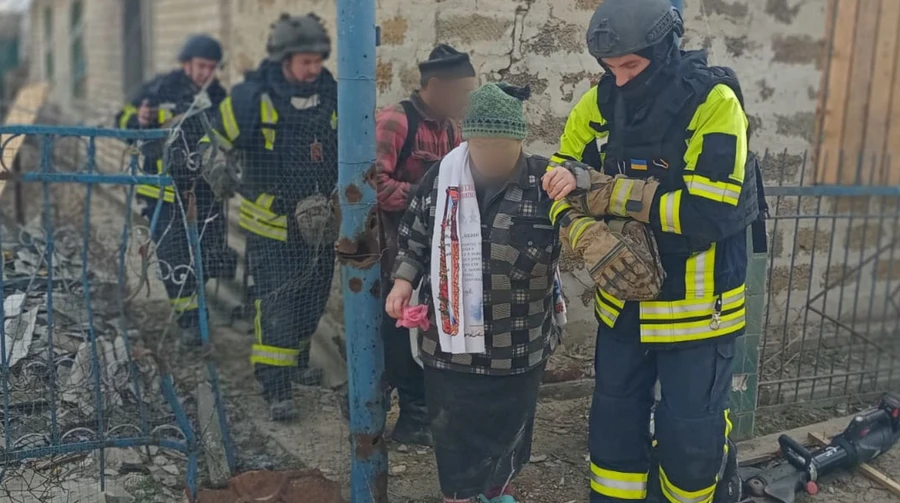
Three civilians were injured in Russian strikes on settlements in Kherson Oblast during the day, according to local authorities and emergency services. The attacks targeted residential areas in Bilozerka and Nova Kamianka, highlighting the continued danger for civilians living near the front lines.
At around 10:30 a.m., Russian forces struck Bilozerka, injuring a 73-year-old woman and a 49-year-old man who were inside their home. Both suffered blast injuries and concussions but received medical assistance and are expected to recover while being treated on an outpatient basis. About an hour later, a drone attack hit a residential property in Nova Kamianka, where a 66-year-old man was wounded by shrapnel and blast effects. Doctors are continuing to monitor his condition.
France is supposed to send to Ukraine the newest version of the SAMP/T NG anti-aircraft missile system for battlefield testing
Volodymyr Zelensky informed that France plans to provide Ukraine with an unspecified number of its newest SAMP/T NG air defense system in 2026 for testing against Russian ballistic missiles. Zelenskyy added that he and Emmanuel Macron agreed Ukraine would be the first country to receive the system if it proves effective in intercepting such threats.
The announcement comes as Russia increasingly relies on ballistic missiles in its strike campaigns against Ukraine, underscoring the urgent need to strengthen the country’s air defense capabilities. Zelensky emphasized that advanced Western systems capable of countering ballistic missiles are critical to protecting Ukrainian cities and infrastructure from escalating attacks.
Indonesia plans to buy Russian oil
Indonesia, home to the world’s largest Muslim population, is considering purchasing Russian oil amid a global fuel crunch and after the United States granted a 30-day waiver allowing countries to buy sanctioned Russian oil shipments stranded at sea, according to Reuters. This move indicates that Jakarta’s attempts to secure stable energy supplies as global markets remain volatile.
Indonesia depends heavily on imported oil, with crude and refined products accounting for more than 13% of total imports in 2024, according to the Observatory of Economic Complexity. Data from Kpler shows a sharp drop in imports from Saudi Arabia in March—from 104,000 to 23,000 barrels per day—highlighting the need to diversify suppliers. Energy Minister Bahlil Lahadalia said the government is focused on ensuring supply, regardless of the source.
Officials are also exploring alternative suppliers such as Brunei and weighing potential budget cuts if global oil prices remain high. The situation underscores the broader impact of geopolitical tensions on energy markets and the difficult choices countries face in maintaining energy security.