
Daily Flyer - March 10, 2026
A voice of Ukraine to the West

The US is considering lifting Russian oil sanctions to reduce global energy prices
On March 9, President Donald Trump said that the United States is preparing to waive certain oil-related sanctions to help stabilize global energy prices as the war involving Iran pushes markets higher. The remarks signal a potential shift in Washington’s sanctions enforcement as the escalating conflict in the Middle East threatens global oil supplies.
Trump did not specify which country could receive sanctions relief, though sources say the administration is considering easing restrictions on Russia’s oil sector. “We're waiving certain oil-related sanctions to reduce prices,” Trump said, adding that some sanctions could be lifted temporarily until the market stabilizes. The comments came hours after he held a phone call with Russian President Vladimir Putin to discuss Russia’s full-scale war against Ukraine and the growing conflict in Iran.
Global energy prices surged after the United States and Israel launched strikes on Iran on February 28, prompting Tehran to close the Strait of Hormuz, a key route for roughly 20% of the world’s oil supply.
While easing sanctions could increase available oil, critics warn it may weaken pressure on Moscow. Alexander Kirk of the NGO Urgewald said relaxing restrictions could encourage the Kremlin, arguing that Russia’s fossil fuel revenues continue to finance the war against Ukraine.
Russia's new law restrictst foreign words in public spaces
On March 1, the "Law on the Protection of the Russian Language," came in power, which war previously signed by President Vladimir Putin back in June 2025. This legislation aims to safeguard Russian as the state language by prioritizing its use in all consumer-facing public information, including shop signs, menus, price tags, advertisements, websites, and product descriptions. The law requires that any foreign words or phrases—such as common anglicisms like "sale," "open," "coffee," or "shop"—must be accompanied by equivalent Russian translations displayed in the same font, size, color, and prominence. While it does not impose a complete ban on foreign terms, it effectively pushes them into a secondary role, ensuring Russian remains dominant in everyday commercial and public communication to preserve linguistic purity and cultural identity.
The measure reflects broader efforts to counter Western cultural influence amid geopolitical tensions, with initial drafts proposing stricter prohibitions on Latin-script signage and advertising. Although watered down from earlier versions that sought to outright eliminate many borrowings, the law still mandates compliance for businesses, with exceptions for registered trademarks and brand names (e.g., "Starbucks" or "Adidas" can remain unchanged).
Supporters argue it protects the Russian language from "vulgar and mechanical" foreign loanwords that "pollute and distort" it, while critics view it as symbolic nationalism that burdens commerce without fully eradicating anglicisms. As enforcement begins, many companies are adapting signs and materials to avoid fines, marking a significant step in Russia's ongoing campaign to reinforce linguistic sovereignty.
Ukraine is sending three teams of military experts to the Middle East
According to President Volodymyr Zelensky, Ukrainian security and counter-drone specialists will travel this week to Qatar, the United Arab Emirates, and Saudi Arabia to assist with protection against aerial threats.
Speaking during an online briefing, Zelensky said Ukraine has sent three fully staffed teams of experts, with each group assigned to a different country. Kyiv has gained extensive experience in countering drone attacks during Russia’s war against Ukraine, particularly Iranian-designed Shahed-type drones used by Moscow.
Zelensky also noted that the escalating situation in the Middle East led the United States to postpone planned trilateral talks with Ukraine and Russia. According to early indications, the negotiations may now take place next week. He previously said Ukraine faces a shortage of Patriot PAC‑3 interceptor missiles and is ready to exchange some of its interceptor drones for them.
Russians hit Sloviansk with aerial bombs: four killed, 16 injured
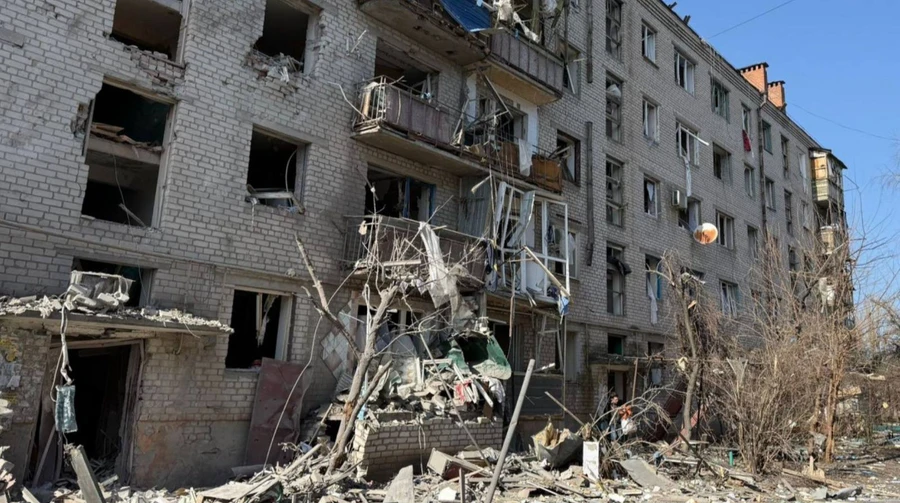
A Russian airstrike hit the central part of Sloviansk in Donetsk Oblast on the morning of March 10, killing four people and injuring 16 others, including a 14-year-old girl, according to Ukrainian authorities.
Prosecutors said Russian forces targeted densely populated residential areas. One munition struck a block of flats, while two others exploded near nearby multi-storey buildings, causing significant damage. At least six apartment buildings and around 10 cars were damaged in the attack.
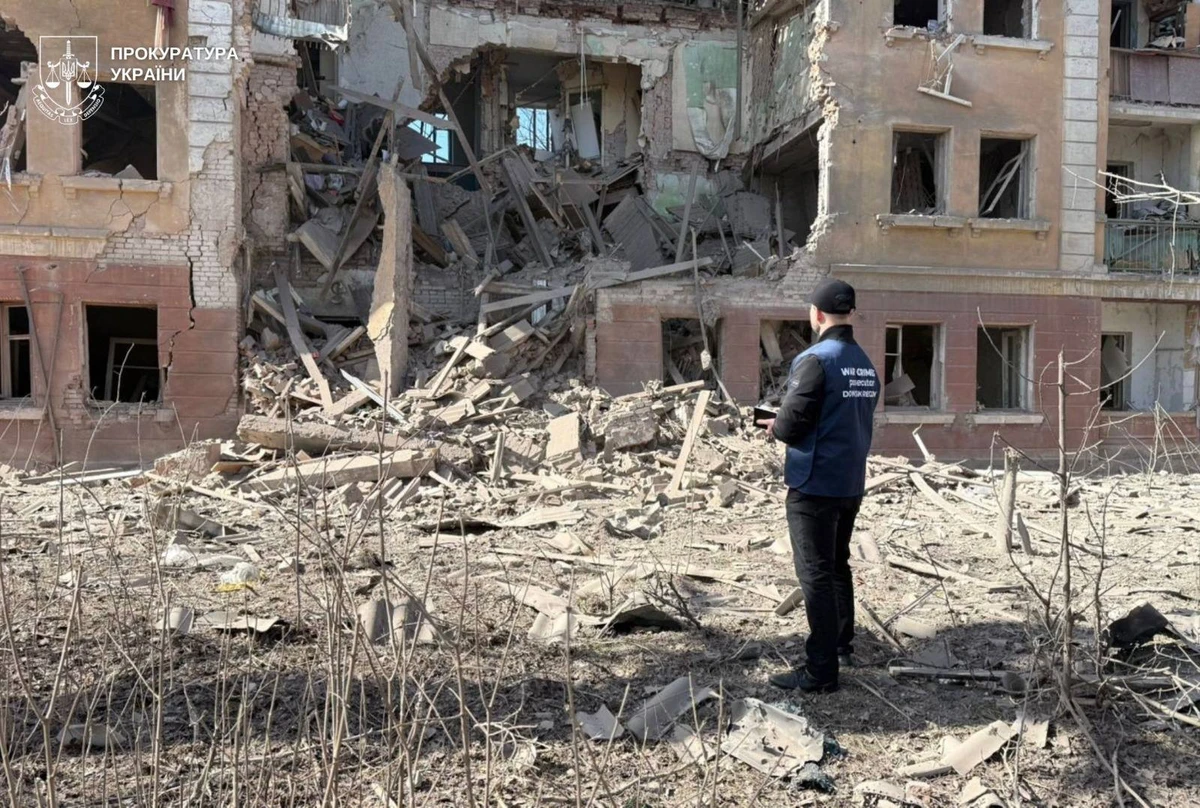
Ukraine’s prosecutors have launched a pre-trial investigation into a suspected war crime under Article 438 of the Criminal Code. Officials initially reported two civilians killed and 17 injured, but later confirmed the updated toll of four dead and 16 wounded as rescue efforts continued.