


Zelensky’s strategic letter to Putin: peace offer aimed at Russian elites and the West
Zelensky's open letter to Putin, published on June 4, 2026, was not primarily intended for the Russian president himself. According to Ukrainian officials, the message targeted a broader audience, including Putin's inner circle, Russian elites weary of the prolonged war, and ordinary citizens. It marked the first direct outreach from Zelenskyy to Putin since 2022, proposing a face-to-face meeting in a neutral country to discuss ending the conflict, with Ukraine ready for a full ceasefire during negotiations and an all-for-all prisoner exchange.
The letter strategically placed the responsibility for continuing the war on Putin by publicly offering talks and urging him to set a clear date, while inviting the United States and Europe to participate. Kremlin responded dismissively, with Putin claiming he saw "no point" in meeting Zelenskyy. Ukrainian sources described the move as creating a clear public record: Kyiv is actively seeking peace, while Moscow consistently rejects genuine diplomacy.
Beyond Russia, the initiative also aimed at Western audiences, demonstrating Ukraine's willingness to negotiate amid stalled U.S.-mediated talks due to Washington's focus on other crises. European officials welcomed the proposal, and analysts noted it helps reinforce international support by highlighting Putin as the main obstacle to peace. The letter underscores Kyiv's proactive diplomatic efforts regardless of external mediation progress.
In response to Zelenskyy's letter, Putin stated that he "sees no point in meeting"
Russian leader Vladimir Putin said he currently sees no point in holding a meeting with Ukrainian President Volodymyr Zelenskyy, claiming that a recent open letter from the Ukrainian leader contained "elements of rudeness" that create obstacles to direct talks.
Speaking at the St. Petersburg International Economic Forum, Putin said he is not opposed to a meeting in principle but does not want what he described as "empty conversations." He also criticized Zelenskyy over the lack of elections in Ukraine and urged him to act "within the framework of the constitution."
Putin further claimed that Zelenskyy had previously sought a meeting through a Russian businessman. Commenting on criticism of his long time in power and age, Putin said many world leaders are the same age or older than him.
Despite his remarks, Putin stressed that he was not refusing dialogue altogether, while reiterating his position on negotiations with Ukraine.
185 Ukrainian POWs returned from Russian captivity in the latest exchange
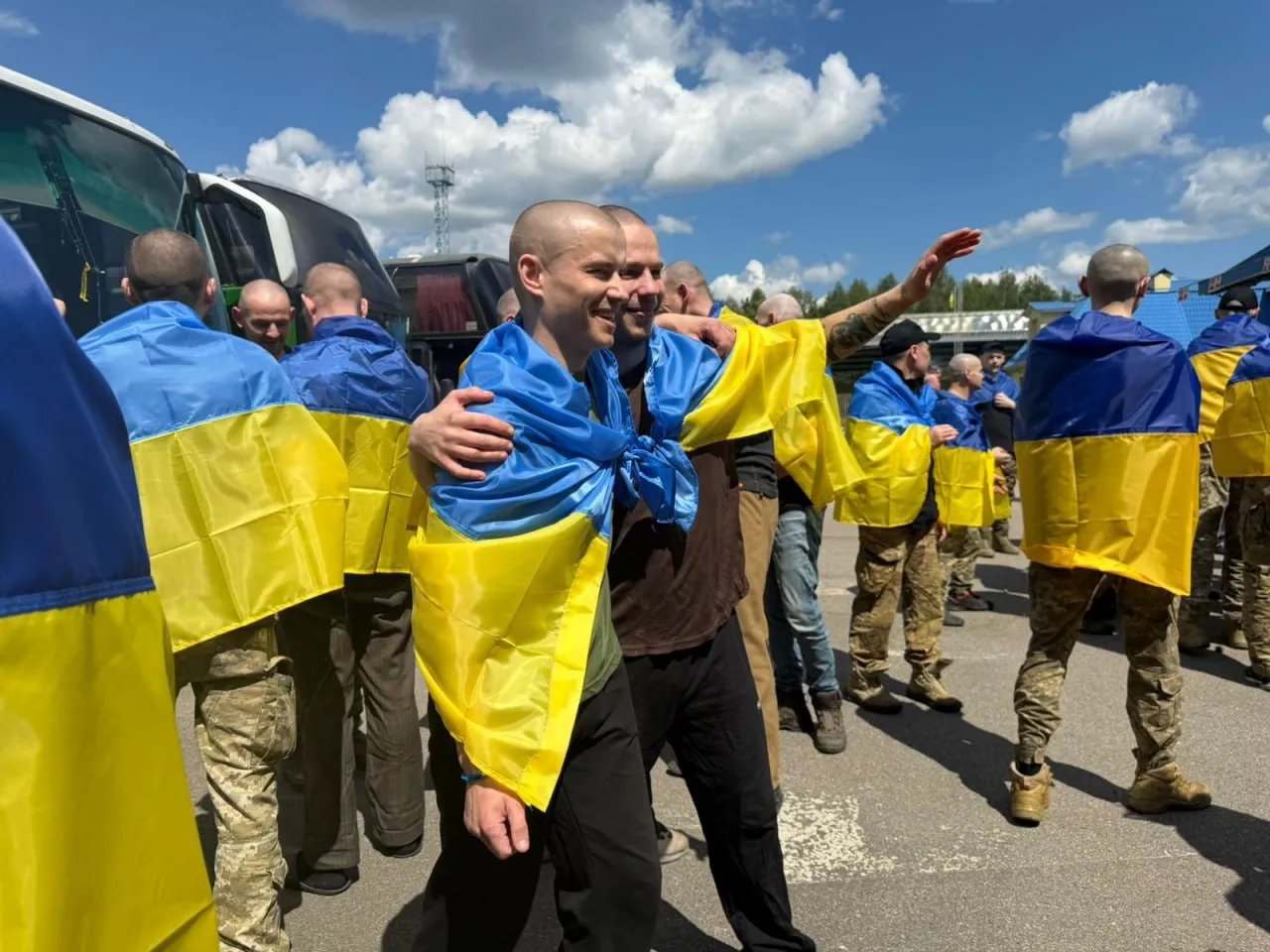
A total of 185 Ukrainian prisoners of war returned home from Russian captivity in the latest prisoner exchange, President Volodymyr Zelensky announced on 5 June. One Ukrainian civilian who had been held by Russia since 2022 was also released.
The exchange, the 75th since the start of Russia's full-scale invasion, was carried out with the support of the United States and the United Arab Emirates. Russia's Defence Ministry confirmed that 185 Russian POWs were also returned as part of the swap.
Among those freed are members of the Ukrainian Armed Forces, National Guard and State Border Guard Service who fought in multiple sectors of the front. More than half had been held captive since 2022, including defenders of Mariupol and soldiers who took part in the defence of the Azovstal steel plant.
The youngest released prisoner is 26 years old and the oldest is 62. The group also includes two officers. Ukrainian authorities said the returned service members will receive medical treatment, rehabilitation and financial assistance.
Zelensky thanked everyone involved in organising the exchange, calling it another important step in bringing Ukrainians home from Russian captivity.
US House of Representatives passes a new Ukraine aid bill approving sanctions against Russia
The U.S. House of Representatives has passed a bill that would provide additional military aid to Ukraine, support reconstruction efforts, and impose new sanctions on Russia. The measure was approved with support from Democrats and a small group of Republicans who bypassed the usual committee process to bring it to a vote.
The legislation includes funding for Ukraine's recovery, additional security assistance, loans for purchasing weapons, support for the Baltic states, and measures aimed at countering Russian influence.
However, the bill faces significant obstacles in the Republican-controlled Senate, where leaders are unlikely to advance legislation that conflicts with President Donald Trump's position. The vote also highlighted declining Republican support for Ukraine compared with previous aid packages.
Supporters argued the bill would strengthen Ukraine's defense and increase pressure on the Kremlin, while opponents called it a partisan measure that could complicate efforts to negotiate an end to the war.