


Ukrainian drones hit Russian oil, gas sites in Crimea and Siberia
Ukrainian forces carried out a series of long-range drone strikes on 20 June, targeting Russian energy and military infrastructure in occupied Crimea and deep inside Russia.
According to Ukraine's Unmanned Systems Forces, drones struck four gas compressor stations, a bridge linking occupied Crimea with occupied parts of Kherson Oblast, and several other military facilities across occupied territories. Explosions and smoke were also reported near the Hlibivka underground gas storage facility and energy infrastructure in Crimea.
In Russia, Ukrainian drones reportedly hit an oil refinery in the city of Tyumen, around 2,000 kilometres from Crimea. Local residents reported explosions and emergency measures at the facility.
The strikes are part of Ukraine's broader campaign against Russia's energy and logistics infrastructure, aimed at disrupting supplies that support Moscow's war effort. The operation follows recent Ukrainian drone attacks on energy facilities around Moscow and other regions of Russia.
Ukrainian officials have said that increasing pressure on Russian military and energy infrastructure is intended to weaken Russia's ability to sustain its war against Ukraine.
Zelensky issued an ultimatum to Lukashenko over drone-guidance equipment
President Volodymyr Zelensky accused Belarus of continuing to support Russia’s war against Ukraine by allowing communication relay systems on its territory to help guide Russian drone attacks. He warned that Minsk has one week to remove the equipment or Ukraine will take action itself.
Zelensky said Belarus has been involved in Russia’s military campaign since the start of the full-scale invasion, including by allowing attacks from its territory and supplying fuel to Russian forces. He argued that Belarusian leader Alexander Lukashenko has the power to stop this support if he truly wants to avoid being drawn into the war.
The warning comes despite Lukashenko recently claiming that Belarus poses no threat to Ukraine and apologizing for previous harsh remarks about Zelensky.
Ukrainian forces struck the key bridge linking Russian-occupied Crimea to mainland Ukraine
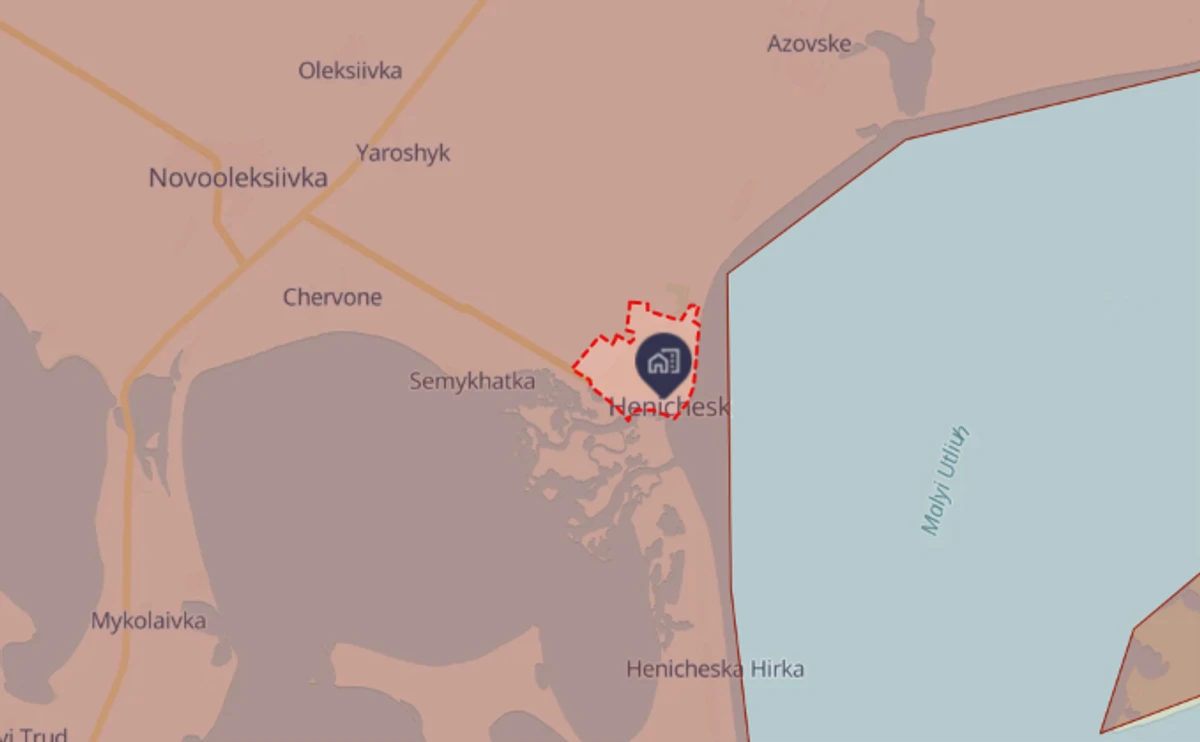
Ukrainian defence forces struck a key road bridge over the Henichesk Strait during the night of 19-20 June, according to the General Staff of the Armed Forces of Ukraine.
The bridge, located near Henichesk in Kherson Oblast, connects the Arabat Spit with the mainland and is used by Russian forces as an important logistics route between occupied Crimea and other occupied territories in southern Ukraine.
Ukrainian forces also struck a Russian Pantsir-S air defence system near the settlement of Dolynske in Zaporizhzhia Oblast.
In separate operations on 19 June, Ukrainian troops targeted Russian drone ground-control stations near Soledar in Donetsk Oblast, Hrozove in Zaporizhia Oblast, and Terebreno in Russia's Belgorod Oblast, as part of ongoing efforts to disrupt Russian reconnaissance and strike capabilities.
43% of Poles hold negative views toward Ukrainians
According to data highlighted by UA War Infographics, 43% of Poles now express negative attitudes toward Ukrainians. This marks a significant increase from just 17% in 2023, according to a long-running survey by Poland’s respected CBOS public opinion research center.
The deterioration in attitudes comes amid ongoing tensions related to Ukrainian refugees in Poland, economic disputes (particularly over grain imports), historical memory issues, and general war fatigue after more than three years of supporting Ukraine. While a substantial portion of Polish society still holds positive or neutral views, the rapid rise in negative sentiment reflects growing polarization.
This data underscores the challenges in maintaining strong Polish-Ukrainian solidarity, which was exceptionally high in the first years following Russia’s full-scale invasion. Both Ukrainian and Polish analysts note that while bilateral relations at the governmental level remain strategically important, public opinion on both sides has become more complex and strained.
The Polish president has decided to remove Zelensky from the Order of the White Eagle
Polish President Karol Nawrocki has stripped President Volodymyr Zelenskyy of the Order of the White Eagle, Poland's highest state award, citing Zelenskyy's approval of naming a Ukrainian military unit after the Heroes of the Ukrainian Insurgent Army (UPA).
Nawrocki said the Order of the White Eagle symbolizes Poland's highest trust and requires not only merit but also respect for the values of the Polish state. He argued that Poland cannot accept the glorification of groups responsible for the killing of Polish civilians during World War II.
At the same time, Nawrocki stressed that the decision is not directed against the Ukrainian people and does not signal any change in Poland's support for Ukraine. He reiterated that Russia remains the aggressor, described Vladimir Putin as a criminal responsible for the largest war in Europe since World War II, and reaffirmed Poland's support for Ukraine's sovereignty and territorial integrity.
The Polish president also said that Ukraine's path toward the European Union requires an honest reckoning with difficult historical issues, adding that Europe was built on rejecting totalitarianism and the cult of violence.
Following criticism from Ukrainian Foreign Minister Andrii Sybiha, who called the decision a strategic mistake benefiting Moscow, the head of Nawrocki's office, Zbigniew Bogucki, defended the move. He said Poland had first warned Ukraine about the issue, consulted the award's chapter, and held diplomatic talks that gave Kyiv an opportunity to reverse the decision to name the unit after the UPA. According to Bogucki, Ukraine chose not to do so, after which Nawrocki made a "measured and considered" decision to revoke the honor.
Polish Foreign Minister Radosław Sikorski highlighted how Russian officials reacted to President Karol Nawrocki’s decision to revoke President Volodymyr Zelenskyy’s Order of the White Eagle.
Sikorski pointed to a statement by Dmitry Medvedev, who welcomed the move and used derogatory language against Zelenskyy, claiming the Polish award had no real significance. Medvedev also repeated typical Kremlin narratives about Ukraine.
Responding on X (Twitter), Sikorski noted Russia’s approval of the decision, effectively warning that Moscow was politically exploiting the dispute between Poland and Ukraine.
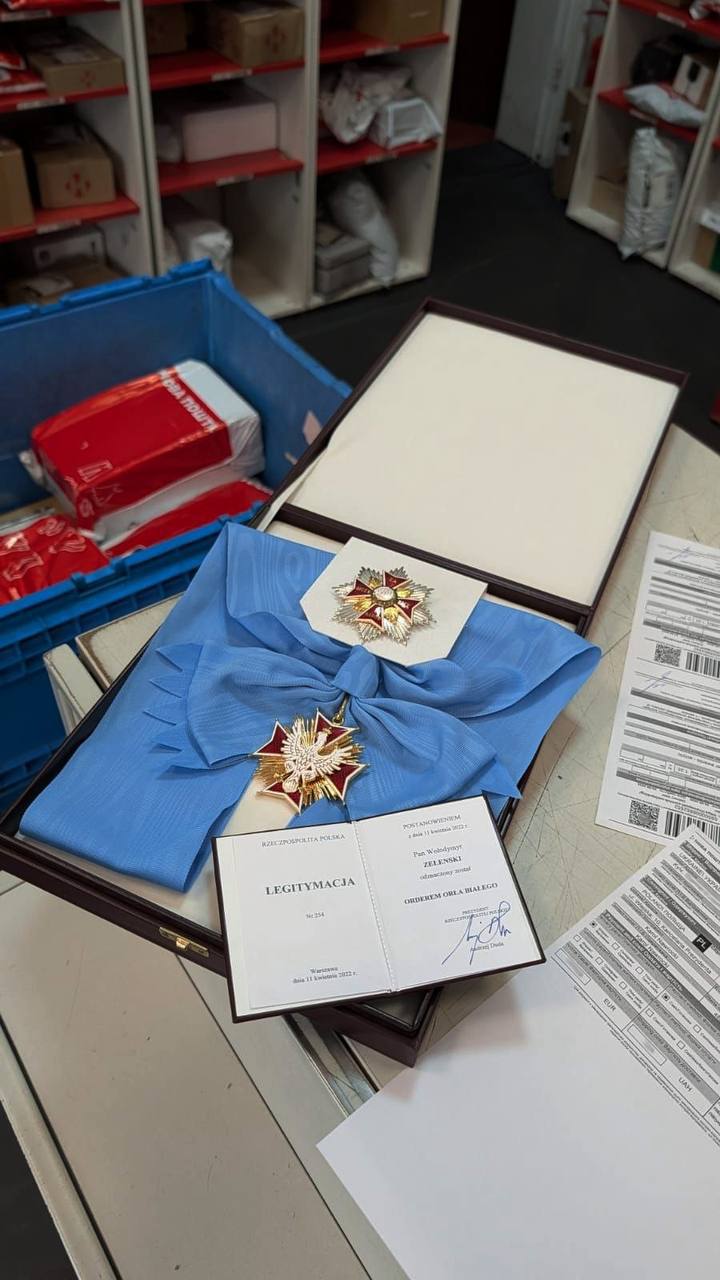
In his turn, Zelensky returned the Order of the White Eagle to Poland via “Nova Poshta” shipping company.