


Putin threatens to increase strikes on Ukraine
Russian leader Vladimir Putin has stated that Russia intends to intensify strikes on Ukrainian infrastructure, presenting the move as a response to Ukrainian attacks on targets inside Russia.
Speaking at a meeting with Russian servicemen, Putin said Moscow would continue expanding its campaign against Ukrainian infrastructure in an effort to deter further strikes on Russian territory.
"Given what they are doing, we must – and this is our next task – respond appropriately. And we are doing that, and will continue to increase our strikes on the enemy's infrastructure so as to discourage them from attacking our civilian facilities."
Putin also acknowledged that Ukrainian long-range strikes are causing economic damage inside Russia. However, he argued that the effects are limited and manageable.
"As regards the economy, of course, damage is being done. But everything is recovering quickly; they won't be able to create any serious problems for us."
His comments come amid an intensifying Ukrainian campaign targeting Russian military, industrial, and energy infrastructure. In recent months, Ukrainian forces have expanded long-range drone and missile strikes against oil depots, refineries, logistics hubs, railway infrastructure, air defense systems, and military facilities deep inside Russia and in occupied territories.
At the same time, Russian forces have continued large-scale attacks on Ukrainian cities and infrastructure using missiles, drones, and guided aerial bombs. Ukrainian officials have repeatedly accused Russia of deliberately targeting civilian and energy infrastructure throughout the war.
Putin's remarks also coincide with a warning from the Ukrainian Air Force that there is a heightened risk of ballistic missile launches from the Kapustin Yar test range within the next 24 hours. The site has previously been used to launch the Oreshnik intermediate-range ballistic missile.
The statement suggests that Moscow may continue or increase its use of long-range missile and drone strikes as Ukraine's attacks on Russian territory become more frequent and more damaging to Russia's military and economic infrastructure.
Zelensky announces major reforms to soldier paya nd a new way to recruit foreign fighters
President Volodymyr Zelensky has announced a major overhaul of military compensation and personnel policies aimed at addressing Ukraine's growing manpower challenges after more than four years of full-scale war.
The reforms were developed in coordination with Prime Minister Yuliia Svyrydenko, Defense Minister Mykhailo Fedorov, Finance Minister Serhii Marchenko, and Ukraine's military leadership.
Higher pay for soldiers
Under the new system, military personnel serving in non-combat roles will receive a minimum monthly salary of Hr 30,000 (about $670), up from the previous Hr 20,000.
The most significant increase is aimed at infantry troops serving on the front line. Soldiers spending a full month on the "zero line" — the positions closest to enemy forces — will receive Hr 300,000 (about $6,700) per month.
Currently, combat personnel generally receive up to Hr 100,000 in combat pay, with additional bonuses depending on their duties and operational circumstances.
Zelensky emphasized that infantry units bear the heaviest burden of the war.
"Everything rests on the Ukrainian infantry, on our Ukrainian infantry."
Fixed-term contracts and demobilization incentives
One of the most anticipated reforms is the introduction of fixed-term contracts for infantry and assault troops.
For years, Ukrainian soldiers and their families have demanded clearer rules governing military service and eventual release from duty. Under the new framework, personnel who complete these contracts will receive a period of exemption from future mobilization.
The measure is intended to provide a predictable path out of service and help address concerns among troops who have served continuously since the early stages of the war.
Better incentives for commanders
The government will also raise compensation for senior officers and commanders.
According to Zelensky, the goal is to create a stronger incentive for effective leadership and improve command quality across the armed forces.
Reforms to transfers between units
Another significant change concerns transfers between military units.
The current system has been widely criticized by soldiers who feel trapped in poorly managed brigades. Difficulties in obtaining transfers have contributed to morale problems and, in some cases, have reportedly encouraged personnel to go absent without leave in order to join more effective units.
The reforms are expected to simplify transfers and give soldiers greater flexibility in choosing where they serve.
Expanding foreign recruitment
Zelensky also ordered a major expansion of efforts to recruit foreign volunteers.
Ukraine has relied on international volunteers throughout the war, and foreign fighters—particularly from Latin America—have become an increasingly visible presence in frontline infantry and assault formations.
The president called for the creation of "significantly more opportunities" for foreigners to join the Ukrainian military as Kyiv seeks additional personnel sources.
Addressing a long-term manpower challenge
The reforms reflect Ukraine's continuing struggle to maintain sufficient manpower. Many soldiers have spent years in combat with limited opportunities for rest or discharge, while mobilization efforts have faced increasing difficulties.
Zelensky has repeatedly argued that Ukraine should eventually transition toward a more professional military built around volunteer contract soldiers receiving competitive salaries and benefits.
A previous recruitment program targeting Ukrainians aged 18–24 offered generous pay and fixed service terms but initially attracted limited interest. Participation increased only after the program was expanded to include elite drone units, which are often viewed as less hazardous than traditional infantry roles.
The new package represents one of the most significant personnel reforms since the start of Russia's full-scale invasion and is designed both to improve frontline morale and to create a more sustainable military structure for the future, including after any eventual ceasefire or peace agreement.
Ukrainian journalist spent almost three years in Russian captivity, and even went on a hunger strike
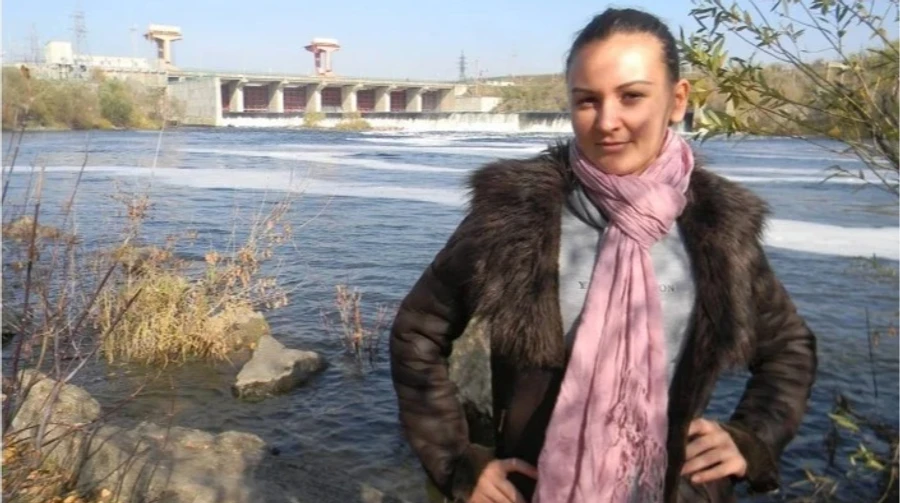
Ukrainian journalist Anastasiia Hlukhovska, who was abducted by Russian security forces in occupied Melitopol in August 2023, is reportedly being held in a pre-trial detention center in Kizel, Perm Krai, Russia, where she has spent nearly three years in captivity without formal charges.
According to reporting by RIA-Pivden, citing relatives and testimony from former detainees, Hlukhovska was transferred from a detention facility in Taganrog to Kizel, where at one point she reportedly went on a hunger strike. The reasons for the protest remain unknown.
The detention center has drawn particular attention because Ukrainian journalist Viktoriia Roshchyna was also held there before her death in Russian custody. According to Hlukhovska's family, conditions at the facility are extremely harsh.
Her sister said detainees are not permitted to sit or lie down in their cells during daytime hours, a situation that has reportedly worsened Hlukhovska's chronic health condition, endometriosis, and contributed to severe swelling in her legs.
Former prisoners who were later exchanged reported seeing Hlukhovska alive in the prison yard. One former detainee said she was assigned to work in a sewing workshop inside the detention center.
According to relatives, prison conditions reportedly improved somewhat only after scrutiny increased following the deaths of Roshchyna and Yevhen Matvieiev, who also died in Russian custody. Former detainees said prisoners subsequently received bedding and somewhat improved food supplies.
Hlukhovska was seized during a Russian security operation in occupied Melitopol on 20 August 2023. Russian authorities also detained several local media and Telegram administrators during the same crackdown, including Heorhii Levchenko. Some of those detainees were later accused of cooperating with Ukrainian intelligence and sentenced to lengthy prison terms.
According to testimony collected by RIA-Pivden, Hlukhovska was initially held at a facility located on the grounds of the Ruslan Komplekt plant in occupied Melitopol. Former detainees alleged that prisoners there were subjected to electric-shock torture. She was later transferred through detention facilities in Pryazovske and Taganrog before ending up in Kizel.
The chairman of the Ukrainian parliament's Freedom of Speech Committee, Yaroslav Yurchyshyn, warned that securing Hlukhovska's release through prisoner exchanges is particularly difficult because Russia generally refuses to acknowledge that it is holding civilian detainees.
Yurchyshyn argued that international attention remains one of the few available tools for protecting imprisoned Ukrainian civilians and journalists. He called on Ukraine's international partners to increase pressure on Russia and work toward the release of Hlukhovska and other detained media workers.
The case highlights the broader issue of Ukrainian civilians held in Russian custody from occupied territories. Human rights organizations and Ukrainian officials have repeatedly accused Russia of unlawfully detaining civilians, journalists, local officials, and activists, often without formal charges or transparent legal proceedings.