


Russia conducted a record-breaking aerial strike on Kyiv with ballistics and Zircons
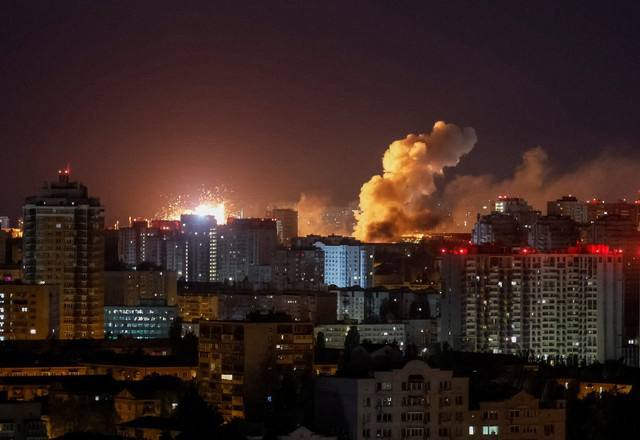
Russia launched one of its largest combined missile and drone attacks on Kyiv overnight on July 19, killing at least one person and injuring 16 others, including several people in serious condition. According to Ukraine's Air Force, Russia fired 41 missiles—including 25 ballistic missiles, 10 Zircon hypersonic missiles and six other missiles—along with 125 drones, with Kyiv as the primary target. Ukrainian air defenses intercepted 17 ballistic or Zircon missiles, one Kh-59/69 guided missile and 108 drones. Nevertheless, 23 missiles and 10 drones struck 20 locations, while debris from intercepted weapons fell at 18 additional sites. The attack continued until about 2:40 a.m., with more than 20 ballistic missiles reportedly launched at Kyiv in less than an hour.
President Volodymyr Zelensky called it one of Russia's largest ballistic missile assaults on the capital. Kyiv Mayor Vitali Klitschko said at least nine people were hospitalized, three of them in serious condition. Fires and damage were reported across multiple districts of the city. In the Solomianskyi district, missile strikes ignited the roof of a supermarket and a nearby apartment building, while four residents were rescued from a burning five-story residential building. In the Dniprovskyi district, debris sparked a fire at a dormitory, while in the Desnianskyi district, strikes hit commercial property, setting vehicles, a warehouse and other facilities ablaze. In Shevchenkivskyi district, an administrative building caught fire, more than 10 parked cars were damaged, and nearby residential buildings sustained blast damage. Authorities also reported a strike on a residential building in the Sviatoshynskyi district.
The attack also caused damage in Kyiv Oblast, where warehouse buildings and a logistics facility near Bucha caught fire, injuring two people. The above-ground entrance to Kyiv's Lukianivska metro station was damaged by an explosion, forcing the station to close temporarily. Residents described the assault as one of the most terrifying of the war. "It was the scariest night of my life," Kyiv resident Eleonora Belei told the Kyiv Independent after her apartment building was damaged in the attack. Further Russian drone activity was reported over Kyiv Oblast later in the morning.
Hungary's president reluctantly agrees to step down amid push from Prime Minister Peter Magyar
Hungarian President Tamás Sulyok agreed to step down on July 18 after signing constitutional amendments ending his term on July 20, while criticizing the changes that forced his departure.
"The next President of Hungary will be the President who violated the constitutional values. The institution of the President of the Republic and the principle of power distribution have been trampled on for the sake of power," Sulyok said.
The move follows the April election victory of Prime Minister Péter Magyar and his Tisza party, which ended Viktor Orbán and Fidesz's 16-year rule. Magyar had accused Sulyok of shielding abuses committed under the previous government and had previously called on him to resign.
After Sulyok refused to step down voluntarily, Hungary's parliament approved constitutional amendments that could have paved the way for impeachment proceedings if he did not approve them.
Following Sulyok's signature, Magyar said the amendments had entered into force, ending the current presidential term, strengthening judicial independence, removing political influence from the Constitutional Court, and creating the legal basis for a National Asset Recovery and Protection Office.
The amendments also introduce a 12-year term limit for members of Hungary's parliament.
Hungary's National Assembly is expected to elect a new president within 30 days. Until then, Ágnes Forsthoffer will serve as acting head of state, according to Magyar.
Botswana warns Russia of trafficking its citizens into the Ukraine war at an alarming rate
Russia is increasingly luring citizens of Botswana to the country under false promises of employment before forcing them into military service, Botswana's Ministry of International Relations said in a statement published on July 18.
The ministry warned that the recruitment campaign is escalating "at an alarming rate" and urged citizens to be cautious of deceptive overseas job offers.
"These individuals are often promised employment opportunities, only to discover upon arrival that they are being forced into active combat."
According to the ministry, Botswana's ability to help citizens once they arrive in Russia is "extremely limited." Officials advised people to be wary of offers promising unusually high salaries, lacking clear English-language contracts, or encouraging travel without proper documentation.
The government did not disclose how many Botswanan citizens it believes have been recruited or trafficked into Russia's war against Ukraine.
Russia has recruited foreign fighters from developing countries since launching its full-scale invasion of Ukraine in 2022, offering high salaries, social benefits, and the prospect of Russian citizenship. Human rights groups and officials have also documented cases involving deception, coercion, and human trafficking.
In April, Ukraine's Main Directorate of Intelligence of the Ministry of Defence of Ukraine warned that Moscow plans to recruit at least 18,500 foreign nationals into its armed forces in 2026. According to Ukrainian intelligence, Russia has set recruitment quotas with the goal of having foreign fighters make up between 0.5% and 3.5% of personnel in different sectors of the front.
Ukraine has also accused Moscow of expanding its influence across Africa through state media and recruitment efforts. In February, Foreign Minister Andrii Sybiha said that at least 1,780 citizens from African countries were fighting on Russia's behalf.