


,
Russian drone strike on Odesa killed three and injured 35, more people may be under the rubble
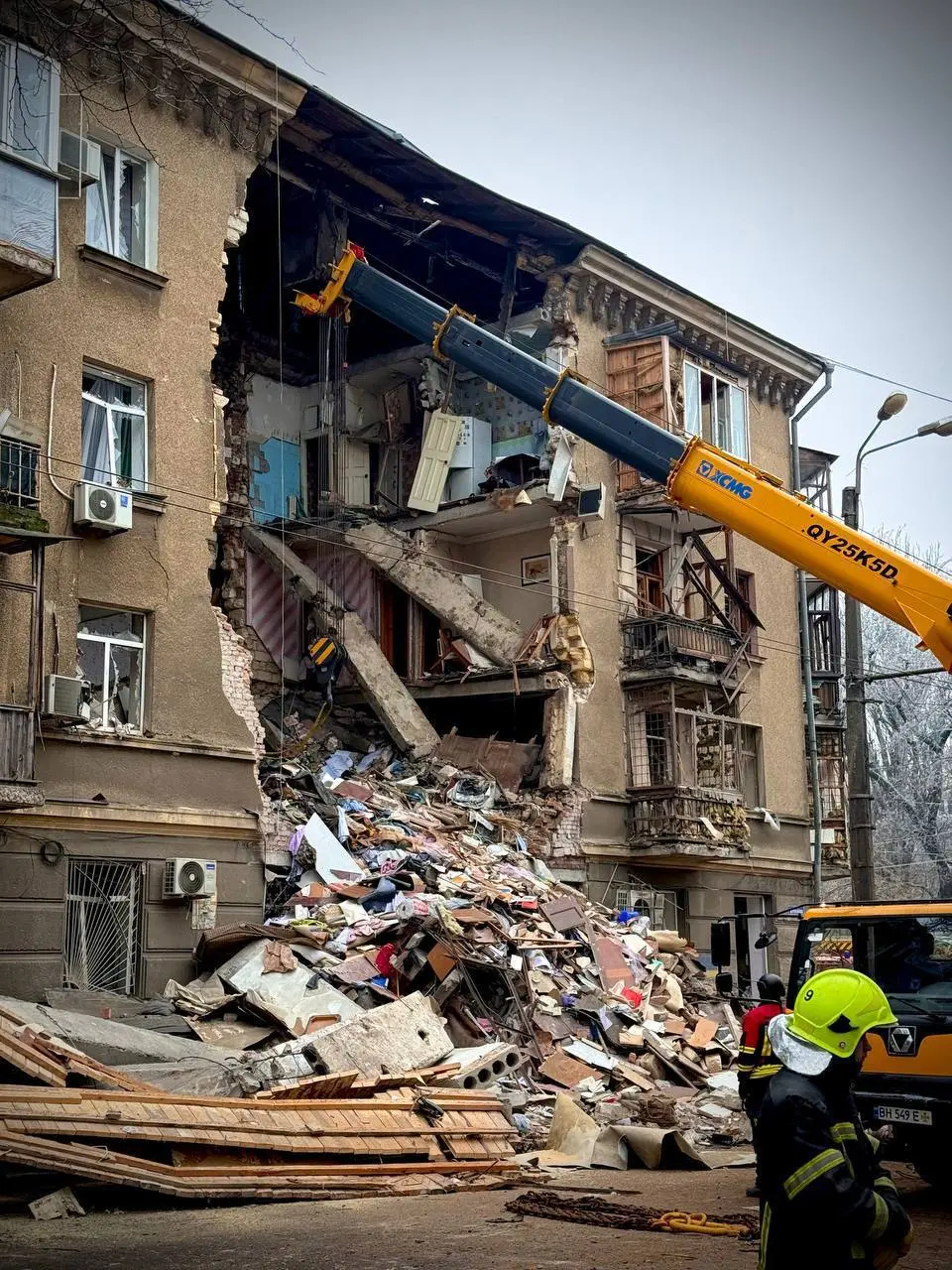
A massive Russian drone attack on Odesa overnight struck residential and educational buildings, killing at least three people, injuring dozens, and leaving an unknown number trapped under rubble, Ukrainian officials reported on January 27.
According to Odesa Oblast Governor Oleh Kiper, Russia launched more than 50 drones at the city starting around 2:20 a.m. The strikes damaged dozens of apartment buildings, a university facility, a preschool, and a church. Initial reports put the number of injured at 23, but that figure later rose to 35, Suspilne reported, citing Public Health Director Olena Kolodenko. Emergency crews rescued 14 people, including one child, while officials warned others could still be buried under the debris.
Odesa Mayor Serhiy Lysak confirmed that the first fatality was recovered hours after the attack, with the death toll rising to three by mid-afternoon as search operations continued. In the Prymorskyi district near the city’s port, 43 buildings and 122 apartments were damaged, while additional destruction was reported in the Peresyp district. Energy provider DTEK said its facilities were among those hit, warning that restoration would take significant time.
Odesa was the hardest-hit city in the nationwide assault. Ukraine’s Air Force reported that Russia launched 165 drones across the country, with direct strikes recorded at 14 locations and falling debris damaging buildings in at least nine others.
Zelensky is ready to meet with Putin to discuss territories and the Zaporizhzhya Nuclear Power Plant — Donbas, as in Kosovo? A possible compromise that could stop the war
Andriy Sybiga the Minister of Foreign Affairs of Ukraine, announced Zelenskyy's readiness for the meeting, while Foreign Policy outlined a scenario that could potentially bring the war closer to an end.
As discussions continue over possible frameworks for de-escalation in eastern Ukraine, some analysts are increasingly pointing to UN Security Council Resolution 1244 (1999) on Kosovo as a potential reference point for managing contested territory without formal changes to sovereignty.
Resolution 1244 placed Kosovo under international administration while explicitly preserving the territorial integrity of the former Yugoslavia. It introduced international security forces, removed local troops from the area, and transferred governance to the United Nations, postponing any final status decision. Supporters of the comparison argue that a similar arrangement could, in theory, be explored for parts of Donbas as a way to reduce civilian harm and stabilise the front line.
Applied to Ukraine, such a model would likely involve an international peacekeeping or administrative mission deployed to western Donbas under a UN or OSCE mandate. Ukrainian forces could withdraw from the designated zone, while Russian troops would remain in their current positions, without any legal recognition of territorial changes. Ukraine’s internationally recognised 1991 borders would remain intact under international law, and Donbas would not be recognised as part of the Russian Federation.
Proponents say an internationally controlled buffer zone could significantly reduce the risk of renewed fighting and offer a measure of protection to civilians. An international presence could also function as a form of security guarantee — a key demand from Kyiv — and potentially open the door to broader Western commitments tied to stability and reconstruction.
Such an arrangement could allow residents to remain in, or return to, cities in western Donbas such as Kramatorsk, Sloviansk, and Kostyantynivka under comparatively safer conditions. Humanitarian access and early recovery efforts could also become more feasible in areas shielded from constant shelling.
At the same time, analysts caution that the Kosovo precedent cannot be applied mechanically. Russia’s full-scale invasion, the scale of destruction, and Ukraine’s insistence on sovereignty and enforceable security guarantees present far greater challenges than those faced in the Balkans in 1999. While Moscow has prior experience operating under Resolution 1244, whether such a framework could gain political acceptance — or deliver lasting security — remains deeply uncertain.
Russians killed a couple in Sumy Oblast as they tried to evacuate
Russian forces killed a civilian couple from the village of Hrabovske in Sumy Oblast during an attempted evacuation on January 27, according to regional authorities.
The couple was trying to flee the border village of the Krasnopillia hromada after the area became increasingly dangerous due to Russian attacks. The man was transporting his injured wife on a sledge, heading toward what they believed would be a safer location.
Russian soldiers struck the civilians during their evacuation attempt, despite being aware that they posed no military threat.
Regional prosecutors reported that the initial strike killed the 52-year-old woman. Shortly afterward, a separate FPV drone strike killed her 54-year-old husband as he attempted to continue the evacuation.
The Sumy Oblast Prosecutor’s Office has opened an investigation into the incident, which authorities classify as a violation of the laws and customs of war. The killing underscores the growing risks faced by civilians in Ukraine’s border regions, where evacuation routes are increasingly exposed to drone and artillery fire.
Shahed-type drones hit A passenger train in Kharkiv Oblast was hit by a drone
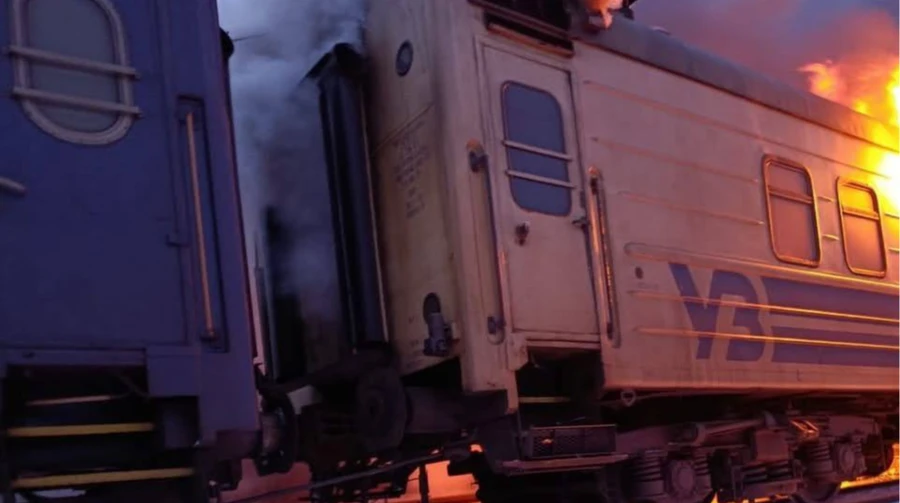
A passenger train travelling from Kharkiv Oblast to western Ukraine was struck in a Russian Shahed drone attack, injuring two people and forcing the evacuation of nearly 300 passengers.
Oleksii Kuleba, Ukraine’s Minister for Development of Communities and Territories, said preliminary information indicates the train was targeted by three Shahed-type unmanned aerial vehicles. The drones hit the front of the locomotive and one of the passenger cars, triggering a fire.
The train had 291 passengers on board at the moment of the attack; 4 were killed and 2 were injured. The train crew immediately assisted the wounded passengers and evacuated them from the train before handing them over to ambulance teams. Both injured individuals were hospitalized.
The attack highlights the continued risks to civilian transport infrastructure as Russia maintains its drone campaign against targets across Ukraine.