


Ukraine faces emergency power cuts following Russia's overnight aerial attack, cause power cuts in the 80% of Ukraine
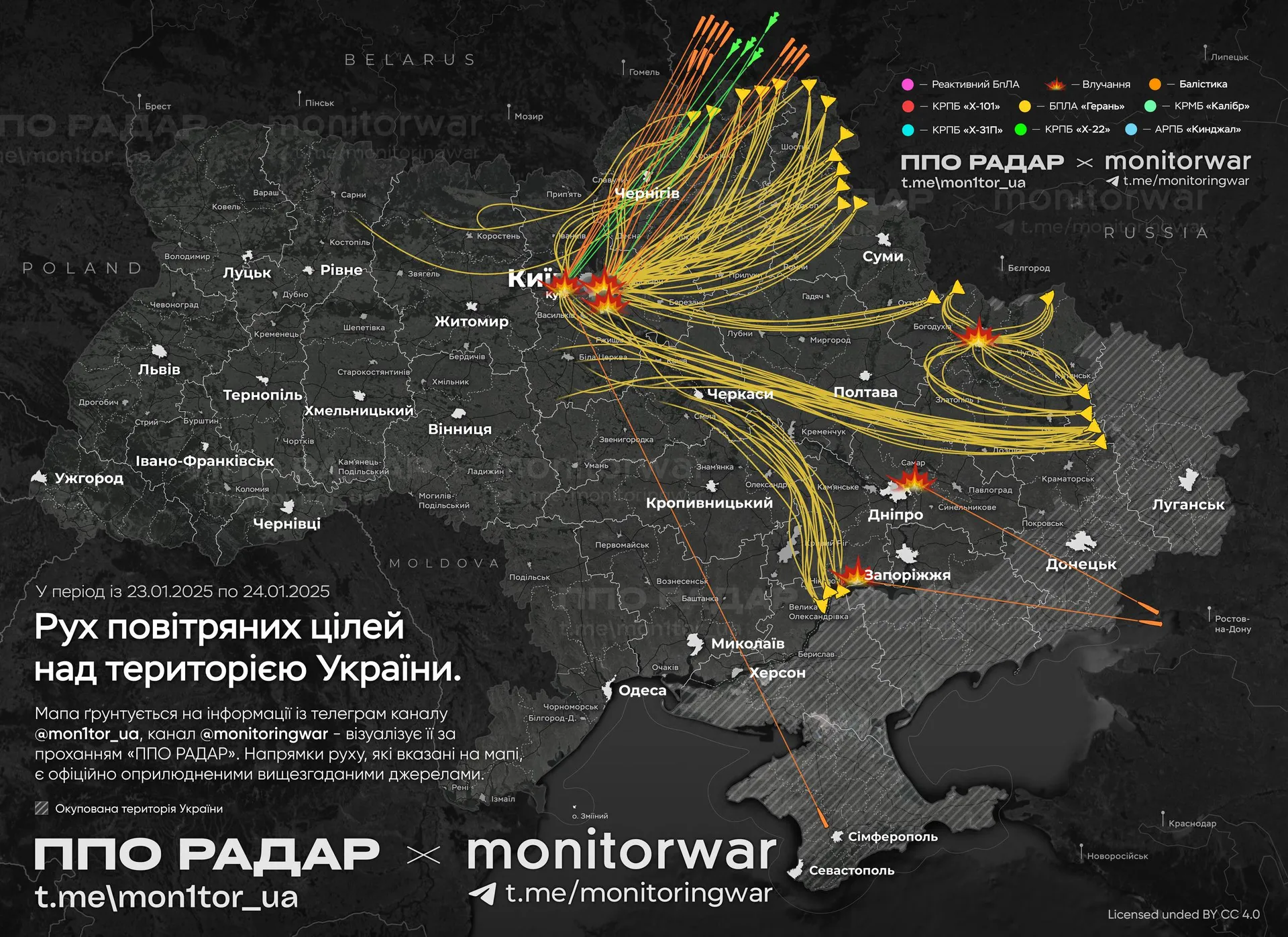
Russia launched a mass aerial attack on Ukraine overnight, January 24 focusing on Kyiv, and also hitting Kharkiv, Dnipro, and Zaporizhia, targering energy infrastructure. The Ukrainian Air Force tallied 396 aerial weapons, including 21 missiles and 375 drones. The Air Force mentioned hypersonic "Tsirkon" missiles, ballistic Iskander missiles, and Kh-22/Kh-32 cruise missiles.
Kyiv,

One person was killed, and at least four others were injured in a Russian overnight attack on Kyiv, as the capital faced explosions, missile interceptions, and widespread disruptions to heating and power supplies.
Explosions were first heard around 1:20 a.m. local time, with blasts continuing through the night, including the interception of a ballistic missile. In the Holosiivskyi district, a Shahed drone struck a Roshen confectionery factory, killing one person and injuring three others, according to emergency services. Damage was also reported in the densely populated districts: Desnianskyi, Dniprovskyi, and Solomianskyi.
Vitaliy Zaichenko, CEO of state grid operator Ukrenergo, said Kyiv’s left bank — on the eastern side of the Dnipro River — is facing a critical heating situation, with problems now spreading to the right bank. Nationwide, up to 80% of Ukraine is expected to face emergency, unscheduled power outages on Jan. 24.
Kyiv authorities also announced partial service cuts on a metro line crossing the Dnipro from Pechersk to Darnytsia, citing damage to infrastructure, while other lines continue to operate. Mayor Vitali Klitschko said nearly 6,000 of the city’s roughly 12,000 apartment buildings are currently without heating, up sharply from fewer than 2,000 the day before. Many of the affected buildings, he added, had already been reconnected multiple times following earlier Russian attacks on January 9 and January 20.
Kharkiv
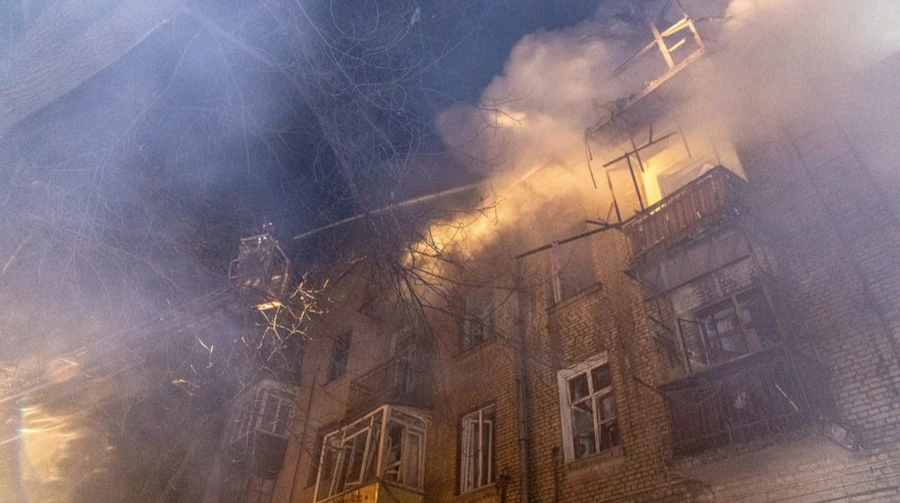
A mass Russian attack on Kharkiv injured at least 27 people and triggered widespread destruction and fires across Ukraine’s second-largest city, local authorities reported.
Ukraine’s State Emergency Service said 134 rescuers and 34 units of firefighting and rescue equipment were deployed to deal with the aftermath, alongside police officers, medics, volunteers, and city utility workers. Emergency crews worked through damaged residential areas to extinguish fires and assist the injured.
The strike came amid continued Russian attacks on Ukraine’s energy infrastructure, which have left major cities struggling with outages of heat, electricity, and water as temperatures drop below freezing.
Officials say the humanitarian crisis is the result of Moscow’s deliberate strategy of targeting critical energy facilities — a tactic used every winter since 2022 — with this season shaping up to be the coldest since Russia launched its full-scale invasion on February 24 of that year, placing unprecedented strain on power grids and making the loss of heating particularly dangerous.
The latest missile attack came shortly after trilateral peace talks involving Kyiv, Moscow, and Washington.
Zelenskyy has agreed on the supply of Patriot missile systems for Ukraine with Trump in Davos
President Volodymyr Zelensky said he reached an agreement with U.S. President Donald Trump on supplying PAC-3 missiles for Patriot air defense systems during the World Economic Forum in Davos.
Speaking at the second National Forum of Talented Youth, Zelensky said the deal was secured during his visit to Switzerland, though he did not disclose how many missiles Ukraine would receive. He described the talks as combining broader global discussions with concrete outcomes for Ukraine.
“We talked about global matters, but we resolved an issue that satisfies my reason for going there,” Zelensky said, emphasizing the importance of strengthening Ukraine’s air defenses amid continued Russian attacks.
Humanitarian catastrophe in Ukraine is inevitable without an energy ceasefire
Ukraine is on the brink of a “humanitarian catastrophe” after months of Russian airstrikes on its energy system, and any future peace agreement must include a halt to attacks on energy infrastructure, DTEK (the largest private investor in the energy industry in Ukraine) CEO Maksym Tymchenko said in comments to Reuters.
Tymchenko said Russia has waged a campaign of “energy terror” since October 2025, repeatedly striking power plants and overwhelming air defenses. Kyiv and surrounding regions have been hit hardest, with Mayor Vitali Klitschko urging residents to temporarily leave the capital if possible as heating and electricity shortages worsen during prolonged мороз periods of –15 to –20°C.
“We need an energy ceasefire — a ceasefire on the energy assets,” Tymchenko said. “How can you talk about peace and keep attacking people, knowing that people are freezing?” He said many Ukrainians now have electricity supply for only three to four hours at a time, followed by outages lasting up to 15 hours, while some apartment blocks have been without heat for weeks.
DTEK has lost 60–70% of its generating capacity and suffered hundreds of millions of dollars in damage, Tymchenko said, adding that Ukraine is coping only thanks to gas imports, including from the U.S. He estimated the cost of rebuilding the energy system at $65–70 billion, citing World Bank figures, and stressed that the task amounts to building an entirely new system.
Tymchenko called for faster decentralization through solar, storage, and green energy projects, noting that dispersed assets are harder to target. “We cannot count on a peace deal being signed,” he said. “We need to start preparing today.”