


the
55% of Ukrainians support holding a referendum on a peace deal - poll
Around 55% of Ukrainians support holding a referendum on a potential peace agreement to end Russia’s war against Ukraine, while 32% oppose the idea, according to a survey by the Kyiv International Institute of Sociology (KIIS) published on January 16. Another 14% of respondents said they remain undecided.
The findings come amid renewed discussion over how decisions on ending the war should be made. In mid-December, President Volodymyr Zelensky said that any territorial concessions proposed as part of a U.S.-backed peace plan should be decided by the Ukrainian people, potentially through a nationwide referendum.
While the idea of a referendum has been raised previously, both elections and referendums are currently prohibited under Ukraine’s martial law. Zelensky has instructed lawmakers to prepare legislative proposals that would allow changes to election legislation during wartime.
Significant obstacles remain to holding either a referendum or elections before the war formally ends. Most notably, Russia has shown no willingness to agree to a ceasefire.
A separate KIIS poll released earlier in January found that only 10% of Ukrainians believe elections should take place before a ceasefire. By contrast, 59% said elections should only be held after a final peace agreement and the complete end of hostilities.
David Arakhamia, the parliamentary leader of Zelensky’s Servant of the People party, said on January 3 that elections and a referendum could be held on the same day, potentially within 90 days after a ceasefire takes effect.
The KIIS survey was conducted between January 9 and 14 and included responses from 601 people across Ukraine, excluding territories currently under Russian occupation.
Russia issued a warning over U.S. President Donald Trump’s renewed interest in acquiring Greenland
Russian senator Dmitry Rogozin has issued a stark warning over U.S. President Donald Trump’s renewed interest in acquiring Greenland, describing the potential move as carrying “extremely serious consequences” for global stability. He specifically highlighted concerns that transforming the Arctic island into a strategic military base—potentially hosting advanced missile systems and defense platforms—could upset the delicate balance of power that has long prevented major conflicts. The senator argued that such a shift would represent a dangerous escalation, placing powerful weapons closer to Russian territory and disrupting the existing strategic equilibrium in the Arctic region.
The official suggested that Washington may see Greenland as a way to gain a decisive military advantage over rivals like Russia and China, positioning itself to dominate the increasingly important Arctic theater. He warned that this could lead to miscalculations, heightened tensions, and even a risk of large-scale confrontation. The remarks come amid ongoing negotiations between U.S. and Danish officials, which have exposed sharp disagreements over American strategic ambitions in Greenland, further fueling international concerns about the militarization of the Arctic and its broader implications for global security.
Two women were killed in Russian artillery attack on Nikopol
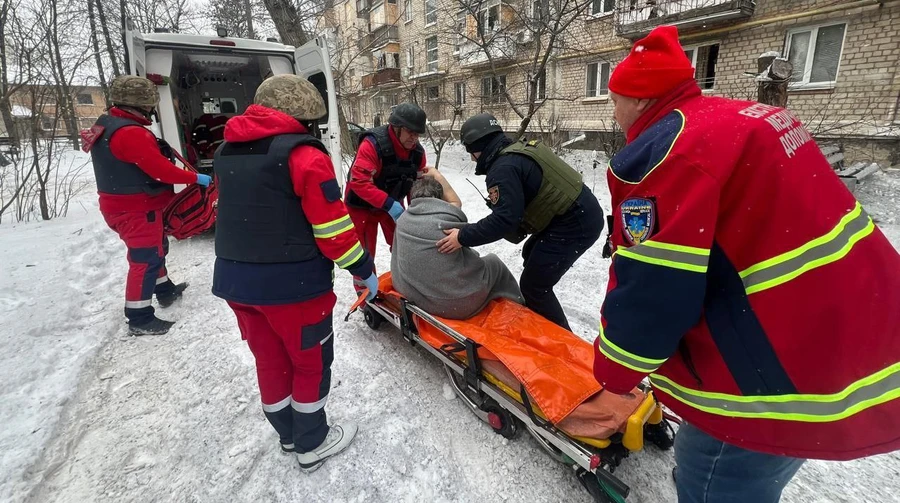
Two women were killed in Russian artillery shelling of the city of Nikopol in Dnipropetrovsk Oblast, regional authorities reported.
Oleksandr Hanzha, head of the Dnipropetrovsk Oblast Military Administration, said the women died as a result of an enemy artillery strike on the city.
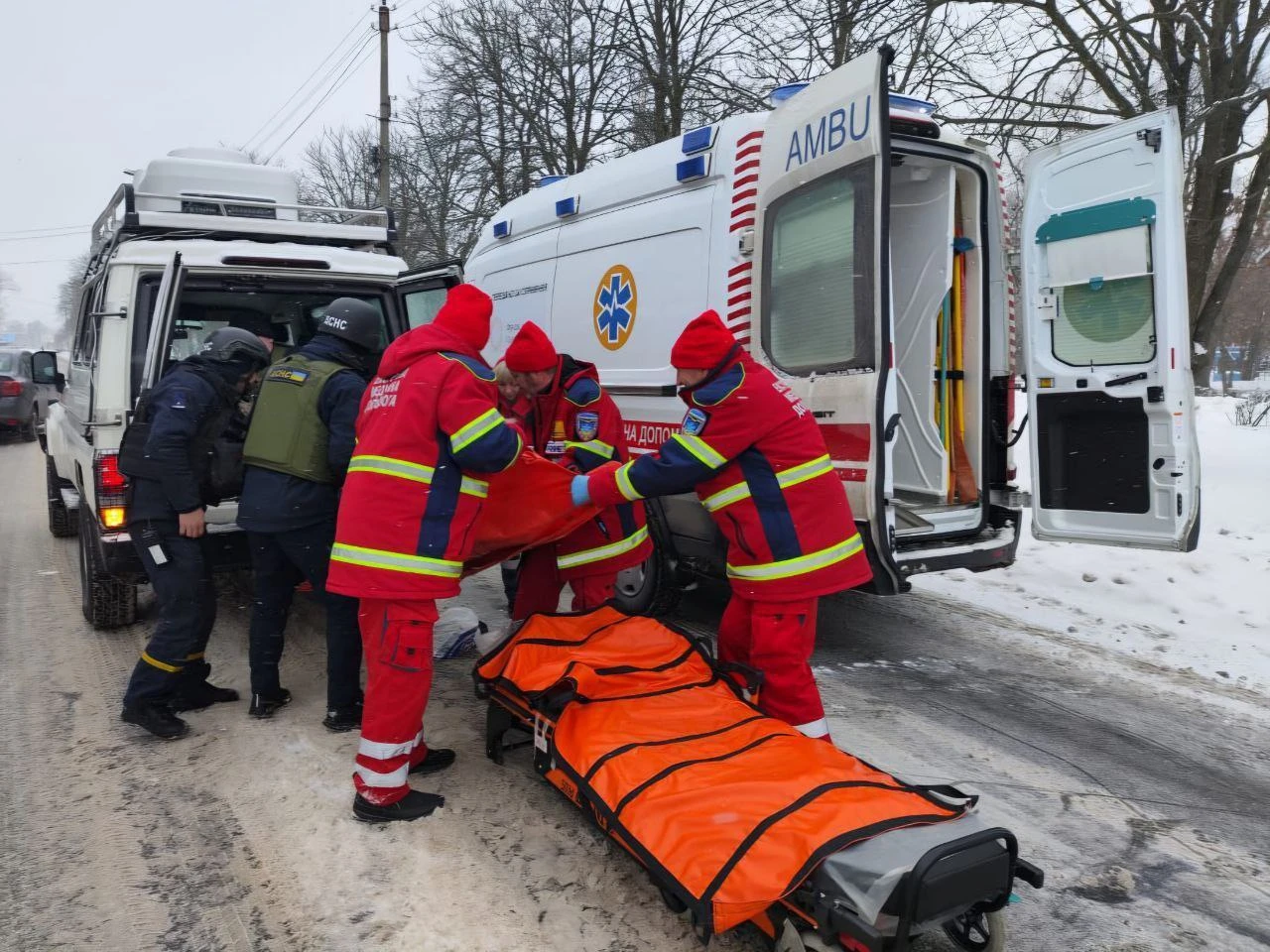
In total, six people have been injured in Nikopol due to Russian attacks since the morning. A 65-year-old woman is in critical condition, while another resident — a 44-year-old man injured overnight — will receive outpatient treatment.
Ukraine is not able to cover more than a third of its electricity demand - Zelensky
President Volodymyr Zelensky said Ukraine consumed 18 gigawatts of electricity yesterday, while the country’s available capacity stood at just 11 gigawatts.
In a post on social media, Zelensky said repair work is carried out after every Russian strike, with numerous repair teams operating across the country. However, he stressed that restoring the system is complex and cannot be done quickly.
“Work is going on every day not only to restore power stations but also the technical capacity for importing electricity, which is also being destroyed by daily Russian attacks,” Zelenskyy said.
He added that he would not disclose the locations of repair work in order to avoid increasing the risk of further strikes.
Also, President Zelensky has instructed the Cabinet of Ministers to urgently adopt all necessary decisions to simplify and increase electricity imports by both state-owned companies and the private sector.
Speaking after a special conference call on the energy sector, Zelensky said the government must act immediately to remove barriers to importing electricity.
“The government of Ukraine must immediately, today, ensure all necessary decisions to simplify and increase electricity imports by both state-owned companies and the private sector,” he said.
Most Ukrainians say that Donbas should not be given to Russia for security guarantees
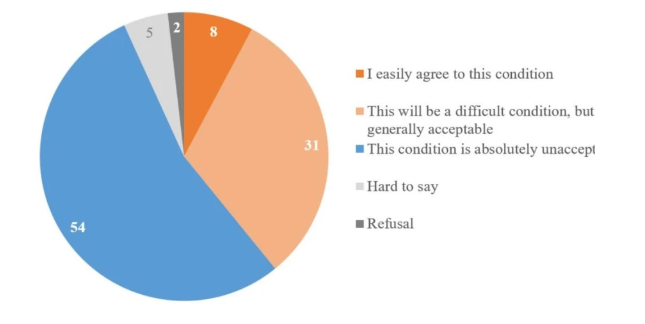
A majority of Ukrainians oppose handing over the entire Donbas region to Russia in exchange for U.S. and European security guarantees, according to a survey published by the Kyiv International Institute of Sociology (KIIS).
The poll, conducted between January 9 and 14, found that 54% of respondents consider such a concession categorically unacceptable, while 39% said they would reluctantly accept it. Another 5% were undecided.
KIIS said opposition to the proposal is driven by three main concerns. About 35% of respondents believe Russia would not stop the war even after territorial concessions. Another 33% said Ukraine cannot give up its territory or abandon people living there, citing constitutional principles and territorial integrity. A further 25% expressed skepticism about whether Western security guarantees would be reliable or enforceable.
Almost 70% of Ukrainians say Russia's goal is to destroy the Ukrainian nation and independence
A large majority of Ukrainians believe Russia’s war aims extend far beyond territorial claims in eastern Ukraine, with many convinced Moscow seeks the destruction of Ukraine as a nation, according to a new survey by the Kyiv International Institute of Sociology (KIIS).
The recent poll found that 69% of respondents believe Russia is either pursuing the physical genocide of Ukrainians or seeking to destroy Ukrainian nationhood and statehood. This figure has risen from 66% in February 2025.
An additional 11% said they believe Russia aims to seize most of Ukraine’s territory and install a puppet government, down slightly from 14% in the previous survey. Meanwhile, 3% said Russia intends to fully occupy five regions, including Donetsk, Zaporizhzhia, and Kherson oblasts.
Taken together, 83% of respondents believe Russia’s objectives go well beyond the Donbas region and amount to the large-scale subjugation or destruction of Ukraine.
Only small minorities expressed more limited views of Russia’s goals. Just 2% said Moscow seeks to occupy only the Donbas without moving into Zaporizhzhia or Kherson oblasts, while 1% believe Russia intends to stop at the territories it currently occupies. Another 2% said Russia’s aims are limited to what it calls Ukraine’s “denazification” and “demilitarization,” without undermining Ukrainian sovereignty.
Another 100 high-rise buildings in Kyiv remain without heating – Mayor
On January 9, Mayor Vitalii Klitschko reported that around 100 high-rise residential buildings in Kyiv remain without heating following Russia’s large-scale attack on the capital.
“At the height of the crisis, about 6,000 high-rise buildings were left without heat. As of the middle of today, around 100 of them remain without heating,” Klitschko wrote on Telegram.
As of January 15, some 300 apartment buildings in the capital were still without heat, indicating gradual progress in restoration efforts.
Klitschko said that municipal services continue to work around the clock to repair critical infrastructure damaged by Russian strikes. However, the electricity supply situation remains very difficult, as power is essential for the functioning of heating and other municipal systems.
Kyiv remains under emergency power outage schedules, while energy workers continue efforts to stabilize the situation.
“All city services are doing everything possible to restore essential services to residents,” Klitschko said. “I thank municipal workers and energy specialists for their dedicated work, and Kyiv residents for their endurance and resilience. I understand how difficult this is.”