


The USA and Ukraine are planing to sign $800 billion deal at Davos
Ukraine and the United States are expected to sign a major economic agreement aimed at accelerating Ukraine’s postwar recovery during the World Economic Forum in Davos, according to a report by the Telegraph on January 9.
President Volodymyr Zelensky and U.S. President Donald Trump are expected to finalize the deal on the sidelines of the forum’s annual summit, which takes place in Switzerland on January 19–23 and brings together global political and business leaders.
Backed by European allies, Ukraine has moved quickly to regain momentum in peace negotiations after reports emerged in November 2025 of a Russia–U.S. peace plan drafted without Kyiv’s participation. That proposal reportedly reflected Russia’s maximalist demands and was widely viewed in Ukraine as tantamount to capitulation.
Kyiv hopes the economic agreement will serve as a tool of economic diplomacy, encouraging Washington to provide firm security guarantees as part of a revised peace framework. The deal is also seen as aligning with the Trump administration’s transactional approach to foreign policy, linking economic opportunities to strategic commitments.
Zelensky first outlined the so-called Economic Prosperity Plan in late December, presenting it as a comprehensive package focused on economic recovery, job creation, and revitalizing life across Ukraine.
Although Zelensky had initially aimed to sign the agreement during a visit to the White House as early as next week, European partners advised that Davos would be a more suitable venue to avoid rushing the process, the Telegraph reported.
In recent weeks, Trump and members of his administration have adopted a tougher tone toward Russian President Vladimir Putin, despite earlier rhetoric that often echoed Kremlin narratives.
Ukrainian officials estimate that reconstruction and recovery will require around $800 billion over the next decade — roughly four times the country’s prewar gross domestic product. Kyiv hopes the prosperity plan will help mobilize both public and private investment to meet those needs.
The agreement reportedly builds on the framework of a 2025 “minerals deal,” which granted preferential access to U.S. investors through a joint U.S.–Ukraine reconstruction fund.
That earlier deal has already produced results, with Ukraine awarding a lithium project on January 9 to a consortium that includes TechMet, a mining company backed by the U.S. government.
Russian large-scale attack on Dnipropetrovsk Oblast caused injuries, fires, and power outages
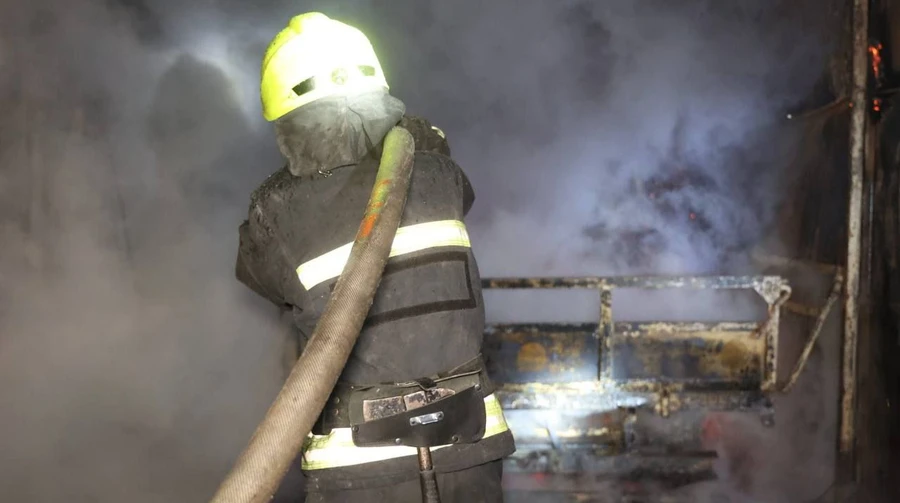
Russian forces launched a large-scale drone attack on Dnipropetrovsk Oblast overnight on January 9–10, sparking multiple fires, damaging infrastructure, and injuring three civilians, regional authorities said.
According to the head of the Dnipropetrovsk Oblast Military Administration, Ukrainian air defenses shot down 27 drones, but several targets were still hit across the region.
In Kryvyi Rih and surrounding areas, fires broke out following the strikes, damaging infrastructure and causing power outages. Two people — a 44-year-old man and a 58-year-old woman — were injured in the attack.
Infrastructure facilities were also damaged in the city of Dnipro, where power supply disruptions were reported in both the city and the surrounding district. A fire erupted at a garage cooperative, destroying two garages and damaging 27 others. A 34-year-old man was injured in that incident.
Additional damage was reported in the Samar district, where a residential house was hit.
The Nikopol district also came under attack. Russian forces used FPV drones to strike the city of Nikopol as well as the Marhanets and Pokrovske hromadas, administrative communities that include towns and surrounding villages.
Russia seeks to undermine Ukraine's ties with its partners, Zelensky
Ukrainian President Volodymyr Zelenskyy has vowed a tangible response to Russia’s attempts to undermine Ukraine’s relations with its partners, while pointing to renewed momentum in the U.S. Congress toward tougher sanctions on Moscow.
In his evening address, Zelenskyy said Ukraine is monitoring Russian lobbying efforts and internal operations aimed at weakening international support, and will respond through intelligence measures, political coordination with partners, and expanded sanctions.
He welcomed renewed discussions in the U.S. Congress on stronger sanctions, particularly targeting Russian oil, calling them potentially effective.
Zelenskyy also said Ukraine remains in near-daily contact with the United States, stressing that dialogue with Washington must remain fully constructive and that Ukraine will not stand in the way of diplomacy.
He added that Russia’s missile and drone production depends on foreign components, making the tightening and better coordination of sanctions a key priority for Ukraine and its partners.
Russia's new missiles are very dangerous for civilians
Russia has developed several new missile types and plans to test them in strikes against Ukraine, posing a serious threat to civilians, according to monitoring groups.
X-BD-K air-launched cruise missile
Carrier: Tu-95MS
Speed: up to 900 km/h
Range: up to 3,000 km
Comparable to the Kh-101, but with a modified guidance system and extremely low flight altitude of 30–70 meters.
Kh-99 hypersonic air-launched cruise missile
Carrier: Tu-160M
Speed: up to 6,600 km/h
Range: up to 5,500 km.
RussiaKh-MC hypersonic air-launched anti-ship missile
Carrier: compatible with all strategic bombers
Speed: up to 4,200 km/h
Range: up to 900 km
Essentially an analogue of the Kh-22 missile.
Monitors note that production of these missiles relies entirely on Russian-made components, without foreign parts. This is expected to reduce reliability and accuracy, increasing the risk to civilian populations.
Russia joins China, Iran for naval drills in South Africa
South Africa hosted the opening ceremony on January 10 for Chinese-led naval exercises in its waters, set to run through January 16, Bloomberg reported.
The drills, dubbed Will for Peace 2026, involve China, Russia, Iran, and South Africa, with Brazil, Egypt, Ethiopia, and Indonesia attending as observers.
The exercises come amid heightened tensions following recent U.S. boardings of oil tankers linked to sanctions evasion, including the tanker Marinera, which was sailing under a Russian flag when seized.
According to a South African government statement issued on December 31, the stated goal of the drills is to ensure the safety of shipping lanes and maritime economic activity.
Russia has relied on a covert “shadow fleet” of tankers to bypass Western sanctions and export oil, a key source of revenue funding its full-scale war against Ukraine.