
Daily Flyer - February 7, 2026
A voice of Ukraine to the West


Zelensky confirmed the deadlock in talks with Russia on two key issues
Ukrainian President Volodymyr Zelensky said that talks held in Abu Dhabi failed to produce progress on key issues, including territorial disputes and the future of the Russian-occupied Zaporizhzhia Nuclear Power Plant. Speaking at a press conference, he noted that the most difficult topics remained unresolved, particularly the situation in Donbas, where Ukraine continues to insist on maintaining its current positions as the most reliable basis for a ceasefire.
Zelensky said the United States once again proposed the idea of establishing a free economic zone as a possible compromise, but stressed that neither Ukraine nor Russia had previously supported such a model. According to him, Moscow continues to demand Ukraine’s withdrawal from Donetsk Oblast, while Kyiv has reiterated that freezing positions along the current line of contact remains the most realistic and fair option. He added that the proposal was discussed and formally recorded during the talks, but no agreement was reached.
No breakthrough was achieved regarding the operation of the Zaporizhzhia Nuclear Power Plant, Zelensky said, emphasizing that the issue must be addressed as part of a broader settlement package. This, he explained, should include the reconstruction of the Kakhovka Hydroelectric Power Plant, water management, and the restoration of the regional ecosystem. He also reiterated that territorial questions require direct talks at the highest level, involving the leaders of Ukraine, the United States, and Russia, confirming his readiness to participate in such negotiations.
Russia launched a large-scale attack on Ukraine's power system
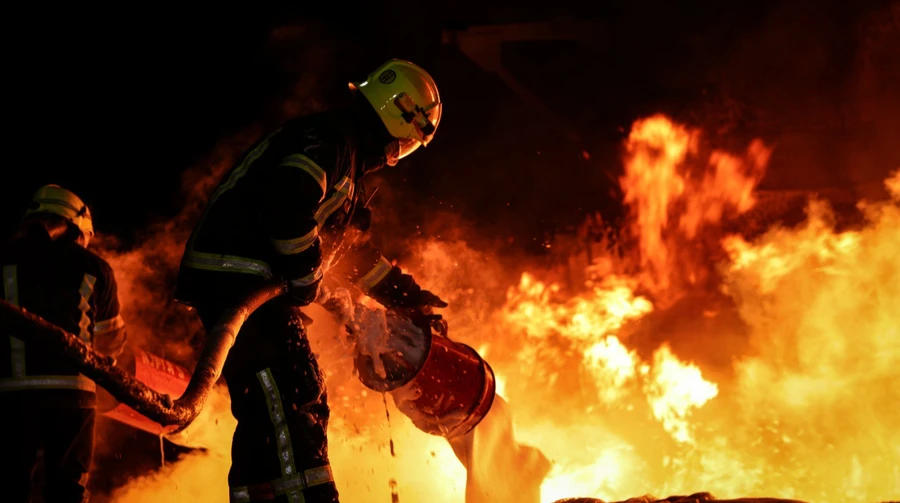
Russian forces launched a massive aerial assault on Ukraine overnight on 6–7 February, deploying more than 400 drones and around 40 missiles, Ukrainian President Volodymyr Zelensky reported. The primary targets were energy infrastructure facilities, including power grids, generation plants and distribution substations. Damage was recorded in Volyn, Ivano-Frankivsk, Lviv and Rivne oblasts, where an apartment building was also hit. In Ladyzhyn, Vinnytsia Oblast, drones struck the administrative building of a local agricultural college, while additional attacks were reported in Kyiv and Kharkiv oblasts. Air defence units continued intercepting incoming threats in several regions.
Prime Minister Denys Shmyhal said that key substations and high-voltage 750 kV and 330 kV transmission lines, which form the backbone of Ukraine’s power grid, were damaged in the strikes. The Burshtyn and Dobrotvir thermal power plants also came under attack. As a result, power output at nuclear power plant reactors was reduced by operational staff, and rolling blackout schedules of four to four and a half hours were introduced nationwide, with emergency power cuts implemented in eastern and northern regions. Zelenskyy urged Ukraine’s international partners to accelerate the delivery of missiles for air defence systems to strengthen protection against further attacks.
The large-scale Russian assault also prompted heightened security measures in neighbouring Poland. The Operational Command of the Polish Armed Forces reported that military aviation was deployed in Polish airspace due to the activity of Russian long-range aircraft conducting strikes on Ukraine. Ground-based air defence and radar reconnaissance systems were placed on high alert as a precautionary measure. In addition, airports in Rzeszów and Lublin temporarily suspended operations to ensure the unrestricted functioning of military aviation and to safeguard airspace security.
Russia deployed the Oreshnik missile in Belarus to draw the country into war - Zelensky
Belarus is already fully or partially hosting Russia’s Oreshnik intermediate-range ballistic missile, President Volodymyr Zelensky said on February 6, warning that Moscow is attempting to draw Minsk deeper into its full-scale war against Ukraine. Zelensky said Russia has completed preparatory technical work related to the missile on Belarusian territory, calling the move a major escalation risk that could further expand the conflict. He stressed that involving Belarus more directly in the war would be a serious tragedy.
Zelensky also addressed Belarus’s broader role in supporting Russian military operations, including participation in attacks on Ukraine’s energy infrastructure. He said Russia has established air corridors over Belarus that are used by strike drones, supported by technical equipment such as antennas. According to Zelensky, Ukraine has taken measures to disrupt this infrastructure and will continue efforts to prevent the Oreshnik missile from becoming operational, describing it as a direct threat to national security.
The president further highlighted the importance of international engagement with the Belarusian opposition in exile, noting his recent meeting with opposition leader Sviatlana Tsikhanouskaya in Vilnius. He expressed hope that Belarusian representatives would help inform European partners about the growing risks posed by Belarus’s involvement in the war.
Belarus, ruled by Alexander Lukashenko since 1994, remains one of Russia’s closest allies and has provided political and military support to Moscow since the start of the full-scale invasion of Ukraine.