
Daily Flyer - February 4, 2026
A voice of Ukraine to the West


Russia has hit Ukraine's energy system 217 times since the beginning of the year
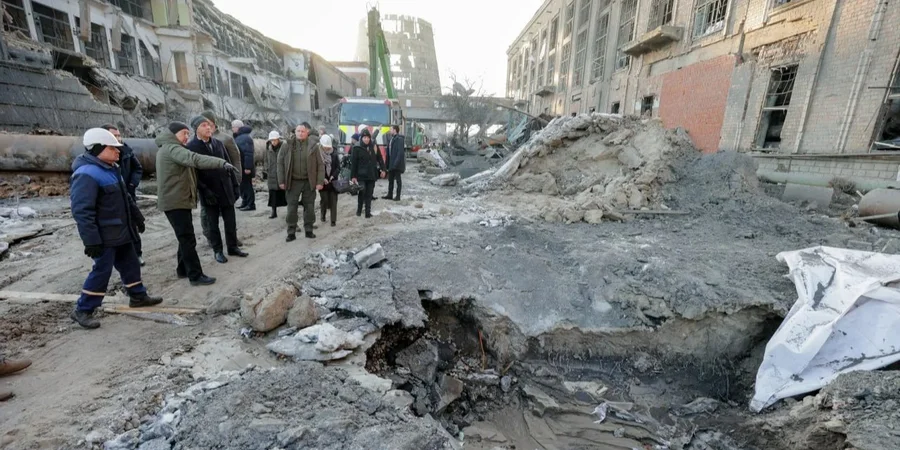
Russian forces have carried out 217 attacks on Ukraine’s energy infrastructure since the beginning of the year, Ukrainian Prime Minister Yuliia Svyrydenko said, as emergency crews continue to deal with the aftermath of recent large-scale strikes.
“Power engineers, utility services, and railway workers are continuing to eliminate the consequences of massive attacks on energy infrastructure,” Svyrydenko said.
Amid the ongoing energy crisis, the government has announced additional financial support for emergency response workers. Power engineers involved in round-the-clock restoration efforts will receive an extra monthly payment of UAH 20,000 (approximately $460) for working in emergency teams. According to Svyrydenko, the first payments are expected to reach workers’ bank accounts later this month.
The prime minister also said the government is providing targeted assistance to vulnerable groups, including people with disabilities and elderly residents living alone.
As part of humanitarian support efforts, 10,000 “warmth packages” supplied by the Naftogaz Group have already been delivered to residents of Kyiv’s Darnytskyi, Dniprovskyi, and Desnianskyi districts, as well as the towns of Brovary and Boryspil in Kyiv Oblast — areas hardest hit by recent Russian attacks.
The packages contain essential items designed to help people endure freezing temperatures, stay warm, maintain communication, and charge medical devices.
“We are expanding this support and engaging other major state-owned companies, including Energoatom, Ukrenergo, and Ukrhydroenergo,” Svyrydenko said. “They will provide additional warmth packages to communities across Ukraine where electricity and heating supply remain critically limited.”
Russia has intensified its campaign against Ukraine’s energy infrastructure this winter, triggering widespread blackouts, heating shortages, and emergency outages across much of the country during extreme cold.
Russian large-scale attack on February 3 confirms that the Kremlin is not interested in serious negotiations
Russia’s massive overnight strike on Ukraine on Feb. 3 demonstrates that Moscow never intended to use the temporary moratorium on energy infrastructure attacks to de-escalate the war or meaningfully advance peace negotiations, according to a new report by the Institute for the Study of War (ISW).
The analysts recalled that Ukrainian President Volodymyr Zelenskyy previously said the moratorium was supposed to begin following trilateral talks in Abu Dhabi on January 23–24 and last until the next round of negotiations, initially scheduled for February 1 and later postponed to February 4–5.
ISW noted that the Kremlin has a long history of proposing short-term truces designed to create the illusion of goodwill and interest in peace, while simultaneously rejecting calls for longer or permanent ceasefires. According to the report, Russia has repeatedly dismissed proposals from both Ukraine and the United States to establish a sustained moratorium on airstrikes.
The analysts warned that Moscow may attempt to portray its compliance with the short-term energy strike moratorium as a “major concession” in order to gain leverage in future negotiations. In reality, ISW said, the temporary pause allowed Russia to accumulate missiles and drones for a subsequent large-scale attack, while continuing to strike Ukraine’s transport networks and other critical civilian infrastructure.
“Short-term pauses are not meaningful concessions,” the report said, emphasizing that Russian forces continued their campaign against non-energy targets throughout the period.
Zelenskyy, meanwhile, stated that Russian shelling had halted for only four days instead of the announced seven, expressing disappointment with the U.S. response. Donald Trump later responded by saying that Moscow had, in his view, complied with the agreed timeframe.
According to Trump, the temporary pause in Russian strikes on Ukraine’s energy infrastructure lasted from January 24 to February 1, a seven-day period he said was personally agreed upon with Russian President Vladimir Putin.
On the night of February 3, Russian forces carried out a massive attack on Ukraine’s energy infrastructure, launching more than 70 missiles and around 450 unmanned aerial vehicles. President Volodymyr Zelenskyy said the attack featured a record number of ballistic missiles, underscoring the scale and intensity of the strike.
The consequences of the strike were recorded in Kyiv City and Kyiv Oblast, as well as in Dnipropetrovsk, Odesa, Vinnytsia, and Kharkiv oblasts, where energy and civilian infrastructure sustained damage. Ukraine’s largest private energy company, DTEK, said the assault marked the most powerful strike against the country’s energy system since the beginning of the year.
Emergency crews and energy workers continue efforts to restore power and stabilize the grid amid ongoing threats of further attacks.
Seven people were killed in a Russian strike on a market and in apartment blocks in Druzhkivka, Donetsk Oblast
At least seven people were killed and eight others injured in a Russian attack on the city of Druzhkivka in Donetsk Oblast this morning.
According to Vadym Filashkin, Russian forces used cluster munitions, directly hitting a market that is typically crowded during morning hours.
"The final number of casualties is still being clarified," Filashkin said, adding that all emergency and utility services are currently working at the scene, providing medical assistance and addressing the aftermath of the strike. In addition to the market attack, Russian forces also dropped two aerial bombs on Druzhkivka, damaging an industrial facility, three apartment buildings, and three private houses, the head of the Donetsk Oblast Military Administration said.
He urged residents of frontline communities to evacuate to safer regions, warning of the continued risk of further attacks.