
Daily Flyer - February 2, 2026
A voice of Ukraine to the West


,
50% of Ukrainians are against giving up Donbas, while 40% consider it acceptable - survey
A majority of Ukrainians oppose handing over the Donbas region to Russia in exchange for security guarantees, according to a new survey conducted by the Kyiv International Institute of Sociology (KIIS).
The poll found that 52% of respondents consider it completely unacceptable to transfer the entire Donbas under Russian control, even in return for security guarantees. At the same time, 40% said they would be willing to accept such a concession, though most acknowledged it would be a deeply difficult compromise. Another 7% were undecided.
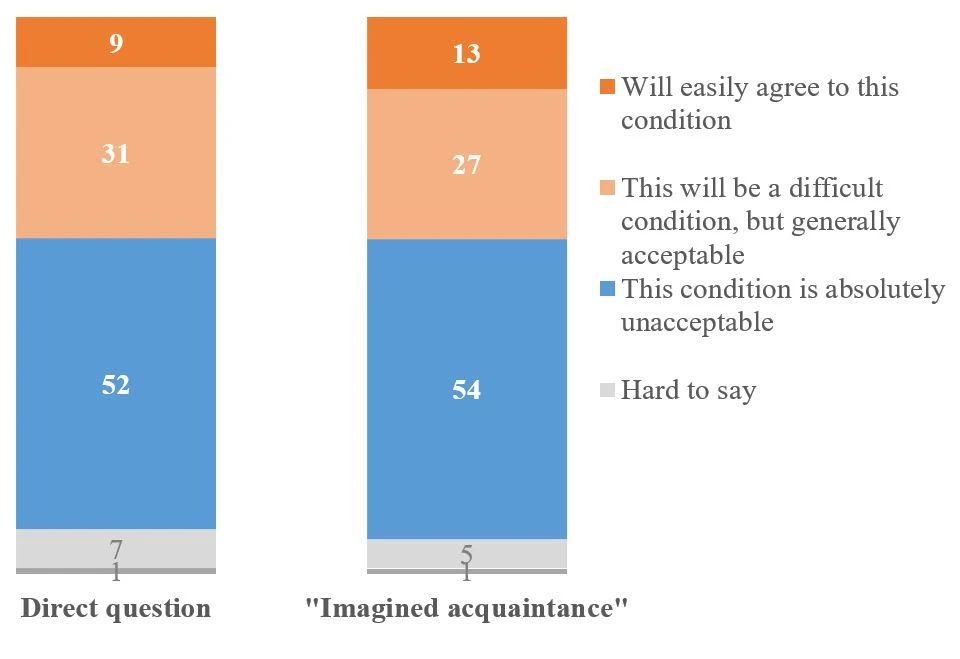
Sociologists noted that support for territorial concessions has not increased over the final two weeks of January, despite intensified Russian attacks and widespread power and heating outages across Ukraine.
Opposition to ceding Donbas remains strongest in Kyiv, where 59% reject the idea outright, while 31% would accept it. In western Ukraine, 57% oppose and 38% support the proposal. In the central and northern regions, the figures stand at 49% opposed and 42% in favor, while in the south, 49% reject and 44% support. In eastern Ukraine, 50% oppose the concession, and 39% would accept it.
The survey was conducted between January 23 and January 29, using telephone interviews based on a random sample of mobile phone numbers across all Ukrainian regions except those under Russian occupation. A total of 1,003 adults aged 18 and over participated.
The margin of error does not exceed 5.8%.
Russia has occupied half as much territory in January as in December or November
Russian forces occupied 245 square kilometers of Ukrainian territory in January, nearly half the area they captured in December or November 2025, according to data published by DeepState, a Ukrainian military analytics group.
Despite the reduced territorial gains, analysts observed only a modest decline in assault activity, down just 4% compared to December. “An unexpected finding was the relatively small drop in assault activity,” DeepState said, noting that most Ukrainian service members still described January as less intense than the previous month.
The Pokrovsk front remained the focal point of Russian operations, accounting for 33% of all recorded assaults. The Huliaipole front ranked second with 21%, followed by Kostiantynivka (12%), Lyman (8%), and Oleksandrivka (8%).
The Sloviansk front showed the most troubling trend, according to analysts. While only 3% of Russian assaults were carried out there, the sector accounted for nearly 20% of all territorial losses, highlighting significant defensive challenges in the area.
Russia dropped a bomb on a house in Donetsk Oblast casualties include 2
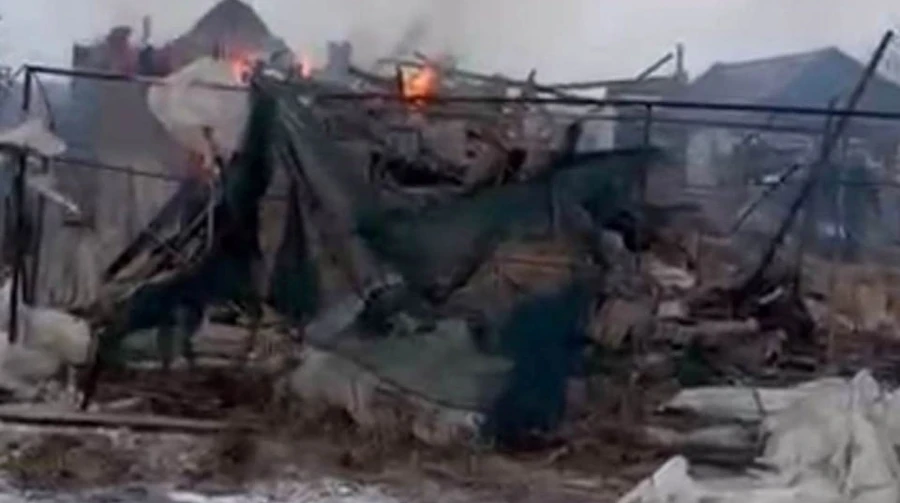
Today Russian occupying forces dropped an aerial bomb on a residential building in Donetsk Oblast, killing two civilians and injuring three others, including two children, the Donetsk Oblast Prosecutor’s Office reported.
The attack occurred at approximately 11:30 p.m. in the settlement of Oleksiievo-Druzhkivka, where a FAB-250 aerial bomb equipped with a guidance module (UMPK) struck a family home, completely destroying the building.
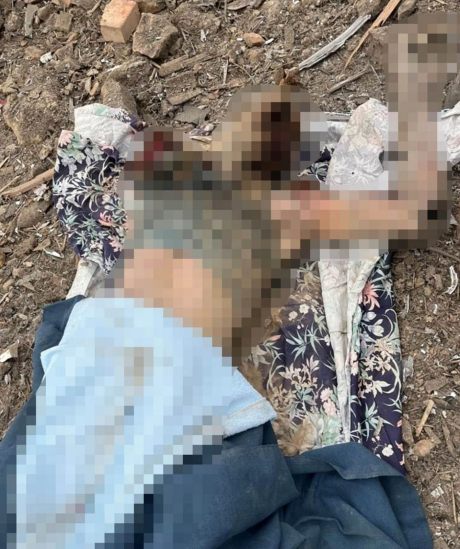
A 44-year-old man and his 23-year-old son were killed in the strike. The victim’s 42-year-old wife, 11-year-old son, and 16-year-old daughter were wounded, suffering fractures, blast injuries, and shrapnel wounds. The younger boy remains in critical condition in hospital, while the others are receiving medical treatment.
Emergency services transported all survivors to hospital as rescue workers cleared debris from the destroyed home. Investigators have launched a probe into the attack as a suspected war crime.
In January, Ukraine imported a record amount of electricity since the war's start
Ukraine imported a record volume of electricity in January 2026, exceeding 894,000 megawatt-hours (MWh), the highest monthly total since the start of Russia’s full-scale invasion, according to calculations by ExPro Electricity, a Ukrainian energy market analytics provider.
The figure represents a 40% increase compared to December 2025, reflecting Ukraine’s continued struggle to stabilize its power system amid ongoing Russian attacks on critical infrastructure. Hungary accounted for the largest share of imports, supplying 45% of the total volume.
Electricity supplies increased from nearly all neighboring countries, with the exception of Moldova. In addition, a record daily import level of 41,900 MWh was registered during the month, highlighting the scale of Ukraine’s energy deficit.
At the same time, Ukraine exported no electricity in January, ExPro Electricity said, noting that power exports have been completely suspended since Nov. 11, 2025, as domestic demand and infrastructure damage continue to strain the system.
Six more weeks of winter are expected in Ukraine
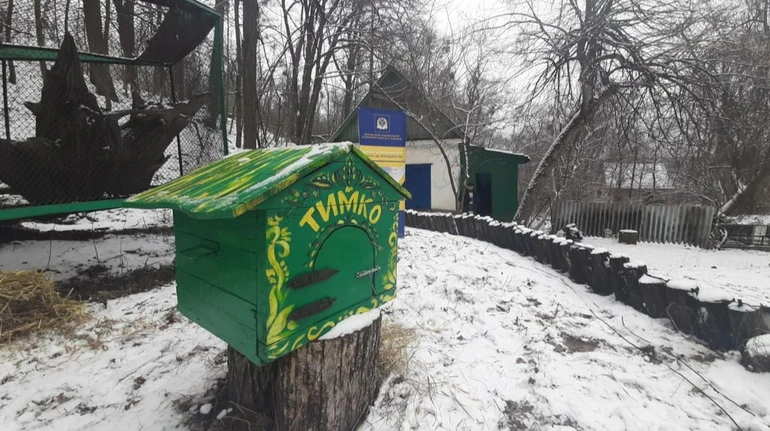
Groundhog Timko IV, who lives at the biological research station of Karazin Kharkiv National University, has made his first seasonal forecast, predicting that spring will arrive in six weeks.
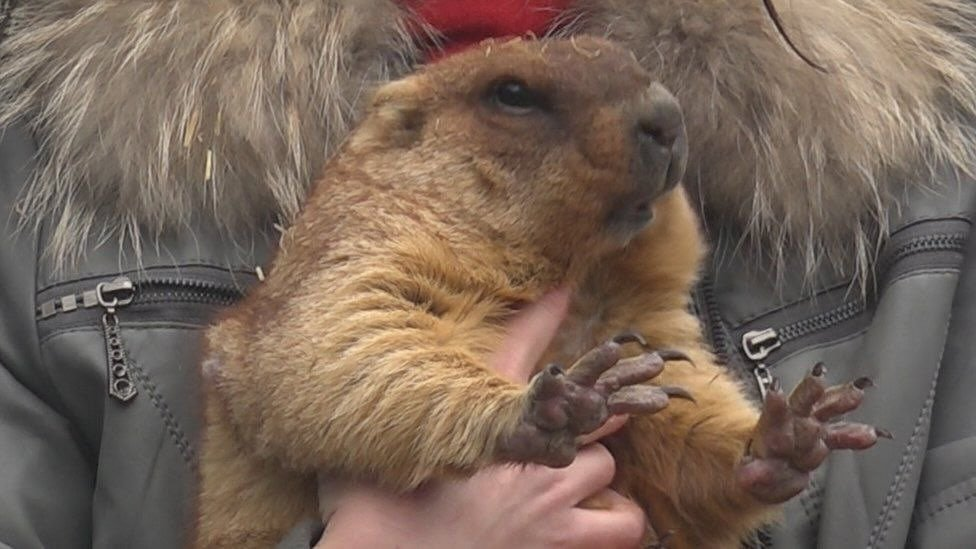
According to biostation observer Volodymyr Hrubnyk, Timko IV saw his shadow during the traditional Groundhog Day observation, signaling a prolonged winter. “In 2026, the groundhog saw his shadow, which means spring will come in six weeks — at least, that’s what he believes,” Hrubnyk said.
Timko IV is the younger brother of Timko III, who previously made annual forecasts but retired this year. The young marmot is one of 19 groundhogs living at the station, where scientists have conducted long-term behavioral research for over 25 years.
Life at the biostation remains challenging due to power outages, harsh winter conditions, and the ongoing war, Hrubnyk added. Station employee Halyna Savchenko noted that war-related stress and unusual weather patterns significantly affect the animals, disrupting their hibernation and breeding cycles. Despite these difficulties, researchers say the groundhog population remains stable, allowing for continued scientific observation.
The tradition of celebrating Groundhog Day in Kharkiv Oblast began in 2004, led by Professor Viktor Tokarsky. Since then, three groundhogs have taken turns predicting the arrival of spring, making the event a long-standing local scientific and cultural tradition.