


Slovakia and Hungary halt diesel exports to Ukraine
Slovakia and Hungary are suspending diesel fuel exports to Ukraine after Russian crude deliveries via the Druzhba pipeline were halted on January 27 following a Russian strike on pipeline infrastructure in Ukraine. According to NaftoRynok, supplies via the Hungarian-Slovak route — which accounted for about 11% of Ukraine’s diesel imports in January — could resume within weeks or take up to two months.
Slovakia’s only refinery, Slovnaft, has temporarily stopped diesel exports and will receive up to 250,000 tonnes of crude from state reserves to maintain domestic supply, Prime Minister Robert Fico said. Hungary has taken similar steps, with oil group MOL also seeking crude from strategic reserves, according to Foreign Minister Péter Szijjártó.
Market analysts say the suspension is not critical for Ukraine. They note that the disrupted route accounts for 10–11% of imports and that alternative supply channels are available, making price increases at filling stations unlikely.
Polish energy company plans to raise gas supplies to Ukraine by 40% in 2026
Poland’s state-owned energy group Orlen plans to supply more than 1 billion cubic metres of natural gas to Ukraine in 2026, according to CEO Ireneusz Fąfara, as cited by the Ukrainian analytical agency ExPro. The projected volume marks a significant increase from roughly 0.7 billion cubic metres delivered in 2025, continuing the upward trend in bilateral energy cooperation.
Gas deliveries are carried out under commercial contracts between Orlen and Ukrainian partners, primarily Naftogaz. Last year, part of the supply helped cover peak demand after Russian attacks reduced Ukraine’s domestic gas production.
As part of the expanding partnership, Naftogaz and Orlen have also finalized an agreement for the supply of 300 million cubic metres of U.S. liquefied natural gas to Ukraine in the first quarter of 2026, further strengthening Ukraine’s energy security amid ongoing wartime disruptions.
Ukrainian forces pushed Russians back in Dnipropetrovsk Oblast
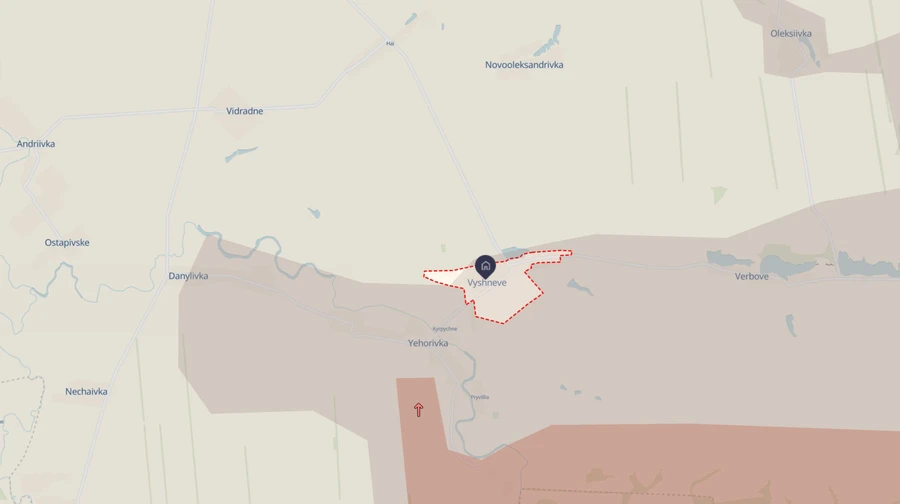
Ukrainian forces have pushed back Russian troops in parts of Dnipropetrovsk Oblast, according to DeepState, a Ukrainian military analytics group. In a recent update, the group reported that Ukrainian defenders forced Russian units to retreat near the villages of Vyshneve, Verbove, and Ternove, regaining ground along a key stretch of the front line.
At the same time, Russian forces made gains near the village of Berestok in neighboring Donetsk Oblast, underscoring the fluid nature of fighting in eastern Ukraine. Front lines in this area have shifted repeatedly in recent months as both sides probe for weaknesses and attempt localized offensives.
The fighting is centered along what is known as the Oleksandrivka front, which runs between Verbove, Vyshneve, Stepove, and Ternove in Dnipropetrovsk Oblast. This section lies near the administrative borders of the Dnipropetrovsk, Zaporizhzhia, and Donetsk regions, making it strategically significant for control of supply routes and defensive positions.
There was progress in the military area, but none in the political one - Zelensky on Geneva Talks
President Volodymyr Zelensky said there has been measurable progress on military issues following two days of trilateral talks between Ukraine, the United States, and Russia in Geneva on February 17–18. Speaking to reporters after receiving a briefing from Ukraine’s delegation, Zelensky said discussions were divided into two tracks — military and political — and described the military component as constructive on all sides. “I’ve been told there is progress in the military area,” he said, while cautioning that political differences remain.
According to Zelensky, negotiations on politically sensitive issues were more difficult. While some groundwork was laid and the parties agreed to continue talks, he said positions are still far apart. He emphasized that the discussions were not easy and that he expects further details from the delegation as follow-up consultations continue.
The head of Ukraine’s delegation, Rustem Umierov, described the Geneva meetings as “intensive and substantive.” He said both political and military tracks were actively addressed, including security arrangements and mechanisms for implementing potential agreements. Some issues were clarified, while others require additional coordination. Umierov stressed that the process is ongoing and complex, with the next step being to align positions sufficiently to present proposals to the presidents. He reiterated that Ukraine’s ultimate objective remains a just and lasting peace.