


Ukrainian air defence successfully repelled a Russian aerial attack
Russian forces carried out one of the largest combined aerial assaults in recent months on the night of 16–17 February, launching a mix of ballistic missiles, cruise missiles, and nearly 400 drones against targets across Ukraine, according to the Ukrainian Air Force.
The attack involved four Iskander-M ballistic missiles, 20 Kh-101 cruise missiles, four Iskander-K cruise missiles, one Kh-59/69 air-to-surface missile, and 396 Shahed, Gerbera, Italmas, and other types of unmanned aerial vehicles. Around 250 of the drones were identified as Shahed loitering munitions. As of 09:30, Ukrainian air defence units reported destroying or jamming 392 aerial targets, including all 20 Kh-101 cruise missiles, four Iskander-K cruise missiles, the Kh-59/69 missile, and 367 drones. Aircraft, anti-aircraft missile units, electronic warfare systems, unmanned systems units, and mobile fire groups were engaged in repelling the assault.
Despite the high interception rate, strikes by four ballistic missiles and 18 UAVs were recorded at 13 locations, while debris from downed targets fell at eight additional sites. In Dnipro, the attack caused a fire that damaged an administrative building and a vehicle. In Odesa, infrastructure and civilian facilities were hit, including a high-rise residential building where a fire broke out; two people were reported injured. Explosions were also heard in Ivano-Frankivsk and Lviv regions. Ukrainian monitoring groups indicated that the missile strike on critical infrastructure did not achieve its intended impact and warned that Russia may be preparing further large-scale attacks, potentially involving ballistic missiles and other long-range weapons.
Kremlin threatens to deploy navy if Europe keeps seizing more Russian shadow fleet vessels
A senior Kremlin official has warned that Russia could respond with naval measures if European countries intensify the seizure and boarding of vessels linked to Moscow’s so-called “shadow fleet” in the Baltic Sea.
Presidential aide Nikolai Patrushev made the remarks in an interview with the Russian newspaper Argumenty i Fakty on February 17. Patrushev, who previously headed the Federal Security Service and served as secretary of Russia’s Security Council, described European inspections and seizures of suspected sanctions-evading tankers as “piracy” and warned that Moscow could face attempts at a broader maritime blockade if it failed to respond firmly.
His comments came amid growing European scrutiny of Russia’s shadow fleet — a network of hundreds of tankers, often sailing under foreign flags, used to bypass Western sanctions on oil exports. In recent months, France, Germany, Finland and Italy have carried out inspections and raids on vessels suspected of sanctions violations.
On January 22, the French Navy boarded and seized the tanker GRINCH, an operation later highlighted by President Emmanuel Macron as direct action against Russia’s war effort. The vessel was released on Feb. 17 after paying a multimillion-euro fine, French Foreign Minister Jean-Noel Barrot said. Despite tightening sanctions — with more than 600 shadow fleet ships already targeted — European governments have so far stopped short of imposing a comprehensive maritime crackdown, wary of escalation and disruption to global energy markets.
F-16 pilots from the United States and the Netherlands have arrived in Ukraine
American and Dutch pilots are reportedly flying some F-16s in Ukraine, according to the French outlet Intelligence Online. The publication claims a mixed squadron — comprising Ukrainian, American, and Dutch pilots — has been quietly formed in recent weeks to protect the airspace over Kyiv and the surrounding region. The unit focuses on intercepting Russian cruise missiles (such as Kalibr and Kh-101) and strike drones.
According to Intelligence Online’s sources, the American pilots bring combat experience from Afghanistan and recent operations in the Middle East. Dutch pilots are said to have trained at elite European air combat schools specializing in modern interception tactics and high-tech air warfare.
The Western pilots serve on six-month temporary contracts with rotation, hold no official rank in the Ukrainian Armed Forces, and do not appear on public personnel lists. Their primary value lies in expertise with advanced equipment, particularly the Lockheed Martin Sniper targeting pod — an electro-optical/infrared system enabling long-range target identification, tracking of fast-moving objects, and operations in adverse weather.
The article notes that Ukrainian crews already had basic familiarity with this technology but lacked the depth of experience and sustained practice that the foreign veterans provide. No official confirmation has come from Ukraine’s Air Force Command, General Staff, or Ministry of Defense.
Latest Russian attacks on Kharkiv, Kherson, and Zaporizhzhia oblasts left nine injured
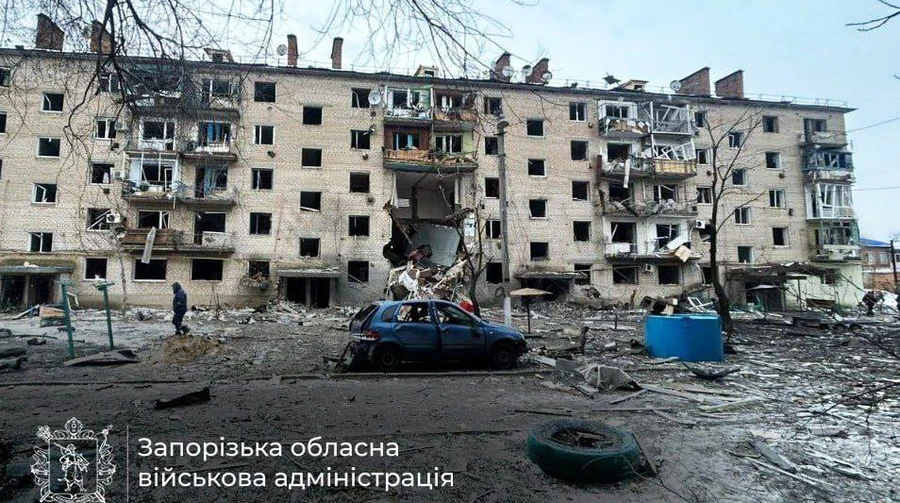
Nine people have been injured and residential buildings as well as infrastructure facilities damaged in Russian attacks on Kharkiv, Kherson, and Zaporizhzhia oblasts over the past 24 hours, according to regional authorities.
In Kharkiv Oblast, Russian forces struck three settlements, injuring two men aged 51 and 52 in the village of Husynka in the Kindrashivka community, regional governor Oleh Syniehubov reported. Three houses and a car were damaged in Kozacha Lopan, while power lines were hit in the village of Enerhetykiv. The attacks involved guided aerial bombs and drones, including Geran-2 loitering munitions.
In Kherson Oblast, six people were wounded as Russian troops targeted residential areas and critical infrastructure in Kherson, Antonivka, Bilozerka, Beryslav, and other settlements, according to thegovernor. The strikes damaged three high-rise buildings, six private homes, an administrative building, commercial premises, a gas pipeline, and vehicles.
In Zaporizhzhia Oblast, one person was injured in a shelling of the Zaporizhzhia district, regional head Ivan Fedorov said. Over the same period, Russian forces carried out 386 strikes on 35 settlements across the oblast, using aircraft, more than 200 drones, multiple-launch rocket systems, and artillery