


No agreement on Donbas yet - Zelensky, as he visits London to discuss US-led peace efforts with European leaders
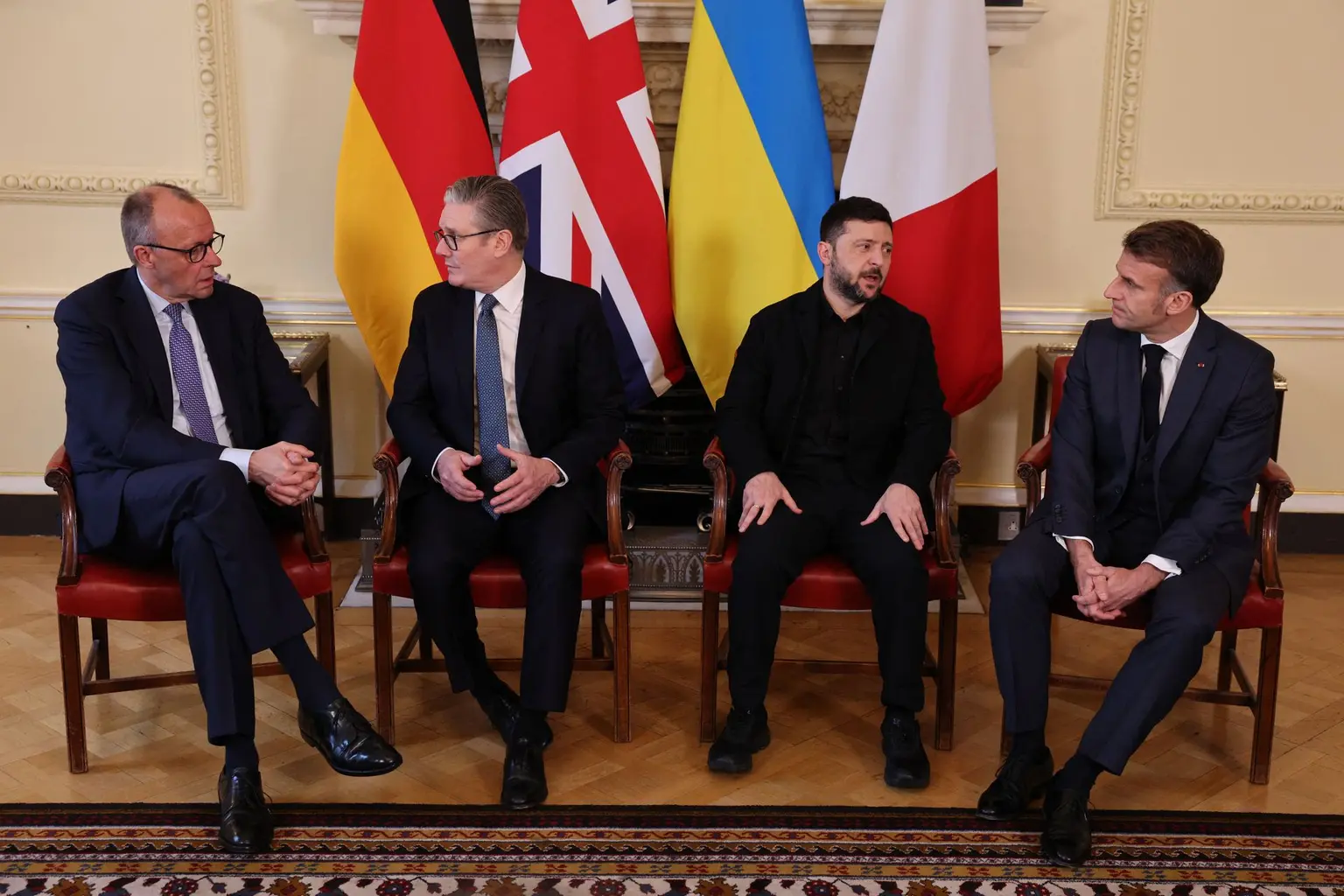
President Volodymyr Zelensky met British Prime Minister Keir Starmer and several European leaders in London on December 8 as Western governments intensify efforts to shape a peace plan for Russia’s war against Ukraine.
French President Emmanuel Macron and German Chancellor Friedrich Merz joined Zelensky and Starmer at 10 Downing Street, where the leaders discussed strategy amid growing unease in Europe over a renewed U.S. push for a negotiated settlement.
After the meeting, Zelensky wrote on X that lasting security requires shared effort and thanked the leaders for their support.
European officials have privately voiced concern that they are being sidelined as Washington and Moscow continue direct talks. The original 28-point proposal drafted by the U.S. and Russia last month set harsh terms for Kyiv. While U.S. negotiators have since revised the plan in separate talks with Ukraine and Russia, Zelensky told Bloomberg that major “sensitive issues” — including security guarantees and the status of eastern Ukrainian regions — remain unresolved. He said Ukraine, the U.S., and Russia still lack a unified position on Donbas and added that Kyiv aims to reach separate security agreements with Western partners, particularly Washington.
Starmer described the current moment as a “critical stage” in the broader push for peace. Zelensky emphasized the need for unity among Europe, Ukraine, and the United States. Merz said he remained skeptical about some elements of the U.S. documents and argued that Ukraine’s fate is inseparable from Europe’s.
The London talks came after National Security and Defense Council Secretary Rustem Umerov traveled to the U.S. last week for additional negotiations. U.S. envoys Steve Witkoff and Jared Kushner also met Russian President Vladimir Putin in Moscow on Dec. 2, though the meeting produced no breakthrough.
Moscow continues to insist on demands Kyiv has rejected, including a ban on Ukraine joining NATO and a full Ukrainian withdrawal from the partially occupied Donetsk Oblast.
Zelensky said Umerov and Chief of the General Staff Andrii Hnatov are now heading to Europe to brief him on the latest discussions, including what was conveyed to American envoys in Moscow and which elements the U.S. is willing to adjust in talks with both sides.
Following his stop in London, Zelensky is scheduled to travel to Brussels for meetings with NATO Secretary General Mark Rutte and European Commission President Ursula von der Leyen. Those talks are expected to focus on air-defense support and long-term financial assistance as Ukraine braces for a difficult winter. Russia has intensified strikes on the country’s power grid in recent months, triggering emergency outages as temperatures drop.
The US insists on Ukraines withdrawal from Donetsk Oblast without a fight
The United States has continued to press Ukraine in peace negotiations to agree to withdraw from the remaining parts of Donetsk Oblast, Politico reported, citing a European official.
According to the official, U.S. negotiators are still exploring ways for Ukraine to hand over the territory Russia has not yet occupied, arguing that Washington is focused on how to make Moscow’s territorial demands “happen.”
Ukrainian officials reportedly maintain that any potential freeze of the conflict must be based on the current front line. They have warned Washington that granting Russia territory it has failed to capture militarily — despite years of fighting and heavy losses — would only encourage further aggression.
Kyiv also feels pressured by the pace of U.S. efforts. An unnamed Ukrainian source told AFP that Washington has been pushing hard for a quick deal with Moscow.
According to the source, there are concerns that U.S. President Donald Trump wants rapid progress and that his team may be eager to avoid blame for delays. The source added that much depends on whether the United States acts as a neutral mediator or leans toward accommodating Russia’s position.