


Demographic expert assessed the population losses in Ukraine due to the war
Ukraine's full-scale war with Russia could leave the country with a staggering demographic shortage of up to 10 million people—a mix of permanent losses and mass emigration—according to Ella Libanova, director of the Institute for Demography and Social Studies at Ukraine's National Academy of Sciences. Speaking to RBC-Ukraine, Libanova described this as a "demographic black hole" that encompasses everything from excess deaths and plummeting birth rates to forced displacement and occupied territories. "This number covers it all: war-related deaths, the kids who won't be born because of the chaos, migration, and the areas under occupation," she explained. "And don't forget the long-term ripple effect on age demographics—fewer children today means an even older, emptier society tomorrow." The true scale, she added, won't be clear until the fighting ends and a full census is conducted, but the human toll is already reshaping Ukraine's future.
Migration data paints a bleak picture: Eurostat estimates 4.3 million Ukrainians have fled to Europe alone, with another 700,000 scattered across the U.S., Canada, the UK, Latin America, Georgia, and Moldova—bringing the total to about 5 million refugees worldwide. Strikingly, one-third are children and teens under 18, while just 6% are seniors over 65, signaling a brain drain of Ukraine's working-age population and youth that could hobble economic recovery for decades. For American readers, this echoes the refugee crises we've seen from conflicts like Syria or Afghanistan, but with a twist: it's not just survival—it's a generational wipeout that could leave Ukraine's heartland hollowed out, much like the population voids left by the Dust Bowl migrations in our own history.
The EU will stop importing Russian gas by 2027
The European Union has announced it will stop importing Russian gas by 2027, marking a major step in its energy strategy. Under the agreement, imports of pipeline gas will end by September 30, 2027, with some contracts extending until November 1, 2027.
The deal includes a transition period for existing contracts. For short-term supply agreements signed before June 17, 2025, the ban on Russian gas imports will take effect on April 25, 2026, for liquefied natural gas, and on June 17, 2026, for pipeline gas.
Battle for Pokrovsk is over as Russia has captured the city
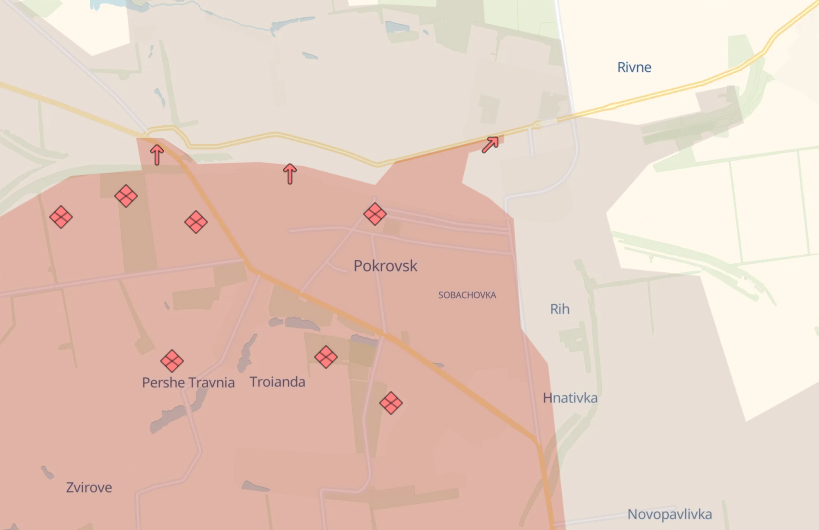
Germany's BILD newspaper reported on December 3, 2025, that Russian forces have fully captured the strategic Donetsk city of Pokrovsk after an 18-month siege, marking a significant propaganda victory for Moscow and exposing Ukraine's mounting vulnerabilities on the eastern front.
Citing Kremlin spokesman Dmitry Peskow, BILD described the fall of the once-thriving coal-mining hub and a home for 60,000 pre-war residents as the end of a tough urban battle that claimed over 10,000 Russian and 2,000 Ukrainian lives, with Russian troops employing drone-evading infantry tactics to encircle and overrun the city, potentially paving the way for advances on Kramatorsk and Sloviansk. However, Ukraine's General Staff swiftly refuted the assertion as "boastful propaganda," insisting that fighting continues in the northern sector along the railway line, with Ukrainian units actively clearing enemy pockets and maintaining defensive operations amid encirclement fears in nearby Myrnohrad.
What does the capture of Pokrovsk mean?
From a strategic standpoint, the former transport hub of Kyiv has lost its relevance, as all major roads to and from Pokrovsk are either destroyed, blocked by drones, or lead into Russian-occupied territory.
For Russia, the capture of the heavily damaged city represents a tactical gain. Analysts say the Kremlin now has a fortified position near the front line where it can deploy troops, including heavy tanks and artillery. Pokrovsk could serve as a springboard for a potential push westward toward Ukraine’s Dnipropetrovsk region.
Securing full control of Pokrovsk also allows Moscow to disrupt Ukrainian logistics routes to the nearby city of Myrnohrad, which still has partial Ukrainian control and was home to more than 47,000 residents before the war. Russian forces are expected to take the city in the near future.
Despite these developments, experts caution that the fall of Pokrovsk is unlikely to decisively affect the broader conflict in Donbas. The two major remaining Ukrainian-held cities in the region, Sloviansk and Kramatorsk, are more than 50 kilometers away, and the battle for them has yet to begin.
Putin rejected the peace deal. Analysys from ISW
ISW (Instinue of Study of the War) warns that Putin is betting on prolonged escalation, not peace.
Russian President Vladimir Putin rejected a U.S.-backed peace proposal for Ukraine during a meeting with an American delegation in Moscow on December 2. Analysts say the Russian leader appears unlikely to agree to any compromises beyond his original military objectives.
Following the talks, Kremlin aide Yuriy Ushakov said the delegations discussed “several options” for a peaceful settlement but did not reach agreement on a “compromise plan.” He added that the discussions did not involve “specific wording or specific proposals,” focusing instead on the general “essence” of documents that Washington had submitted to Moscow earlier.
Both sides agreed not to disclose the details of the negotiations. Experts at the Institute for the Study of War (ISW) note that this suggests the Kremlin may be deliberately keeping the outcome vague to obscure its rejection of the U.S.-Ukraine proposal.
“Senior Kremlin officials, including Putin, have consistently rejected the 28-point peace plan and its subsequent versions since mid-November,” ISW reported. The documents did not align with Russia’s maximalist military demands. NBC reported that Moscow is unwilling to compromise on territorial claims in Donetsk and Luhansk, limitations on Ukraine’s military, or recognition of Russian occupation by the United States and Europe. Moscow, however, is reportedly willing to be flexible on secondary issues, such as freezing Russian assets in Europe.
Analysts note that ahead of the December 2 meeting, the Kremlin intensified information operations to portray a Russian victory in Ukraine as inevitable. Putin reportedly held a meeting with military commanders to highlight alleged battlefield successes in Pokrovsk, Myrnohrad, Vovchansk, and Kupyansk—claims both Kyiv and independent Russian media have disputed. ISW suggests these statements were part of a preemptive information campaign aimed at influencing U.S. perceptions before the delegation’s visit.
During the meeting, Putin emphasized that the Russian military should be fully equipped for winter operations, signaling Moscow’s readiness to continue fighting to achieve its objectives.
American experts describe Putin’s “victory theory” as based on the assumption that Russian forces can continue advancing indefinitely, prevent Ukraine from reclaiming territory, withstand Western support for Kyiv, and ultimately prevail in a prolonged war of attrition.
“Putin’s increasing battlefield claims are part of a broader strategy to convince the West that Russia can outlast Ukraine,” ISW concluded. Putin hopes this perception will pressure Ukraine and its Western allies into accepting Russian demands during negotiations.