


Putin closes the door to peace: what scenario is being prepared in the Kremlin
The Kremlin has flatly rejected Ukrainian proposals for a ceasefire, a referendum, and the creation of a demilitarized zone in the Donbas, according to an assessment by the Institute for the Study of War (ISW).
ISW analysts cited recent remarks by Kremlin spokesman Dmitry Peskov, who argued that a ceasefire would amount to a temporary pause that would not serve Russia’s interests. Peskov claimed such proposals would merely delay the fighting and allow Ukraine to rearm, asserting that this approach was incompatible with what Moscow describes as a “guaranteed, long-term” peace.
Russian presidential aide Yuri Ushakov also dismissed any settlement that does not place the Donbas under Russian control, reiterating Moscow’s long-standing position that Ukraine must withdraw its forces from the entire region before Russia would consider a ceasefire.
According to ISW, Russian officials have consistently rejected ceasefire proposals not only in connection with potential referendums, but also during multiple past efforts to negotiate an end to the war. The institute noted that Moscow routinely argues that any pause in fighting—whether to hold elections or a referendum—would be too short to prevent Ukraine from restoring its military capabilities. ISW assessed that this argument serves as a recurring justification for Russia’s refusal to halt offensive operations, as the Kremlin continues to pursue an outcome on its own terms.
The Kremlin has also rejected proposals for a demilitarized zone in the Donbas. Russian officials have indicated that such a zone would be acceptable only if it were controlled by Russia’s National Guard (Rosgvardiya) and other law enforcement bodies, which Moscow claims would be necessary to maintain order and administer the area.
ISW analysts countered that deploying Rosgvardiya would, in effect, militarize any so-called demilitarized zone. While officially tasked with internal security, the Russian National Guard possesses significant military capabilities and combat experience. Its units took part in the initial phase of Russia’s full-scale invasion of Ukraine in 2022 and have continued to expand their capabilities, including by absorbing equipment previously used by the Wagner Group.
The institute concluded that placing Rosgvardiya forces in a demilitarized zone would undermine the very purpose of such an arrangement and could enable Russia to threaten Ukraine anew or resume offensive operations from more advantageous positions.
Russia hit a supermarket in Zaporizhzhia in Ukraine, injuring at least 11, including a child
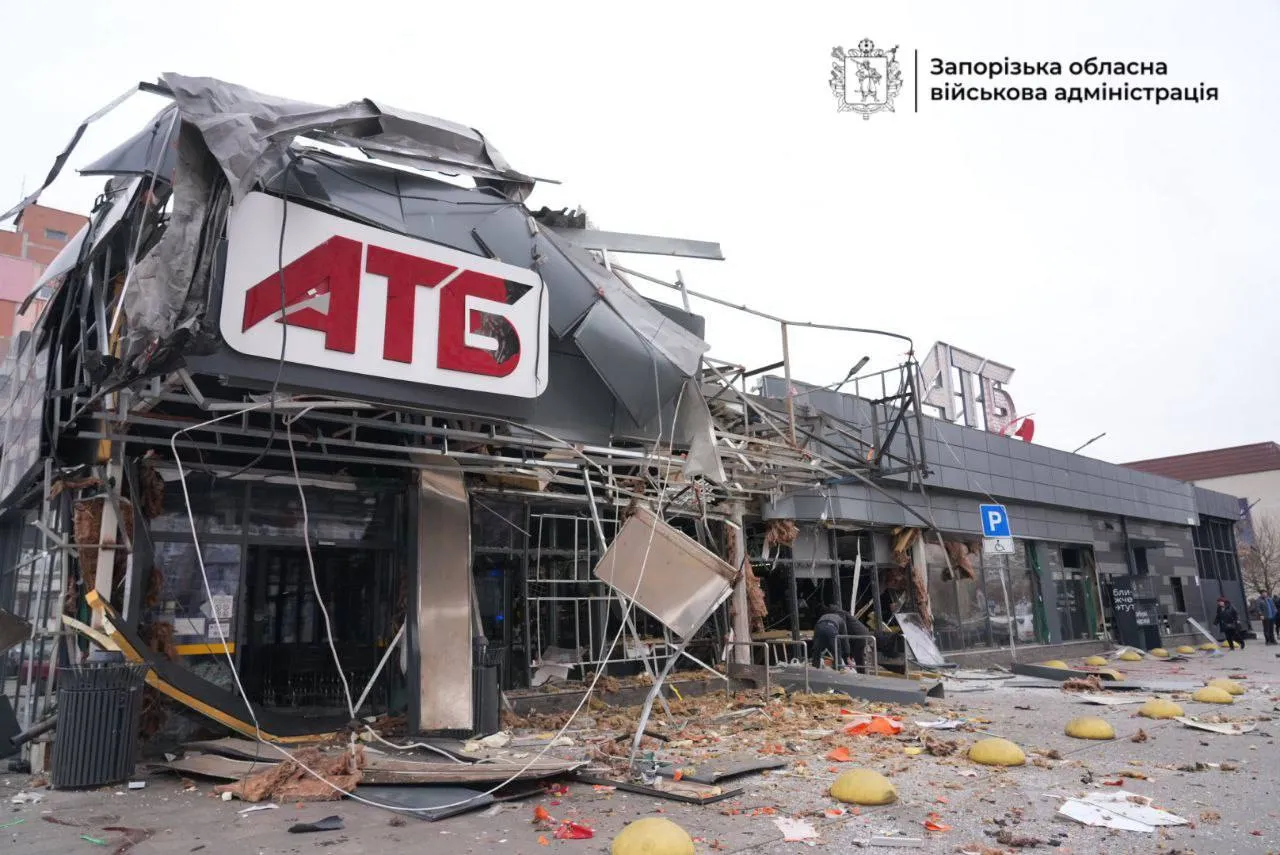
Russian forces struck a supermarket in the southern Ukrainian city of Zaporizhzhia on December 14, wounding at least 11 people, including a six-year-old child, regional Governor reported.
The store was located in a residential neighborhood, and video footage from the scene showed extensive damage to the building. Among the injured were two emergency responders and a police officer, according to local authorities.
The attack comes as Ukraine, the United States, and European partners continue negotiations aimed at reaching a peace agreement, amid Washington’s efforts to bring an end to Russia’s full-scale invasion.
Despite the ongoing diplomatic push, Russian forces have continued regular strikes on Ukrainian cities, frequently hitting civilian and energy infrastructure while pressing demands that Kyiv says would amount to surrender.
It would be unfair if Ukraine withdraws forces from the east and Russia does not - Zelensky
President Volodymyr Zelenskyy said it would be unfair for Ukrainian forces to withdraw from parts of eastern Ukraine they currently control if Russian troops are not required to pull back as well.
Speaking during an online briefing with journalists while traveling to Berlin, Zelenskyy said a fair ceasefire would mean both sides holding their current positions and then attempting to resolve broader issues through diplomacy. He noted that this approach reflects the basic principle of a ceasefire but acknowledged that Moscow has rejected it.
According to Zelenskyy, Russia has responded by demanding that Ukraine abandon Donbas, warning that Russian forces would otherwise attempt to seize the region by force. He added that U.S. officials have floated a compromise under which Ukrainian troops would withdraw from parts of the east while Russian forces would refrain from advancing further.
Zelenskyy said he does not view such a proposal as equitable, stressing that the areas in question are economically important and raising concerns over who would administer them. He said that if discussions were to move toward the creation of a buffer or economic zone along the front line, it should be overseen by a police mission rather than military forces, with both sides withdrawing equally.
He emphasized that any Ukrainian pullback of five to ten kilometers should be matched by an equivalent Russian withdrawal deeper into occupied territory. Zelenskyy described the issue as unresolved and highly sensitive, underscoring the difficulty of reaching an agreement on territorial arrangements.