


Zelensky calls Trump envoys Witkoff, Kushner to 'lock in' dates for Ukraine visit
President Volodymyr Zelensky said on August 31 that he held a phone call with U.S. President Donald Trump’s envoys, Steve Witkoff and Jared Kushner, to discuss their future visit to Ukraine.
The two U.S. envoys have yet to visit Kyiv despite playing a leading role in Trump’s efforts to broker an end to Russia’s war against Ukraine and repeatedly traveling to Moscow for meetings with Russian President Vladimir Putin and other senior Russian officials.
Zelenskyy described the conversation as “detailed and constructive,” saying that Ukrainian and U.S. negotiating teams remain in constant contact and are now working to finalize dates for the visit.
“Such a trip would be highly beneficial for hammering out solutions for peace,” Zelensky said, adding that the officials also discussed the situation on the battlefield.
Witkoff and Kushner were expected to make their first visit to Ukraine earlier this month, but the trip was postponed, reportedly because Trump wanted the envoys to remain close as tensions with Iran remained unresolved.
The announcement comes after reports that U.S. Treasury Secretary Scott Bessent met Russian Finance Minister Anton Siluanov in the United States to discuss Trump’s 28-point peace plan.
An earlier version of the plan, reportedly developed by Witkoff and Russian envoy Kirill Dmitriev, contained demands widely viewed as highly unfavorable to Ukraine. The proposal was later revised and reduced to 20 points following talks between Ukrainian and Western officials, but the Kremlin rejected the changes, leaving negotiations at an impasse.
It remains unclear which version of the peace plan Bessent discussed with Siluanov or whether Ukraine was informed about the meeting.
Russia targets Ukraine’s economic lifeline in five-day bombardment of Kyiv region
Russia has launched a sustained campaign of strikes against Ukraine’s civilian economy, with the fifth consecutive day of bombardment targeting Kyiv and surrounding regions. From August 27 to 31, 2026, dozens of commercial and logistics facilities in Kyiv, Kyiv Oblast, Odesa, and Mykolaiv regions came under attack, resulting in nearly 50 hours of air-raid alerts and widespread damage to businesses.
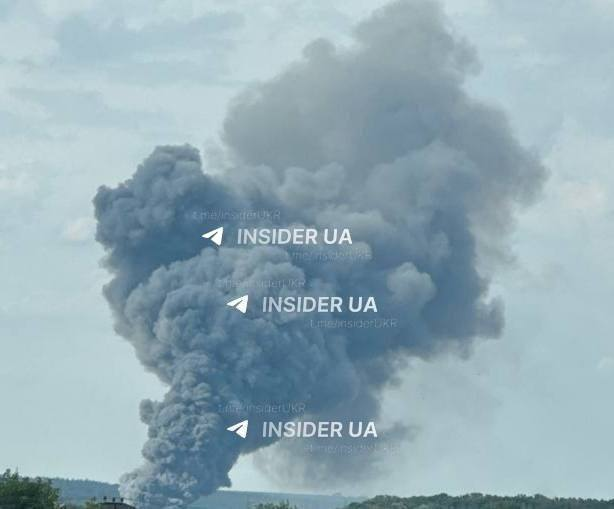
On August 27, Russian forces struck multiple warehouses in Kyiv Oblast belonging to major companies including Roshen, Comfy, Fora, Aurora, Budynok Igrashok, and Kolo/Varus. A UNICEF warehouse in Chubynske containing humanitarian aid for children was also destroyed — the second such incident in two months. The following day, a Nova Poshta depot and fulfillment center in Sviatopetrivske were hit, destroying tens of thousands of books from publishers such as A-BA-BA-HA-LA-MA-HA, Vivat, and others. In Mila, the largest Chysta Voda plant was destroyed, forcing the company to halt production.
The attacks continued in subsequent days: on August 29, an Agromat warehouse in Kyiv region was severely damaged, while a PepsiCo production facility in Mykolaiv region — producing Pepsi, Lipton Ice Tea, Sandora, and Sadok — was struck. On August 30, a large ATB grocery warehouse in Odesa region caught fire across approximately 3,000 m², injuring three people, and facilities in Boryspil, including an Auchan warehouse, were damaged. In Kyiv itself, the SP Hall business center housing offices of international companies such as Novartis, Beiersdorf/Nivea, and Watsons was hit.
Nova Poshta site after the strike
Another strike on a Nova Poshta terminal in the Odesa region on August 31 sparked a massive fire. These coordinated attacks on logistics, retail, and production sites have caused billions in losses and are systematically disrupting the infrastructure that supports daily life across Ukraine.
EU intercepted suspected Russian shadow fleet ship in Mediterranean
An oil tanker suspected of helping Russia evade sanctions was boarded by an EU naval mission in the Mediterranean on Aug. 30, the bloc’s top diplomat Kaja Kallas said.
The tanker, MV Sun, was suspected of sailing under a false flag in violation of international maritime law. It was boarded by forces from the EU’s Operation IRINI mission to verify its registration and flag status, according to Kallas.
Operation IRINI monitors arms and oil trafficking in the Mediterranean. Kallas said the boarding marked the sixth time an EU naval mission had intercepted a suspected shadow fleet vessel.
The operation comes as European countries step up efforts to enforce sanctions against Russia and disrupt its shadow fleet, which helps Moscow continue exporting oil despite Western restrictions. The EU recently expanded the authority of its naval missions to intercept suspected shadow fleet vessels beyond the Mediterranean, including in the Indian Ocean.
France, Sweden, Belgium and the United Kingdom have also taken action against suspected shadow fleet vessels in recent months.
“Illegal oil sales from shadow fleet ships are a critical lifeline for Russia's war in Ukraine, and we'll continue to cut them off,” Kallas said.
The EU has sanctioned 673 vessels linked to Russia’s shadow fleet so far and is expected to add more ships as part of its planned 22nd sanctions package. Kallas said action against the shadow fleet would also be discussed when EU defense ministers meet in Ireland on September 1.
US Treasury chief reportedly meets Russian counterpart to push Trump peace plan. Kyiv was unaware
U.S. Treasury Secretary Scott Bessent met Russian Finance Minister Anton Siluanov on August 31 to discuss a Washington-backed 28-point peace plan for Ukraine, Fox Business reported.
The two officials reportedly met on the sidelines of the G20 summit in Asheville, North Carolina, marking Siluanov’s first in-person attendance at the summit since Russia launched its full-scale invasion of Ukraine in 2022.
The meeting had not been announced in advance, and a Ukrainian official said Kyiv was not informed about it.
The talks come as Washington seeks to revive efforts to broker a peace deal in Ukraine after more than a year of negotiations failed to produce a breakthrough amid Russia’s territorial demands and refusal to agree to a ceasefire.
An earlier version of the 28-point plan, reportedly developed by U.S. Special Envoy Steve Witkoff and Russian envoy Kirill Dmitriev, included demands widely viewed as heavily unfavorable to Ukraine. The proposal was later revised and reduced to 20 points during talks involving Ukrainian and Western officials, but the Kremlin rejected the changes, leaving negotiations at a standstill.
Diplomatic activity has increased again in recent weeks. Earlier in August, President Volodymyr Zelensky said Ukraine, the U.S. and European partners had drafted a one-page plan to end the war. The proposal reportedly included a ceasefire and the creation of a “free economic zone” in the partially occupied Donbas region, which includes the Donetsk and Luhansk oblasts.
Russia has demanded that Ukraine surrender the entire Donbas as part of any peace agreement and has already rejected both a ceasefire and the proposed buffer zone.
It remains unclear whether the plan discussed by Bessent and Siluanov was the same proposal mentioned by Zelensky.
The meeting was the latest unexpected high-level contact between U.S. and Russian officials this month. On August 25, CIA Director John Ratcliffe made his first known visit to Moscow, though the purpose of the trip was not publicly disclosed.