


At least 37 killed after Russian drone strike on ammunition depot near Kyiv
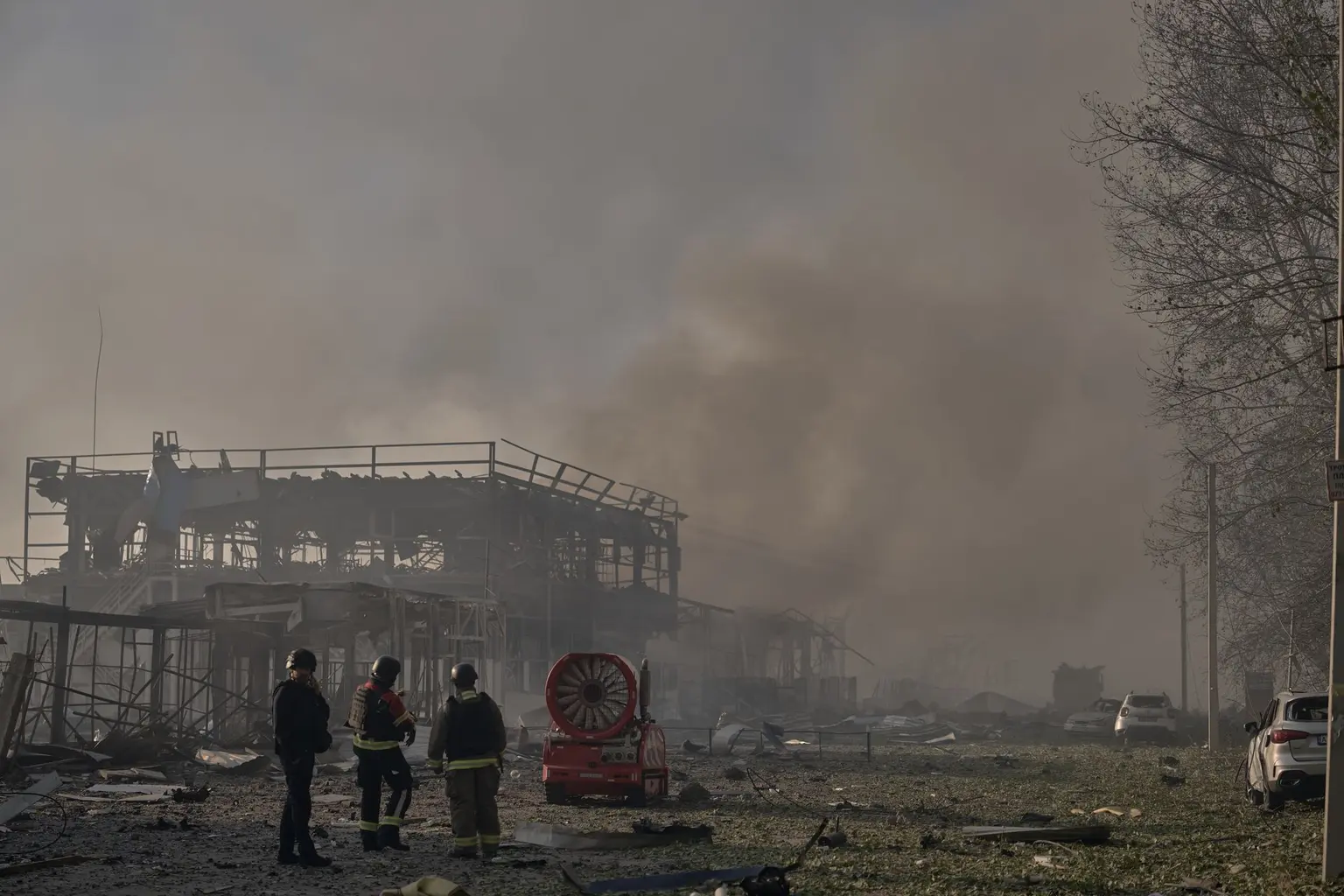
At least 37 people were killed and 42 others injured, including four children, in a Russian attack on Kyiv Oblast on Aug. 28 that triggered massive ammunition detonations and a large fire at a storage facility, local authorities said.
Four people remained missing as of 5 p.m. local time on August 29, Interior Minister Ivan Vyhivskyi said.
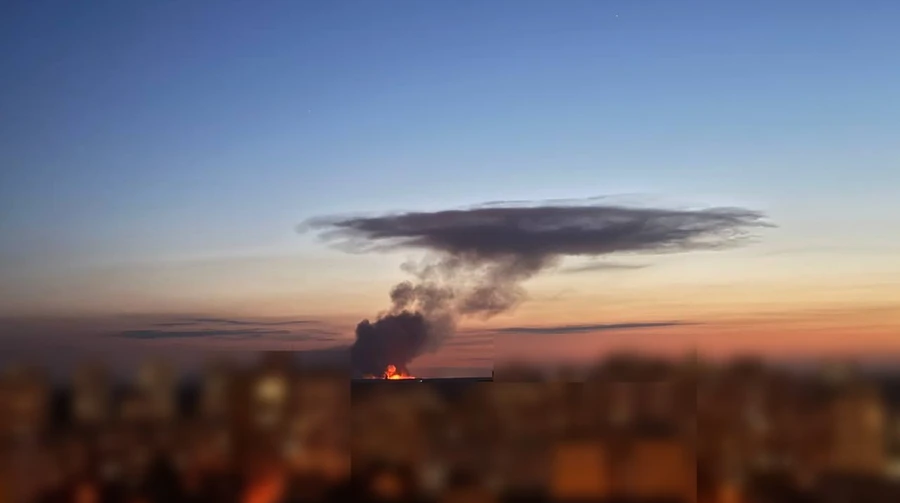
At around 8:10 p.m. on Aug. 28, a Russian drone struck a facility in the village of Myla, about 5 kilometers (3 miles) west of Kyiv along the Kyiv-Chop highway in Bucha district. The strike sparked a large fire, followed by a chain of ammunition explosions.
President Volodymyr Zelensky said the first Russian strike hit a Ukrainian military ammunition depot, triggering explosions involving shells, mines, other ammunition, and drones.
Taras Didych, head of the Dmytrivka community, which includes Myla, was among those killed. According to Kyiv Oblast Governor Tymur Tkachenko, Didych was one of the first responders to arrive at the scene.
Local residents described a series of powerful explosions that continued for hours. Stefania Torska, who lives nearby, said she heard an initial blast while speaking with her children on a video call and ran toward the area because she thought someone might need help.
She said another massive explosion followed shortly afterward and described flames rising high into the sky.
Nataliia Kuznietsova, a veterinarian working at a clinic in Myla, said she and her colleagues were preparing for an emergency operation when the explosions began.
“The walls began shaking and tiles started falling. As the explosions grew stronger, the windows began to blow out,” she said.
The clinic's staff and animals were not injured, but the building sustained heavy damage.
Tetiana Biletska, a local business owner in the neighboring village of Dmytrivka, said she saw a drone heading toward the warehouse before the first massive explosion.
“We immediately ran home, and when we got there, the first massive explosion happened, and a mushroom cloud rose into the sky,” she said.
Biletska said the explosions initially occurred every 20 to 30 seconds before becoming almost continuous. She said she had regularly passed the warehouses but had no idea ammunition was being stored there.
Emergency crews continued firefighting, debris removal, and search-and-rescue operations on Aug. 29, with more than 300 Ukrainian emergency service workers involved in the response.
At least 130 residential buildings were damaged in the attack and subsequent detonations. A care facility for elderly people and people with disabilities was also damaged, while 381 people, including 59 children, were evacuated from the area.
Zelensky said he had been briefed by Prime Minister Serhii Koretskyi and Interior Minister Vyhivskyi and stressed that those responsible for allowing ammunition to be stored near residential areas must be held accountable.
“There are regulations: ammunition cannot be stored near houses or other residential buildings. There will certainly be appropriate conclusions,” Zelensky said.
The Security Service of Ukraine opened criminal proceedings and launched a pretrial investigation into both the Russian attack and possible negligence related to the storage facility. According to the SBU, the site was struck by a Russian Geran-4 jet-powered drone.
Rescue operation in Myla, Kyiv oblast
Prime Minister Koretskyi also called for a swift investigation and severe punishment for anyone found responsible.
“On the fifth year of the full-scale invasion, making the same mistakes is criminal negligence,” he said.
Tkachenko said Aug. 30 had been declared a day of mourning in Kyiv Oblast for the victims of the attack.
Ukrainian law prohibits military or industrial ammunition storage facilities from being located within cities or near civilian residential areas. The disaster has drawn renewed attention to similar concerns following a Russian attack on the village of Vyshneve in Kyiv Oblast on July 6.
That attack also triggered detonations at an ammunition storage facility belonging to a company within the state-owned defense conglomerate Ukroboronprom, killing eight people and injuring 29.
Zelensky later said that two Ukroboronprom officials had approved the facility's location in violation of the law and would be held accountable. The state-owned company subsequently announced that it had dismissed two managers, along with several other officials whose actions or inaction may have contributed to the deadly incident.
Putin orders military to plan for offensive towards Kyiv and Chernihiv
Russia’s military leadership has been instructed by the country’s political leadership to plan several possible operational scenarios involving Kyiv and Chernihiv, according to Pavlo Palisa, deputy head of Ukraine’s Presidential Office.
Palisa said the information came from intelligence agencies and had been verified by multiple sources.
“We have indeed received information from intelligence agencies, verified by several sources, that the military leadership of the Armed Forces of the Russian Federation has been tasked by the political leadership to plan several possible scenarios for such an operation towards Kyiv and Chernihiv,” Palisa said.
However, he stressed that planning a potential operation is different from actively preparing for an offensive. Ukraine has not detected the formation of an offensive force in either area.
Palisa added that Ukraine’s General Staff has already developed potential response, defense and counteraction plans in case Russia moves forward with such operations.
Ukrainian forces reportedly attacked an Ozon warehouse and other sites across Rostov Oblast in a mass strike on southern Russia
Ukrainian forces struck a warehouse belonging to Russian e-commerce giant Ozon overnight on August 29 as several sites across Russia’s southern Rostov Oblast reportedly came under attack.
Ozon said a drone struck one of its logistics facilities in Rostov-on-Don, causing a small fire that was quickly extinguished. The company said it had temporarily suspended operations at the facility while emergency services inspected the site and confirmed it was safe.
A warehouse belonging to Russian appliance and electronics retailer DNS was also reportedly set on fire in the town of Aksay, while employees at the facility were evacuated. In the nearby village of Leninskoye, Ukrainian forces reportedly struck a warehouse belonging to Russian supermarket chain Chizhik.
Ukraine regularly strikes military and strategic infrastructure deep inside Russia and in occupied Ukrainian territories in an effort to weaken Moscow’s ability to continue waging war.
Overnight on August 28, Ukrainian drones struck the Yaroslavl oil refinery, one of Russia’s largest oil-processing facilities, according to Ukraine’s General Staff. Attacks were also reported in Moscow and the surrounding region.
Ukraine has also carried out a series of strikes against major Russian retailers and their logistics networks over the summer. On August 27, Ozon reported that its warehouses in the cities of Ufa and Orenburg had come under attack.
Ukrainian forces also targeted a Wildberries warehouse on August 26 amid reported explosions in Tambov Oblast and occupied Ukrainian territories.
Wildberries is Russia’s largest online retailer and has previously listed military-related equipment for sale, including drone components and body armor. Its banking arm was sanctioned by the European Union in July over its contribution to Russia’s state budget.