


Ukrainian drones destroyed the Tuapse refinery in Russia
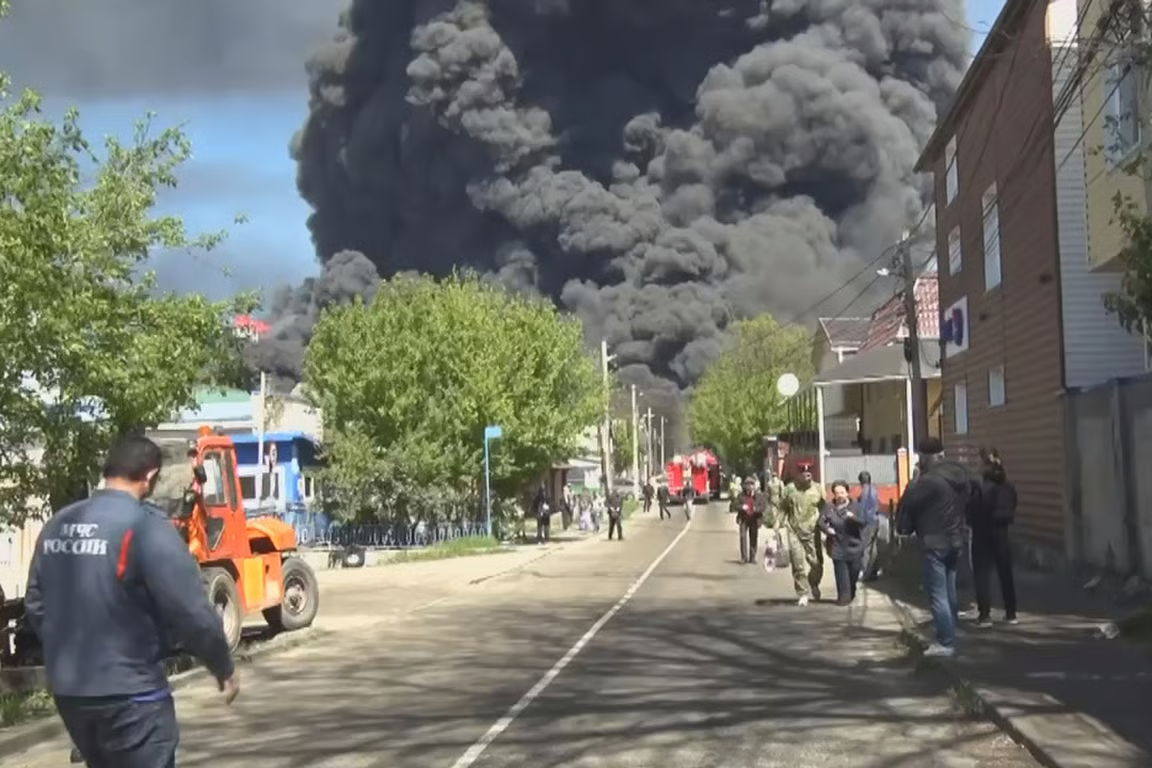
On April 28, 2026, a concentrated swarm of Ukrainian long-range drones successfully struck the Tuapse Oil Refinery on Russia’s Black Sea coast, marking the third major assault on the facility this month. The drones bypassed regional air defenses by flying at ultra-low altitudes over the sea, eventually striking the plant's primary distillation units and several fuel storage tanks. This coordinated effort has forced a total suspension of operations at the site, which traditionally processes 12 million tonnes of crude oil annually, significantly disrupting Russia’s southern energy export corridor and domestic fuel supply chains.
The strike triggered a massive fire that required over 160 emergency personnel to contain, leading to a regional state of emergency in the Krasnodar Krai. Beyond the industrial wreckage, the attack caused a localized environmental crisis, characterized by a "black rain" of soot and oil residue falling over the city of Tuapse. Local authorities have reported significant air contamination and a major oil spill into the Black Sea, while utility damages have left over 30 city streets without running water, highlighting the high civilian and environmental cost of the intensifying "refinery war."
Military analysts view the repeated targeting of Tuapse as a calculated strategy to dismantle the economic infrastructure funding the Russian war effort. By hitting the refinery’s high-value distillation columns, Ukraine has rendered the facility nearly impossible to repair in the short term due to international sanctions on specialized hardware. While the Kremlin has condemned the operation as an attack on civilian infrastructure, Ukrainian officials maintain that these hubs are legitimate military-economic targets. This strike further isolates Russia’s energy sector, proving that even heavily defended maritime ports remain vulnerable to sustained drone campaigns.
Ukraine asks Israel to seize vessel with stolen grain as diplomatic row escalates
Kyiv confirmed on April 29 that it has formally asked Israel to seize the vessel Panormitis, which Ukrainian authorities say is carrying grain looted from Russian-occupied territories.
The Panama-flagged bulk carrier reportedly arrived in Haifa Bay earlier this week with more than 6,200 tons of wheat and 19,000 tons of barley. According to Ukraine’s Prosecutor General Ruslan Kravchenko, Kyiv has already sent a formal request for legal assistance, asking Israeli authorities to seize the vessel, inspect the cargo, and question the crew.
Ukrainian officials say the grain was partially loaded through ship-to-ship transfers and that the vessel had previously entered ports in Russian-occupied areas of Ukraine, violating international maritime law.
The case is part of a broader dispute. Earlier in April, another vessel — the Russian bulk carrier Abinsk — allegedly delivered stolen Ukrainian grain to the same port. Ukrainian officials say they had warned Israel in advance, but the ship was still allowed to unload and depart.
The issue has escalated into a diplomatic clash between Kyiv and Gideon Sa'ar, who claimed Israel had not received sufficient evidence and criticized Ukraine’s approach. In response, Ukrainian Foreign Minister Andrii Sybiha said Kyiv had followed all official diplomatic and legal channels and expects the request to be taken seriously.
Sa’ar later confirmed that Israel is now reviewing the request.
Ukraine maintains that Russia has been systematically seizing agricultural products from occupied regions and exporting them through covert logistics networks. Kyiv argues that accepting such shipments violates both international law and the domestic regulations of receiving countries.
According to Ukrainian officials, similar shipments have already been accepted this year by countries including Turkey, Egypt, and Algeria, further complicating efforts to curb the trade.
Kremlin confirms Slovak PM will attend Victory Day parade in Moscow
Yuri Ushakov, an aide to Russian President Vladimir Putin, has said that Slovak Prime Minister Robert Fico will visit Moscow to attend the military parade on Victory Day.
According to Ushakov, Fico will be among the foreign guests present at the annual parade marking the Soviet Union’s victory over Nazi Germany in World War II. He did not specify which other international leaders are expected to attend the event.
Victory Day, celebrated on May 9 in Russia, is one of the country’s most significant national holidays and traditionally features a large military parade in Moscow attended by top Russian officials and invited foreign dignitaries.