


Russians intensify offensive across entire front line but face air defence missile shortage
Oleksandr Syrskyi, Commander-in-Chief of the Armed Forces of Ukraine, said that Russian troops have stepped up offensive operations across nearly the entire front line, while also facing growing shortages in key defensive capabilities.
Speaking after a meeting with Jennie Carignan, Chief of the Defence Staff of the Canadian Armed Forces, Syrskyi described the situation as “difficult,” noting that Russian forces are increasing pressure along multiple sectors.
At the same time, he emphasized that Ukrainian forces are adapting through careful planning, innovative tactics, and effective use of available strike assets. According to Syrskyi, these efforts are inflicting losses on Russian troops that exceed their ability to replenish.
He also highlighted that ongoing Ukrainian strikes on Russian military-industrial facilities are degrading Russia’s air defense capacity. As a result, Russian forces are increasingly facing a shortage of missiles needed to counter Ukrainian unmanned systems and precision strike capabilities.
World marks 40th anniversary of Chornobyl disaster
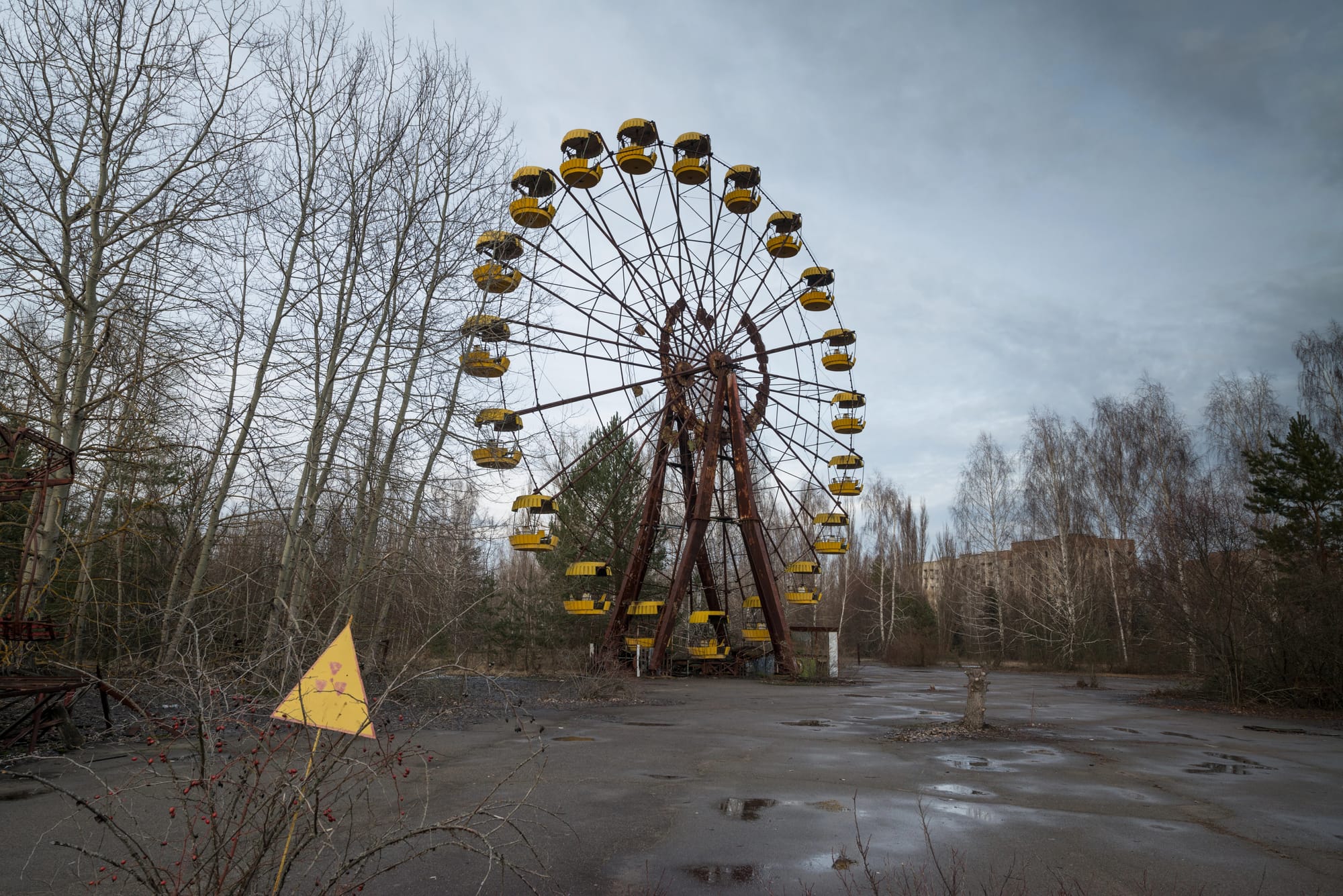
As the world marks the 40th anniversary of the Chernobyl disaster, Ukrainian and international leaders are commemorating the victims while warning that Russia’s war continues to pose serious risks to nuclear safety.
Ukrainian President Volodymyr Zelenskyy paid tribute to those who responded to the catastrophe, honoring their sacrifice and the lives lost. The disaster occurred on April 26, 1986, when reactor No. 4 at the Chernobyl Nuclear Power Plant exploded, releasing radioactive material across Ukraine, Belarus, and much of Europe.
Forty years ago, the world faced one of the largest nuclear disasters – the fourth reactor of the Chornobyl Nuclear Power Plant exploded. A significant amount of radioactive material was released. Hundreds of thousands of people have been dealing with the consequences of that… pic.twitter.com/oGNrShuo14
— Volodymyr Zelenskyy / Володимир Зеленський (@ZelenskyyUa) April 26, 2026
The explosion led to the creation of a vast exclusion zone, displacing around 116,000 people from heavily contaminated areas. It remains the deadliest nuclear accident in the history of civilian nuclear energy.
Prime Minister Yulia Svyrydenko stressed that the consequences of the disaster are still felt today, affecting millions and shaping global approaches to nuclear safety. She also drew parallels between the Soviet system that enabled the disaster and modern-day Russia, warning of ongoing risks.
Those concerns have intensified amid the war. In February 2025, a Russian drone struck the New Safe Confinement structure built over the destroyed reactor, damaging it but not causing a radiation leak. Russian forces also briefly occupied the plant early in the full-scale invasion, and some Ukrainian personnel remain in captivity.
Svyrydenko warned that Russia continues to violate nuclear safety norms, particularly at the Zaporizhzhia Nuclear Power Plant—Europe’s largest nuclear facility—which remains under Russian occupation and has been repeatedly put at risk due to militarization and poor maintenance.
EU Energy Commissioner Dan Jørgensen emphasized that ensuring nuclear safety in Ukraine is a shared international responsibility, calling it a cornerstone of global security. Similarly, U.S. State Department spokesperson Thomas Pigott noted that the Chernobyl disaster fundamentally reshaped global nuclear safety standards, highlighting the importance of transparency and responsible management of nuclear power.
Four decades on, Chernobyl remains not only a symbol of past tragedy, but also a warning about the consequences of negligence and the dangers posed by ongoing conflict around nuclear facilities.
Three Russian ships and MiG-31 aircraft were damaged in major overnight strikes on Crimea
Ukraine carried out a large-scale overnight strike on Russian military assets in occupied Crimea on April 26, according to the Security Service of Ukraine.
The operation, led by the SBU’s Alpha special forces unit, targeted key facilities in Sevastopol and nearby areas. Long-range drones struck the base of Russia’s Black Sea Fleet as well as the Belbek Air Base, one of the peninsula’s main military airfields.
According to Ukrainian officials, several high-value targets were damaged. These include large landing ships Yamal and Filchenkov, the reconnaissance vessel Ivan Khurs, and infrastructure such as the Black Sea Fleet’s Lukomka training center and a radio-technical reconnaissance headquarters. A coastal radar system, identified as the MR-10M1 “Mys-M1,” was also reportedly hit.
At Belbek airfield, a MiG-31 fighter jet and parts of the airfield’s technical infrastructure were struck.
Russian-installed authorities in Crimea acknowledged the attack. Mikhail Razvozhayev said that air defenses and mobile fire groups were engaged in repelling the strike, though he did not confirm the extent of the damage.
If confirmed, the operation represents another attempt by Ukraine to degrade Russian naval and air capabilities in occupied Crimea, a region that remains central to Moscow’s military logistics and operations in the Black Sea.